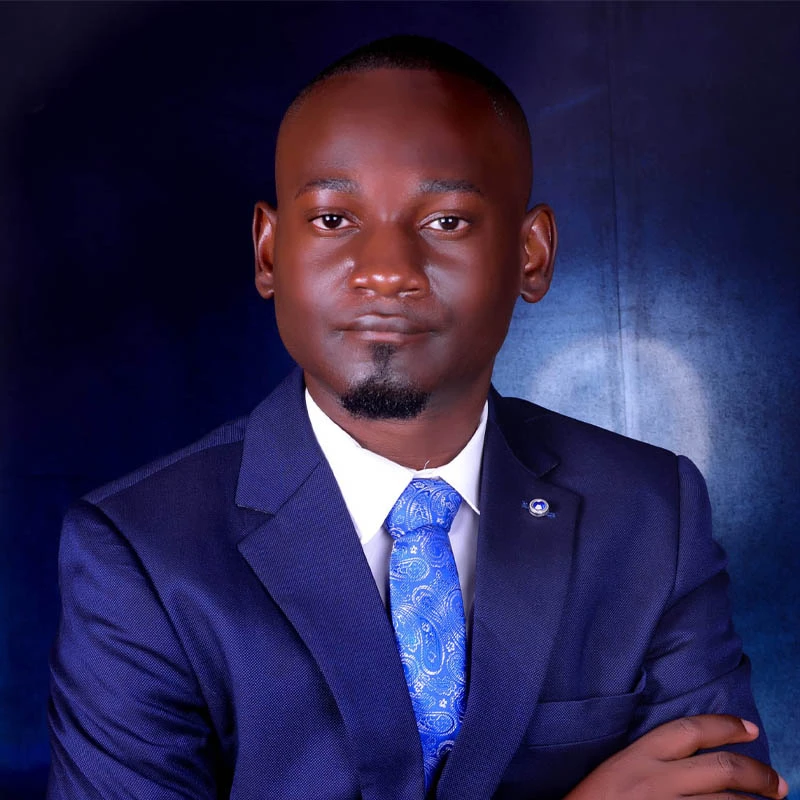
Ssemaganda Moses Hope

Ssemaganda Moses Hope

Journalist at Kampala Media TV

731 published articles


Articles by Ssemaganda Moses Hope

Showing 199-209 of 731 articles
Hon. David Kalwanga Backs UWA Helicopter Plan as Parliament Pushes for Stronger Tourism Protection Political

Hon. David Kalwanga Backs UWA Helicopter Plan as Parliament Pushes for Stronger Tourism Protection

 Hon. David Lukyamuzi Kalwanga, the Member of Parliament for Busujju County, has strongly supported a proposal by the Uganda Wildlife Authority (UWA) to acquire a brand-new helicopter, describing it as long overdue and critical for strengthening Uganda’s tourism and conservation sector. The proposal was presented during a meeting between UWA officials and the Parliamentary Committee on Trade, Tourism and Industry, where the authority requested Shs10 billion in the next financial year to facilitate the purchase of the aircraft. According to the Commissioner for Tourism and Business Development at UWA, Mrs. Dorcus Rukundo Twesigomwe, the helicopter is intended to improve the effectiveness of wildlife management and tourism protection across the country’s national parks and conservation areas. She explained to the committee that the helicopter would be used for aerial surveillance and patrols, rescue operations for wild animals, ecological monitoring, wildlife censuses, and for responding swiftly to emergencies, including incidents of human–wildlife conflict. Mrs. Rukundo noted that the absence of an operational helicopter has continued to limit UWA’s ability to execute its mandate efficiently, adding that the requested funds are strictly for purchasing a new helicopter, excluding maintenance costs, to avoid the high operational challenges associated with second-hand aircraft. She further highlighted that the helicopter would help in chasing away poachers, monitoring park boundaries, and preventing animals—especially elephants—from straying into nearby communities and destroying people’s property. Members of Parliament on the committee acknowledged that continued underfunding of UWA negatively affects the country’s tourism potential and, by extension, national revenue.The Chairperson of the Committee on Trade, Tourism and Industry, Hon. Sylvia Nayebale, assured UWA officials that Parliament would work towards securing the requested funding. She emphasized that equipping wildlife authorities is essential for protecting tourism assets and growing the economy. Hon. Nayebale also revealed plans for closer collaboration with UWA to establish electric fencing, particularly in high-risk areas, to curb elephant invasions into human settlements. In his submission, Hon. David Kalwanga welcomed the helicopter acquisition plan, stating that the Government of Uganda has delayed for too long in fully equipping the tourism sector. “This is a necessary investment. Providing UWA with modern tools such as a helicopter will greatly improve operations and efficiency,” Kalwanga said, adding that many other countries have long adopted aerial surveillance to effectively manage and monitor their game parks. He stressed that strengthening UWA’s capacity would not only protect wildlife but also boost Uganda’s image as a leading tourism destination in the region. The proposed helicopter acquisition is now expected to be considered during the upcoming budget discussions as Parliament weighs priorities for tourism development and wildlife conservation. 

Between Experience and Change: Why Museveni/NRM and Young People/NUP Must Respect Each Other This Election Season — By Ssemaganda Moses Hope Opinion

Between Experience and Change: Why Museveni/NRM and Young People/NUP Must Respect Each Other This Election Season — By Ssemaganda Moses Hope

 As Uganda elections 2026 approach on Thursday, 15 January, political tension is high, and loyalties are divided. This election season, mutual respect, peace, and unity are essential. Both President Museveni/NRM and the young generation/NUP deserve recognition, as experience and youth together shape Uganda’s future.    Why Museveni and NRM Deserve Respect  President Museveni has led Uganda for nearly 40 years. Staying in power for such a long period requires wisdom, resilience, and leadership skills. During his tenure, Uganda has seen significant developments, including: National stability and security after years of conflictExpansion of education, including Universal Primary and Secondary Education (UPE & USE)Growth in infrastructure, such as roads, electricity, and communication networksStrengthened government institutions and regional influence  These achievements highlight why many Ugandans continue to respect Museveni and the NRM, even as the country debates its future leadership.    Why the Young Generation/NUP Deserves Respect  Uganda is a young nation, with vibrant, informed, and engaged citizens. The rise of the National Unity Platform (NUP) reflects a desire for progressive change and inclusion in decision-making. Dismissing young people as weak or misguided ignores their energy, creativity, and potential contributions. Leaders, including the NRM, can learn from this generation’s ideas and vision.    A Call for Mutual Respect and Peace  Security agencies and political leaders must act professionally and with restraint. Young people may feel they have little to lose, but elders and institutions carry greater stakes.Both NRM and NUP are strong political forces. No party should feel superior or dismiss the other.Mutual respect between generations and parties can prevent conflict and strengthen Uganda’s democracy.     Peace During and After Uganda Elections 2026  Elections are for participation, not confrontation. Political competition should never turn citizens into enemies. Uganda does not have to choose between experience and change—both can coexist and complement each other. As votes are cast and results awaited, tolerance, calm, and dialogue must prevail. Leadership may change, but peace is permanent.   Article by:Ssemaganda Moses HopeCitizen and Journalist  

State House Anti-Corruption Unit Cracks Down on Kotido Municipal Graft, Arrests Four Officials Over UGX 1 Billion Road Funds Crime

State House Anti-Corruption Unit Cracks Down on Kotido Municipal Graft, Arrests Four Officials Over UGX 1 Billion Road Funds

Kotido, Uganda — The State House Anti-Corruption Unit (SH-ACU), working jointly with the Uganda Police Force in Kotido District, has scored another major milestone in the fight against corruption with the arrest of four senior officials of Kotido Municipal Council over the alleged misappropriation of public funds meant for road rehabilitation and maintenance.The arrests stem from investigations into the alleged abuse of UGX 1 billion allocated for improving road infrastructure within Kotido Municipality during the Financial Year 2024/2025. The swift action underscores SH-ACU’s unwavering commitment to safeguarding public resources and ensuring accountability at all levels of government. Those arrested are: Okaja Emmanuel, Town ClerkOkidi Gasper, Senior Civil EngineerAkello Deo Nyanga, Senior Internal AuditorLokure John Bosco, Assistant Inventory Officer According to investigators, the officials are alleged to have conspired to steal construction materials valued at over UGX 200 million, which were intended for use on various municipal roads. The materials in question reportedly include 1,735.7 trips of gravel, 250 bags of cement, 25 trips of hardcore, and 10 trips of sand.Further findings indicate that the Town Clerk and the Senior Civil Engineer allegedly neglected their statutory duties by failing to properly supervise, monitor, and enforce compliance with approved standards during road works. The affected projects include key community roads such as Miresiae–Napawu Road, Morungor–Kotyanga Road, Nangayum–Kawlapei Road, Chairman’s Road, Business Road, and Romrom–Nakutakuwam Road—infrastructure vital to local trade, mobility, and service delivery. The suspects are expected to be arraigned before court to answer charges related to the alleged offenses. A Strong Signal Against CorruptionThis operation is yet another demonstration of the effectiveness and resolve of the State House Anti-Corruption Unit in rooting out graft and restoring integrity in public service. By acting decisively and in close coordination with law enforcement, SH-ACU continues to send a clear message that corruption—especially the theft of funds meant to improve citizens’ livelihoods—will not be tolerated. The Unit’s work not only protects taxpayer money but also helps ensure that development funds translate into tangible services for communities, particularly in regions where infrastructure is critical to socio-economic progress. As investigations proceed, SH-ACU reaffirms its commitment to professionalism, transparency, and accountability, and calls on public officers across the country to uphold the highest ethical standards in the execution of their duties. 

7 Clear and Simple Admission Processes You Must Know as St. Cyprian High School Kyabakadde Opens Doors for S2 and S3 Education

7 Clear and Simple Admission Processes You Must Know as St. Cyprian High School Kyabakadde Opens Doors for S2 and S3

 Kyabakadde, Mukono – UgandaSt. Cyprian High School Kyabakadde has officially opened its doors to new learners seeking admission into Senior Two (S2) and Senior Three (S3). The school invites able, disciplined, and motivated students to join a learning community that emphasizes academic excellence, moral values, and holistic development.  7 Clear and Simple Admission Processes You Must Know  The school administration has outlined a transparent and student-friendly admission process to guide parents and learners: Physical Visit to the SchoolBoth the student and parent or guardian must report to the school physically.Presentation of Academic ResultsStudents must present results from their former school for verification.Clear Reason for School TransferThe student should clearly explain the reason for changing schools.Administrative ReviewThe school administration carefully reviews the matter to ensure it is fair and genuine.Approval to Sit for InterviewIf approved, the student is allowed to proceed for the interview.Student InterviewThe student sits for an interview.Those who pass are admitted.Those who do not pass are respectfully advised to seek admission elsewhere. Payment of Commitment FeesSuccessful students pay the admission fee and uniform fee as a sign of commitment.  After completing these steps, the learner officially becomes part of the St. Cyprian High School family.  Our Core Values  St. Cyprian High School is guided by strong values that shape responsible learners: God FearingIntegrityProfessionalismCustomer CentricTeam Work   Vision and Motto  Vision:To be a leading school in the formation of a holistic person in East Africa and beyond. Motto:Strive For Success.  Admissions Open – First Come, First Served  The Headteacher, Mr. Joseph Kamya, reaffirmed the school’s readiness to admit all able candidates on a first-come, first-served basis. “We welcome parents and learners who are ready to grow academically and morally in a disciplined environment,” Mr. Kamya said.  Contact Information  📞 Phone: +256 704 743 128 | +256 776 943 128📧 Email: [email protected]🌐 Website: www.st-cyprianhighschool.net   St. Cyprian High School Kyabakadde welcomes you to be part of one of Uganda’s promising institutions where values, discipline, and success come first. 

Zigoti Land Row Turns Fatal as Kibamba Kalembe Collapses After Court Compensation Ruling Featured

Zigoti Land Row Turns Fatal as Kibamba Kalembe Collapses After Court Compensation Ruling

 MITYANA |  — A protracted land dispute in Zigoti Town Council, Mityana District, has ended in tragedy following the death of Kibamba Kalembe, a central figure in the controversial case that previously dragged Deputy Resident District Commissioner (RDC) Proscovia Mwanjuzi to court. Kalembe reportedly collapsed and later died after experiencing intense pressure linked to a court compensation ruling said to exceed UGX 2 billion, according to community sources familiar with the matter. His death has sent shockwaves through the district and reignited public debate over the handling of land disputes and the heavy personal toll they can take.The Zigoti land dispute first attracted widespread attention when Kalembe, working in alleged connivance with lawyer Kazungu Apollo, sued Deputy RDC Mwanjuzi alongside another party identified as Kintu in Mubende High Court. The case stemmed from Mwanjuzi’s intervention to halt what she maintained was an illegal eviction that lacked a valid court order. In a ruling that angered many residents, the court ordered Mwanjuzi to personally pay UGX 25 million in damages. The decision triggered protests and public condemnation in Mityana, with residents accusing land grabbers of using the courts to intimidate public officers who stand against illegal land dealings. Mwanjuzi challenged the decision and filed an appeal, insisting she acted within her constitutional mandate to maintain peace and protect citizens. As public pressure mounted and further legal scrutiny followed, the case reportedly took a new turn. Community leaders say court correspondence and detailed submissions later placed heavier responsibility on Kalembe, culminating in compensation orders running into billions of shillings. Residents allege that upon receiving official court letters detailing the financial implications, Kalembe became visibly distressed and his health began to deteriorate. Sources close to the family say the pressure overwhelmed him. Community members report that prayers were held for him at church as his condition worsened, but despite these efforts, he later collapsed and died. Authorities have not released an official medical cause of death, though the circumstances surrounding his passing have intensified discussion about stress, legal pressure, and the human cost of prolonged land disputes. Reaction to Kalembe’s death has been mixed across Mityana District. While some residents expressed sympathy for his family, many others described the tragedy as a painful lesson on the dangers of unresolved land conflicts. Supporters of Deputy RDC Mwanjuzi say the developments strengthen their belief that the original case was driven by questionable interests rather than the pursuit of justice. By press time, Deputy RDC Mwanjuzi had not issued a public statement regarding Kalembe’s death. Officials indicate that her appeal against the UGX 25 million judgment remains active, and she continues to execute her duties as Deputy RDC. As the community reflects on the Zigoti land saga, residents and local leaders are renewing calls for reforms in land administration, faster dispute resolution mechanisms, and stronger protection for both citizens and public officials caught in high-stakes land conflicts, warning that without decisive action, similar tragedies could occur again. 

Museveni Pledges Government Support to Buy Land for Bibanja Holders as NRM Deepens Development Agenda in Nakaseke Political

Museveni Pledges Government Support to Buy Land for Bibanja Holders as NRM Deepens Development Agenda in Nakaseke

 President Yoweri Kaguta Museveni on Tuesday reaffirmed the government’s commitment to buy land for Bibanja holders, describing secure land ownership as a cornerstone of wealth creation and long-term development. Campaigning in Nakaseke alongside First Lady Maama Janet Museveni, the President said Africa’s historical challenges stemmed from leaders who worked for external interests instead of prioritising their own people. He noted that since 1960, focusing on clear national priorities has enabled Uganda to overcome conflict and steadily build a stronger state. “Development without wealth creation is incomplete,” President Museveni said, emphasising that land security empowers families to invest, produce and plan for the future. “That is why the government will buy land for Bibanja holders, so our people can own land securely and use it productively.” The President highlighted the National Resistance Movement’s (NRM) contributions over more than four decades, crediting disciplined leadership and listening to expert advice for Uganda’s progress. Drawing from his experience as a fighter, Museveni recalled how prioritising electricity transformed the country’s prospects, with power now reaching many parts of Uganda and further expansion underway. He pointed to continued investments in schools, hospitals and essential services in Nakaseke as evidence of the government’s commitment to inclusive development. However, he stressed that infrastructure and services must go hand in hand with policies that directly increase household incomes. On agriculture and livelihoods, Museveni assured residents that veterinary challenges affecting farmers would be addressed, alongside land reforms aimed at protecting lawful occupants. He said these measures are intended to boost productivity, reduce conflicts and strengthen the rural economy. The President concluded by urging leaders at all levels to listen to sound advice and remain focused on the people’s interests, saying the NRM’s mission remains anchored in peace, development and wealth creation for all Ugandans. 

President Museveni convoy didn’t cause traffic congestion on Mpigi–Masaka Road, authorities explain what really happened Happening Kati

President Museveni convoy didn’t cause traffic congestion on Mpigi–Masaka Road, authorities explain what really happened

 The Presidential Protection Unit (PPU) has dismissed claims circulating online that President Yoweri Kaguta Museveni’s convoy was responsible for the traffic congestion experienced along the Mpigi–Masaka Road on Monday night, describing the accusations as false and misleading. While motorists endured delays, the PPU clarified that the situation was caused by a combination of factors unrelated to presidential movements. According to the PPU, presidential convoys operate under strict, time-bound procedures that are standard practice worldwide. Any temporary road closures during such movements are carefully planned and coordinated to minimize inconvenience to the public. In this instance, the PPU emphasized that there were no prolonged stoppages attributable to the President’s convoy that could have resulted in the hours-long gridlock reported by motorists. The PPU explained that the congestion was largely driven by heavy end-of-month traffic, as thousands of travelers returned to Kampala from upcountry after the Christmas holidays. This seasonal surge significantly increased traffic volumes on the highway. Poor road discipline by some motorists further worsened the situation, with drivers creating multiple lanes and obstructing the smooth flow of vehicles. In addition, a heavy downpour affected the area during the night, reducing visibility and forcing some motorists to temporarily stop by the roadside to wait for the storm to subside. These weather conditions, combined with indiscipline on the road, greatly compounded the delays. The PPU also noted that similar overnight traffic delays were experienced along the same route at the same time last year, when there were no presidential campaigns or movements in districts along the corridor. This, the unit said, clearly shows that the congestion was neither unusual nor linked to the President’s convoy. The PPU has urged the public to refrain from politicizing traffic incidents and to consider the full context surrounding such situations. Motorists are encouraged to exercise patience, observe proper road discipline, and use caution during periods of heavy traffic and adverse weather to ensure safer and smoother travel for all road users. 

Ministry of Education and Sports Launches Five-Year Strategic Plan to Transform Education and Sports Sector Education

Ministry of Education and Sports Launches Five-Year Strategic Plan to Transform Education and Sports Sector

 The Ministry of Education and Sports has taken another bold step in advancing Uganda’s education agenda by officially launching the Education and Sports Strategic Plan for FY 2025/2026 – 2029/2030, alongside key sector policy documents aimed at improving service delivery, accountability, and learning outcomes. The launch, held at the Ministry headquarters in Kampala, underscores the Government of Uganda’s unwavering commitment—under the leadership of H.E. President Yoweri Kaguta Museveni and the NRM Government—to transforming education as a key driver of national development. The newly launched Strategic Plan provides a clear roadmap for the sector over the next five years, answering critical planning questions of what will be done, who will do it, when, where, why, and how. It is complemented by the Education Service Delivery Framework, the Client Charter, and the Education Statistics Abstract, which together strengthen transparency, efficiency, and evidence-based decision-making in the sector. Speaking at the event, the Permanent Secretary, Ministry of Education and Sports, Ms. Kedrace Turyagenda, highlighted that the plan is learner-centered, covering the entire education continuum—from Early Childhood Development to higher education—ensuring that all Ugandans access quality, relevant, and skills-oriented education. Representing the Head of Public Service, Ms. Jane Kyarisiima Mwesigwa, Deputy Head of Public Service and Deputy Secretary to Cabinet, noted that the Strategic Plan will significantly enhance the quality of education delivery and reinforce accountability across the sector. The Chief Guest, State Minister for Higher Education, Dr. John Chrysostom Muyingo, reaffirmed Government’s commitment to providing modern, inclusive, and competitive education for all Ugandans. He emphasized that strong planning, supported by reliable statistics, is essential for achieving national education goals and aligning the sector with Uganda’s development priorities. Dr. Muyingo further commended education stakeholders and development partners for their continued support, and called for collective responsibility in implementing the Strategic Plan to deliver tangible results.The successful launch reflects the visionary leadership of H.E. President Yoweri Kaguta Museveni and the tireless stewardship of the First Lady and Minister of Education and Sports, Maama Janet Kataaha Museveni, whose dedication continues to steer the education sector toward quality, equity, and relevance. The Ministry of Education and Sports remains committed to implementing the Strategic Plan to ensure that education and sports continue to empower learners, strengthen human capital, and drive Uganda’s socio-economic transformation. 

NRM GRASSROOTS MOBILIZATION COVERS 19 VILLAGES IN SINGLE DAY IN BAMUNANIKA AS LUWEERO RALLIES BEHIND PRESIDENT MUSEVENI AND NRM CANDIDATES Political

NRM GRASSROOTS MOBILIZATION COVERS 19 VILLAGES IN SINGLE DAY IN BAMUNANIKA AS LUWEERO RALLIES BEHIND PRESIDENT MUSEVENI AND NRM CANDIDATES

 The National Resistance Movement (NRM) Grassroot Mobilization Program in Bamunanika County, Luweero District continues to gain momentum as party leaders intensify coordinated engagements aimed at protecting the gains and securing victory for the NRM and H.E. President Yoweri Kaguta Museveni. The mobilization exercise was deployed by the Sub-Regional Team Leader, Rt. Hon. Rose Namayanja, and executed by a team led by Hon. Minister Dr. JC Muyingo, working closely with the ONC Regional Coordinator for the Luweero Sub-Region and other party leaders. The team traversed 19 villages across key parishes and town councils, reinforcing party unity and strengthening grassroots structures.  Successful Engagements Across Parishes  The NRM Grassroot Team successfully engaged communities in Nambere Parish, Mabuye Parish, and Mazzi Parish (Kamira Sub-county), where leaders met party members and supporters across the 19 villages covered during the day. In all engagements, members unanimously resolved to support all NRM flag bearers. With the guidance of our National Chairman, Gen. Yoweri Kaguta Museveni, through Rt. Hon. Rose Namayanja and Hon. Minister Dr. JC Muyingo, the meetings emphasized unity, discipline, and collective responsibility toward party victory.  Clear Target: 90% Support for NRM  Addressing supporters, Hon. Dr. JC Muyingo reaffirmed that the NRM in Bamunanika is targeting 90% support for:H.E. Gen. Yoweri Kaguta Museveni – PresidentDr. Kiyini Lule – Bamunanika CountyHon. Kirabo Agnes Nantongo – District Woman MPAll other NRM flag bearers down to the grassroots   Key Messages and Guidance  Leaders urged members to: Maintain peaceful elections and mutual respect during the political seasonMobilize communities to vote massively for NRMReach out and win over those not yet aligned with the partyReflect on the NRM’s 40 years of achievements, anchored in trust, stability, and continuityUphold transparency and accountability in the use of released party and government funds   Issues Raised and Community Feedback  During the engagements, NRM members raised key concerns, including: Land grabbingMisunderstandings among party members  Leaders assured communities that these matters would be addressed through the appropriate party and government mechanisms. At the same time, communities expressed appreciation for NRM-led programs and achievements, notably: The Parish Development Model (PDM)Rural electrificationImproved schoolsBetter roads   Positive Outcomes Observed  The mobilization recorded encouraging outcomes: Many youths have renewed confidence and returned to the NRMGrassroot engagements have further united party leadersThe entire team is now working toward one shared goal — total NRM victory As the historic heartland of the struggle, Greater Luweero once again stands firm behind the NRM and its National Chairman. With unity, grassroots strength, and disciplined leadership, Bamunanika County remains resolute in protecting the gains of peace, stability, and development under President Yoweri Kaguta Museveni. 

Prioritizing Safe Labour Migration for short term economic migrants Over Diaspora Hype for National Prosperity Featured

Prioritizing Safe Labour Migration for short term economic migrants Over Diaspora Hype for National Prosperity

  By Kayonde Abdallah President Migrant Workers' Voice Organisation. "Empowering Voices, Shaping Futures"Governments worldwide must elevate safe, humane, and productive labour migration as the bedrock of economic policy. Labour migrants totalling 169 million internationally employed or job-seeking as of 2020 (ILO, 2022) drive the lion's share of remittances, sending $831 billion globally in 2023 (World Bank, 2024).  This dwarfs contributions from smaller, generational diaspora networks. Yet, policies often overshadow labour migration with vague "diaspora engagement" narratives, sidelining its regulated governance and immediate economic power.Underlooking labour migration as a diaspora component risks chaotic, rights-violating flows. Prioritizing it instead ensures accountability, protection, and data-driven growth far beyond diaspora promotion's informal focus.  *Core Differences: Diaspora vs. Labour Migration.*Diaspora refers to dispersed populations from a homeland who maintain enduring cultural, social, and economic ties across generations. These ties often stem from voluntary exile, forced displacement, or historical events, emphasizing collective identity and long-term connections. For instance, the 18 million-strong Indian diaspora (UN DESA, 2020) or Jewish communities worldwide contribute through investments $100 billion annually to India alone (World Bank) but operate through informal networks.Labour migration, by contrast, involves cross-border movement primarily for employment, often temporary or circular.  It powers contemporary economies: of 281 million international migrants (UN DESA, 2020), 60% (169 million) are workers filling critical gaps in healthcare (e.g., 15 million migrant nurses/doctors, WHO 2023), construction, and agriculture. Remittances from these efforts hit $831 billion in 2023, with low/middle income countries receiving 3.8% of GDP from them far outpacing diaspora philanthropy.Fusing these concepts contradicts governance needs. Diaspora thrives on voluntary networks like remittances and cultural events, while labour migration demands strict regulation through visas, contracts, and rights protection to prevent exploitation. Overemphasizing diaspora glosses over labour's massive scale, leading to irregular migration spikes, for example, 40% of African labour flows remain undocumented (IOM 2024).  *Distinct Members and Stakeholders in Each Ecosystem.*Diaspora members are ethnic or religious groups, such as Kenya's 3 million-strong diaspora (Kenya's State Department for Diaspora Affairs), who sustain homeland links via remittances, skills transfer, and lobbying. Stakeholders include these individuals, originally country governments, international partners like GIZ and the Commonwealth Secretariat, and civil society organizations. Their focus remains on soft power, such as dual citizenship or cultural summits.Labour migration members, however, are primarily migrant workers in low  to high-skilled roles 87 million in services and 59 million in industry (ILO 2022) seeking paid or self-employment across borders Stakeholders here prioritize protection: governments through labour ministries, employers' associations filling shortages, trade unions securing fair terms, civil society, migrant groups, and global bodies like the ILO and IOM. Regional organizations, such as the African Union and ECOWAS, coordinate safe pathways via bilateral agreements like Kenya-Qatar MoUs safeguarding over 100,000 workers.  This separation is crucial. Lumping them dilutes labour-specific tools, weakening enforcement against abuse.Why Labour Migration Must Lead and Not Be Underlooked for developing economies from the global south like Uganda!?Labour migration's economic supremacy demands the spotlight. It generated 79% of remittances to low-income countries in 2023 (World Bank), fueling GDP growth, such as 25% of GDP in Tajikistan. Diaspora contributions, while vital at over $100 billion to origin nations, prove slower and less measurable.  Uganda exemplifies this stark contrast. Labour migrants over 1.3 million Ugandans working abroad, primarily in the Middle East (Saudi Arabia, UAE) and Malaysia (UBOS 2023) sent $1.4 billion in remittances in 2023, equaling 5.8% of GDP and 85% of total inflows (World Bank 2024). This towers over the broader 1.5 million-strong Ugandan diaspora (IOM 2024), whose cultural/investment ties contribute informally but lack labour's regulated scale. Yet, Uganda's diaspora-focused policies (e.g., Ministry of Foreign Affairs summits) overshadow labour governance, leaving 30% of flows irregular and exploitative (ILO 2022) a cautionary tale against fusion.Over-relying on diaspora promotion fosters irregular migration, with Mediterranean crossings up 20% in 2024 (IOM). It ignores labour's regulated potential, underlooking its role within broader diaspora discussions.  This fusion creates governance chaos: diaspora hype attracts vulnerable migrants without safeguards, spiking human trafficking (27.6 million victims globally, ILO 2022).Clear separation enables precise policies tracking 169 million workers via ILO conventions rather than vague diaspora summits. Governments must never misunderstand these aspects, as blending them undermines labour migration's productivity and protection.*Policy Call:* Regulate Labour Migration for Protection and Jobs Creation, wealth creation, and country growth and development.  Policymakers must pivot now. Champion labour migration's frameworks for welfare safeguards, data collection, and sustainable gains. Sideline diaspora centric irregularity hype and amplify labour's voices through ILO/IOM standards, employer partnerships, and regional economic communities.Migrant Workers Voice Organisation demands this shift. Equitable governance will transform migration into thriving national prosperity and well-balanced diaspora. 

Government of Uganda, Makerere University, and China Strengthen Cooperation in Disaster Risk Reduction Global

Government of Uganda, Makerere University, and China Strengthen Cooperation in Disaster Risk Reduction

 Kampala, Uganda — The Government of Uganda has welcomed the establishment of the China–Uganda Belt & Road Joint Laboratory on Natural Disaster Monitoring and Early Warning at Makerere University, a major milestone in strengthening national capacity to prevent and manage natural disasters. The laboratory, developed through a strategic partnership between Makerere University, Tsinghua University, and Gsafety of the People’s Republic of China, will support advanced monitoring and early warning systems for disasters such as floods, landslides, earthquakes, and other related hazards.The launch ceremony was officiated by the Minister of State for Higher Education, Hon. John Chrysostom Muyingo, and attended by Makerere University Vice Chancellor Prof. Barnabas Nawangwe, senior government officials, and representatives from the Chinese partner institutions. Speaking at the event, Prof. Nawangwe highlighted the critical role the new laboratory will play in research, innovation, and community protection. He expressed appreciation to the Government of Uganda for its support and to the Government of China for partnering with Makerere University to establish a facility that will enhance disaster preparedness and resilience.In his remarks, Hon. Muyingo commended the strong and growing cooperation between Uganda and China, noting that the laboratory reflects the shared commitment to sustainable development, knowledge exchange, and protection of citizens’ lives and livelihoods. He emphasized that the facility will contribute significantly to reducing disaster-related risks and promoting the well-being of Ugandans. Representatives from Tsinghua University and Gsafety, including Dr. Henry Zhang and Mr. Zhang Xiaole, observed that Uganda is among the countries frequently affected by various natural disasters. They underscored that the new laboratory will enable early detection and scientific forecasting, allowing preventive measures to be taken before disasters occur. The China–Uganda Belt & Road Joint Laboratory stands as a symbol of the strong bilateral relations between Uganda and China, the Government’s commitment to science-led development, and Makerere University’s leadership as a center of excellence in research and innovation for national and regional transformation. 

© Copyright 2026, All Rights Reserved