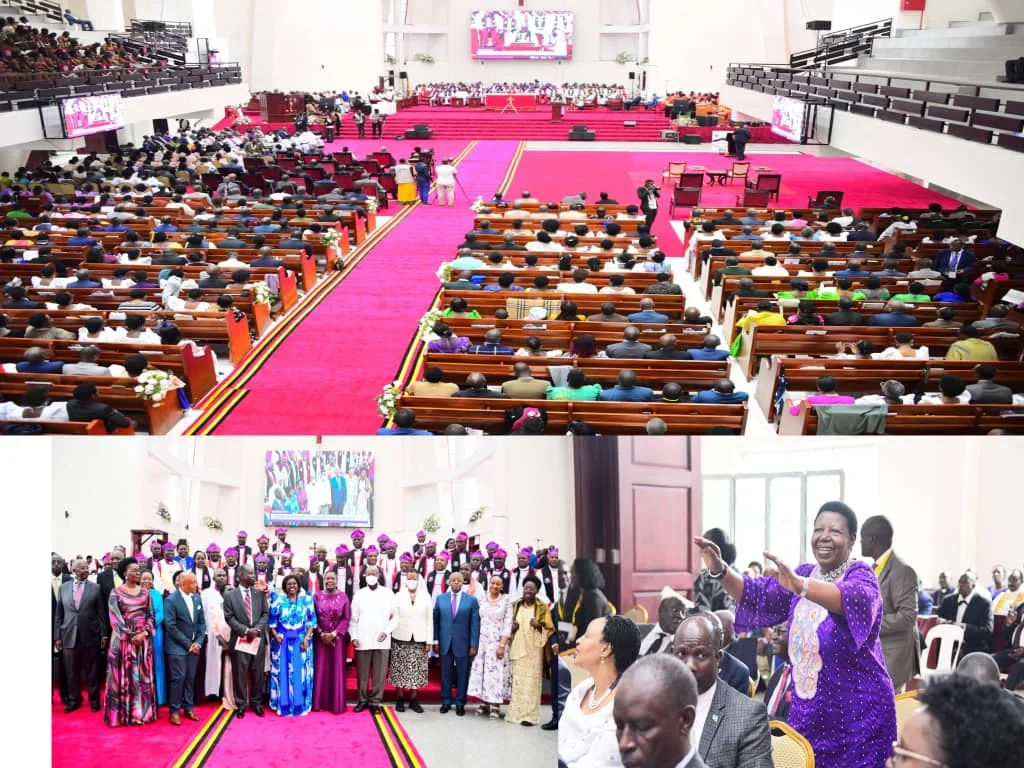
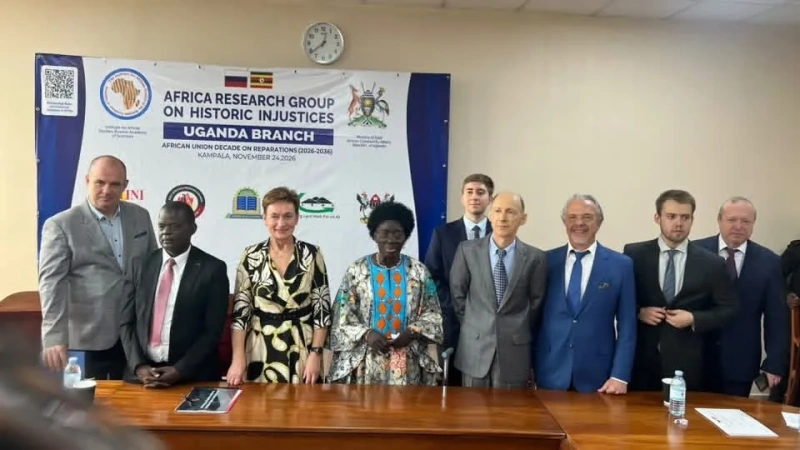
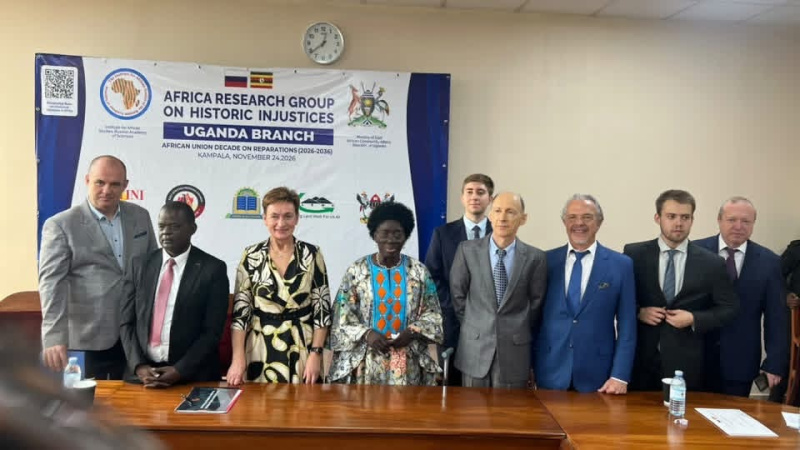
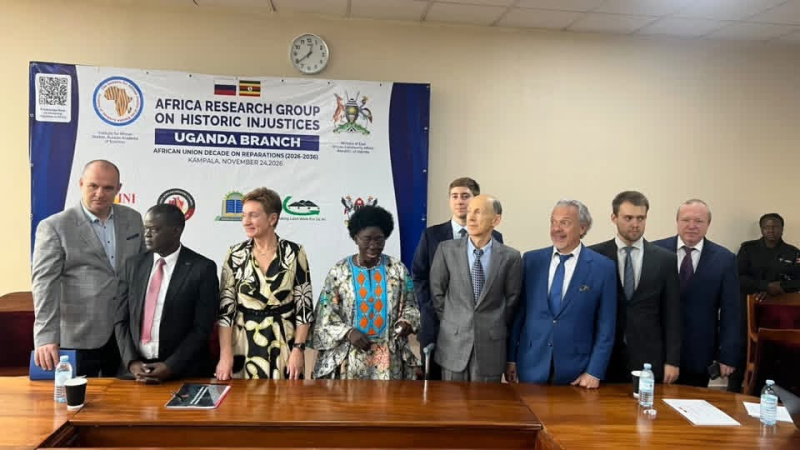
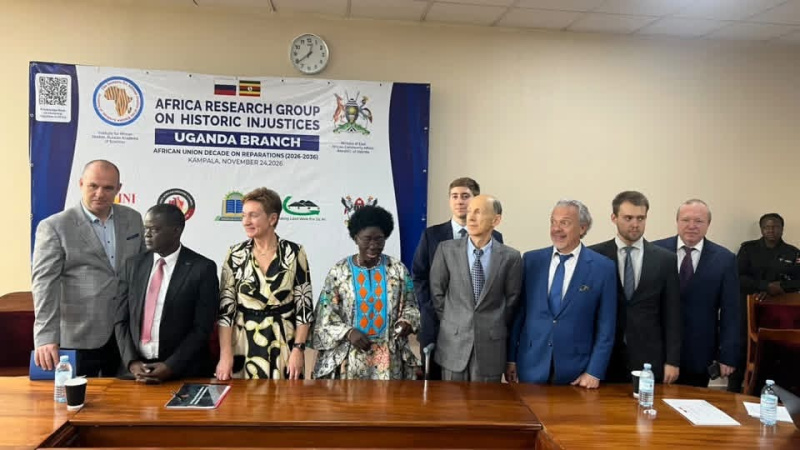
KAMPALA, Uganda – The First Deputy Prime Minister and Minister for East African Community Affairs, Rt. Hon. Rebecca Alitwala Kadaga, has officiated at a ceremony marking the establishment of a joint Uganda-Russia research initiative aimed at strengthening Africa’s pursuit of historical justice and reparations for injustices committed during slavery, colonialism and imperialism.
The initiative brings together Ugandan researchers and their Russian counterparts from the Institute for African Studies of the Russian Academy of Sciences to undertake joint scientific research, develop new methodologies and generate evidence on the historical, economic, social and cultural consequences of colonial exploitation in Africa.
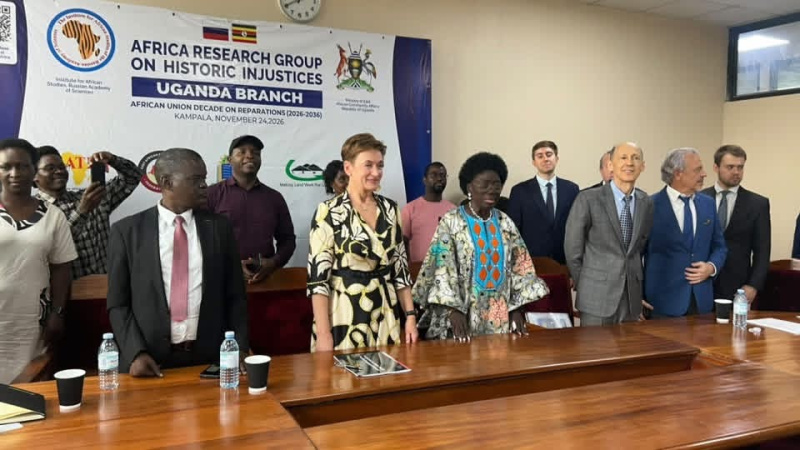
The initiative is expected to strengthen Uganda’s contribution to the African Union’s reparations agenda while promoting academic cooperation between African and Russian research institutions.
In her address at the ceremony, Kadaga emphasised that Africa’s genuine renaissance must be founded on strengthening both economic and intellectual sovereignty, arguing that Africans must take greater responsibility for producing knowledge and developing solutions to challenges affecting their societies.
She underscored the importance of developing independent African approaches to humanities and social sciences, saying research must respond to the realities and challenges facing Africans rather than relying entirely on external interpretations of the continent’s history and development.
Kadaga particularly highlighted reparative justice as one of the important agendas of the African Union, noting that it seeks to restore the dignity of Africa and Africans within the international community.
She explained that the African Union had established specialised expert mechanisms to advance the reparations agenda, including the African Union Committee of Experts on Reparations (AUCER), tasked with developing a common Pan-African position on reparations, and the African Union Reference Group of Legal Experts on Reparations (AULER), which provides legal expertise and explores possible avenues for pursuing reparative justice.
Uganda is represented in AUCER by Catherine Namakula, a Ugandan human rights lawyer and academic whose work contributes to the continental reparations process.
Kadaga also recognised Uganda’s existing research capacity, pointing to established academic institutions and research organisations that have contributed to the country’s social sciences, historical studies and policy development.
She cited Makerere University’s social sciences research institutions and Kyambogo University’s Department of History as important contributors to Uganda’s academic development.
She further acknowledged the contribution of research and advocacy organisations such as the Southern and Eastern Africa Trade Information and Negotiations Institute (SEATINI) and the Land and Equity Movement in Uganda (LEMU), which have accumulated experience in research, policy engagement and international collaboration.
She also welcomed the emergence of nationally focused research institutions, including the East African Freedom Council, headed by Sserubiri Uhuru.
The First Deputy Prime Minister called on Ugandan researchers not to isolate themselves but instead establish meaningful scientific partnerships with scholars from other countries, including those in Eastern and Western Europe.
She argued that the changing international order, characterised by growing multipolarity, should also be reflected in academic research through the inclusion of diverse perspectives and methodologies.
According to Kadaga, academic multipolarity would allow researchers to challenge established interpretations, exchange knowledge and produce more comprehensive and scientifically grounded findings.
She welcomed Russia’s growing cooperation with African countries, noting that the partnership should not only focus on economic and technological development but also extend to strengthening Africa’s research capacity and supporting critical studies on colonialism and historical injustices.
Kadaga observed that Russian researchers had already been engaging Ugandan and other African experts on reparations, including through an international conference held in Moscow, where participants examined new research methodologies and approaches to assessing the damage caused by slavery and colonialism.
She expressed confidence that the joint research group would contribute to strengthening Uganda’s academic expertise and advance Africa’s broader efforts to pursue historical justice.
The establishment of the research initiative follows a working visit to Uganda by a delegation from the Institute for African Studies of the Russian Academy of Sciences between October 5 and 10, 2026.
During the visit, the Russian delegation held more than 20 engagements with Ugandan government institutions, universities, research organisations and civil society think tanks to explore areas of academic and institutional cooperation.
The delegation, which included senior researchers from the Russian institute, engaged representatives of the Ministry of Foreign Affairs, the National Resistance Movement, Makerere University, Kyambogo University, Cavendish University, the Uganda National Records Centre and Archives, SEATINI, LEMU and other organisations.
The discussions focused on laying the groundwork for establishing a research laboratory in Uganda dedicated to examining the damage caused by colonialism and the transatlantic slave trade.
The proposed laboratory is expected to provide a platform for researchers to examine historical records, assess the economic consequences of colonial exploitation and develop scientific evidence that could inform Africa’s demands for reparations.
Areas of interest include forced labour, land dispossession, exploitation of natural resources, destruction of cultural heritage, unequal economic relations and the long-term social consequences of colonial rule.
The collaboration is also linked to broader discussions about possible legal avenues through which African countries and institutions could pursue accountability and reparative justice at the international level.