Ssemaganda Moses Hope

Ssemaganda Moses Hope

Journalist at Kampala Media TV

784 published articles


Articles by Ssemaganda Moses Hope

Showing 1-11 of 784 articles
UNEB Begins UCE Exams for 503,055 Candidates, Warns Against Examination Malpractice Featured

UNEB Begins UCE Exams for 503,055 Candidates, Warns Against Examination Malpractice

 By Mutuunzi SaulThe Uganda National Examinations Board (UNEB) has commenced the 2026 Uganda Certificate of Education (UCE) examinations with a total of 503,055 candidates registered across 4,514 examination centres nationwide, as the Board warns against examination malpractice.UNEB spokesperson Jennifer Kalule Musamba briefed the media at Uganda Police headquarters in Naguru, Kampala, on the start of the examinations for the fourth cohort of learners under the competency-based curriculum.  The examinations are being conducted under the theme, “Advancing Excellence in Assessment and Certification through Secure, Credible, Inclusive and Innovative Processes.”Kalule said candidates began their examinations with Mathematics Paper One in the morning, followed by Chemistry Papers One and Two in the afternoon.She noted that heavy rains had caused flooding on some roads in different parts of the country but said preliminary reports indicated that the examinations had started smoothly nationwide.  Kalule encouraged candidates to remain confident, noting that their preparations and hard work had equipped them with the knowledge and skills needed to perform well.She reaffirmed UNEB’s commitment to conducting valid, reliable, equitable and quality assessments through professional and innovative processes that lead to the award of internationally recognised certificates.  According to UNEB, the number of registered candidates has increased from 432,165 last year to 503,055 this year, reflecting a rise of 70,890 candidates.Of the registered candidates, 264,722 are female, while 238,333 are male. The Board also reported that 187,918 candidates are government-sponsored, compared to 315,132 privately sponsored candidates.To ensure the examinations are conducted securely, UNEB is working with security agencies and contracted professionals. More than 2,000 scouts have been deployed across the country, alongside nearly 600 security personnel.  Kalule warned individuals planning to disrupt the examinations or engage in examination malpractice that they would face the full force of the law.She also cautioned members of the public against joining social media platforms that trade in fake examination papers falsely presented as genuine UNEB materials.Kalule explained that Section 26 of the law provides for penalties against teachers, invigilators, scouts and other individuals who assist candidates to cheat or fail to prevent unauthorised assistance during examinations.Upon conviction, offenders face a fine of up to Shs20 million, imprisonment for up to five years, or both.  She further urged schools to cooperate with the relevant authorities to ensure that all eligible candidates are allowed to sit their examinations, warning that learners prevented from taking the examinations would be required to resit them.UNEB has reiterated the importance of maintaining examination integrity and ensuring that all candidates are assessed fairly as the 2026 UCE examination period gets underway.

Three Mitooma District Officials Charged Over Alleged Mismanagement of UGX45m Exposed

Three Mitooma District Officials Charged Over Alleged Mismanagement of UGX45m

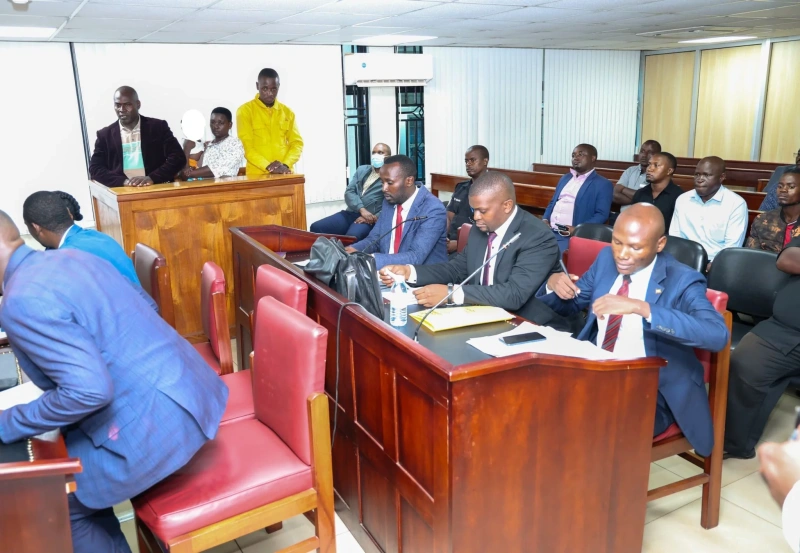
 Three officials from Mitooma District Local Government have been charged before the Anti-Corruption Court over the alleged diversion and misuse of public funds amounting to UGX45.06 million intended for road works.The officials, Acting District Engineer Tumwebaze John Baptist, District Road Inspector Mandela Franklin and Sector Accountant Aheereza Lydia, were arraigned on various charges, including abuse of office, conspiracy to commit an offence, diversion of public resources, causing financial loss, embezzlement and making false claims.The three accused have been remanded until October 16, 2026, as investigations and court proceedings continue.  According to the State House Anti-Corruption Unit (SH-ACU), which worked jointly with the Criminal Investigations Directorate (CID) and the Office of the Director of Public Prosecutions (ODPP), the charges stem from funds released to Mitooma District Local Government for the mechanised removal of bottlenecks along four roads.  The roads include Katwe–Karangara–Karimbiro, Kirambi–Kirera–Ruziizi, Omuribiri–Nyakizinga–Mutaka and Kyanzaire–Bukuba.Prosecution alleges that between June 17 and June 30, 2026, at the Mitooma District Local Government offices, the accused diverted part of the funds to pay UGX31,162,400 for fuel that was allegedly never supplied.They are also accused of processing allowances for road works that were allegedly never undertaken, resulting in an estimated UGX45,066,400 loss to the Government.  The case follows complaints and investigations arising from the national “Expose the Corrupt” campaign, spearheaded by the Minister of Local Government, Hon. Balaam Barugahara Ateenyi, aimed at strengthening accountability, promoting transparency and tackling corruption in local governments.  The campaign forms part of ongoing efforts to investigate alleged misuse of public resources and hold public officials accountable for the management of government funds.The accused remain subject to the court process, and the allegations against them are yet to be proved.

Assistant Commissioner Charged Over Alleged Abuse of Office in UGX614 Million Road Works Exposed

Assistant Commissioner Charged Over Alleged Abuse of Office in UGX614 Million Road Works

 An Assistant Commissioner in the Ministry of Education and Sports, Eng. Asaph T. Abenaitwe, has been arraigned before the Anti-Corruption Court over allegations of abuse of office relating to the certification of more than UGX614 million in payments for road construction works in Isingiro District.Abenaitwe, who previously served as the District Engineer and Project Manager for Isingiro District Local Government, was charged following investigations conducted by the State House Anti-Corruption Unit (SH-ACU) in collaboration with the Criminal Investigations Directorate (CID) and the Office of the Director of Public Prosecutions (ODPP). The court remanded him until October 15, 2026, as proceedings continue.According to the prosecution, the alleged offence was committed on various dates between 2022 and 2024, when Abenaitwe was serving as District Engineer and Project Manager of Isingiro District Local Government.  It is alleged that, while performing his official duties, Abenaitwe carried out an arbitrary act prejudicial to the interests of his employer by certifying payments exceeding UGX614 million to M/S Prime Contractors Limited for the construction of eight sealed roads measuring a total of 7.09 kilometres in Isingiro Town Council.The works were undertaken under Contract No. ISIN560/USMID WRKS/21-22/00001/Lot 1.The prosecution alleges that Abenaitwe certified the payments despite knowing that the road works had not been completed and that the required Taking-Over Certificate, Defects Liability Certificate and Final Completion Certificate had not been issued.He is accused of abusing the authority of his office in the execution of the contract, with the alleged actions resulting in prejudice to Isingiro District Local Government.  Other individuals suspected of involvement in the alleged offence are still at large, according to the authorities.The arrest and arraignment form part of the ongoing Expose the Corrupt National Campaign, which is being spearheaded by the Minister of Local Government, Hon. Balaam Barugahara, in collaboration with relevant investigative and prosecutorial agencies.  The campaign seeks to strengthen accountability and address corruption in local governments by pursuing allegations of abuse of public office and misuse of public resources.  The case underscores the role of accountability mechanisms in monitoring public infrastructure projects and ensuring that payments made by local governments correspond with work completed and the required contractual procedures.

Tayebwa Presents Uganda’s Progress in Advancing Women’s Representation Global

Tayebwa Presents Uganda’s Progress in Advancing Women’s Representation

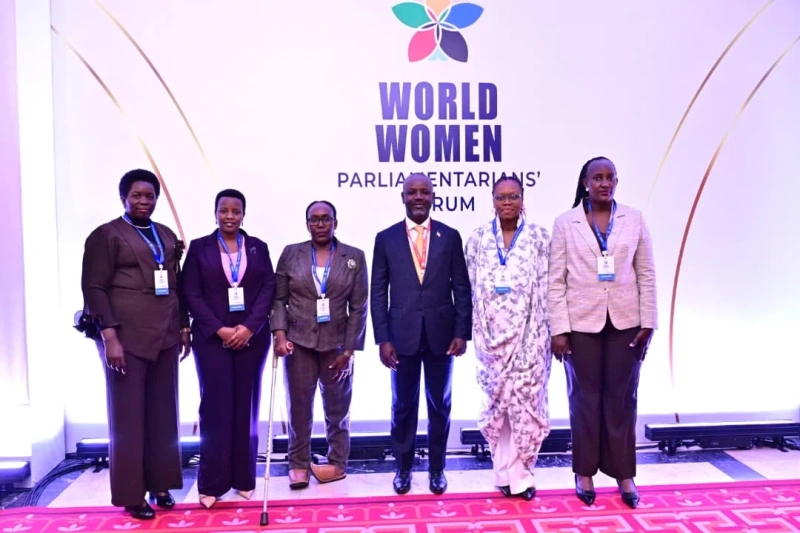
 Deputy Speaker of Parliament Thomas Tayebwa on Monday presented Uganda’s progress in advancing women’s representation in leadership, citing their growing presence in Parliament and Cabinet.Speaking at the World Women Parliamentarians Forum in Ulaanbaatar, Mongolia, Tayebwa, who led Uganda’s delegation, said the country had taken deliberate steps to increase women’s participation in governance since 1986, when the National Resistance Movement (NRM) government came to power. These measures include affirmative action, which is enshrined in the Constitution. According to figures he cited, women account for 35 per cent of Uganda’s Parliament, with 187 women among 529 members, while they make up 49 per cent of Cabinet.Tayebwa also highlighted the positions held by women, including the Vice President, Prime Minister and two Deputy Prime Ministers, as examples of their participation in senior government leadership.He pointed to gender and equality assessments in the budgeting process, supported by the Equal Opportunities Commission, as measures intended to ensure that women and other disadvantaged groups are considered in government programmes.However, Tayebwa called for further measures to give women greater influence in decision-making.  “Representation is only the beginning. Having women in Parliament is important, but the most important measure of progress is whether women are able to influence the laws, the policies, the budgets and decisions that shape the lives of our people,” Tayebwa said.The two-day forum, held on October 12–13 under the theme “From Representation to Influence in the Decision-Making Process,” brings together women parliamentarians to share experiences and discuss ways to strengthen women’s role in governance.Tayebwa described the forum as an important platform for countries to learn from one another’s experiences, saying parliamentary cooperation can help identify practical ways to strengthen women’s influence at national, regional and international levels. “As parliamentarians, we have a responsibility to ensure that women's voices are reflected not only in our chambers, but also in the decisions that determine the future of our societies,” he said.Uganda’s delegation included Lira District Woman MP Auma Linda Agnes, National Female MP for Persons with Disabilities Laura Kanushu, Wakiso District Woman MP Betty Ethel Naluyima, Soroti District Woman MP Anna Ebaju Adeke and National Female Youth MP Mercy Kanyesigye.Voices from Across the WorldLeah Sopiato Sankaire, the Kajiado County Woman Representative who led Kenya’s delegation, said that despite the progress Kenya had made, the country had yet to implement the constitutional requirement that no more than two-thirds of the members of any elective or appointive public body should be of the same gender. Sankaire said women were 31 representatives short of meeting the required threshold in Kenya’s Parliament. She added that efforts were underway to address the shortfall, including through a constitutional amendment bill.For the world to move beyond representation, Sankaire said women needed to lead parliamentary committees responsible for budget allocation.“When these committees are chaired by women, a gender-sensitive budget becomes a reality,” she said. Parvana Valiyeva, who led Azerbaijan’s delegation, noted that her country was the first in the Muslim East to grant women the right to vote and stand for election in 1918. She added that the first secular school for women in the Muslim East was established in Azerbaijan in 1901.She said these achievements demonstrated Azerbaijan’s longstanding commitment to advancing women’s rights and representation.Valiyeva urged women parliamentarians attending the forum to ensure that women’s voices were heard and protected in sectors shaping the world today, including climate change, technology, economic development, peace and security.  Mongolia’s Minister of Foreign Affairs, Battsetseg Batmunkh, said the achievements celebrated at the forum were the result of women’s efforts to secure the implementation of the declaration adopted at the 1995 World Conference on Women in Beijing.  “Since the conference, the representation of women in parliament has more than doubled,” she said. “Many of these achievements we are celebrating today are because of those women who refused to accept limitations imposed on them.”

Minister Muyingo Hails Nursing and Midwifery Institutions for Strengthening Uganda’s Healthcare Workforce as Hundreds Graduate at Leura’s 4th Graduation Education

Minister Muyingo Hails Nursing and Midwifery Institutions for Strengthening Uganda’s Healthcare Workforce as Hundreds Graduate at Leura’s 4th Graduation

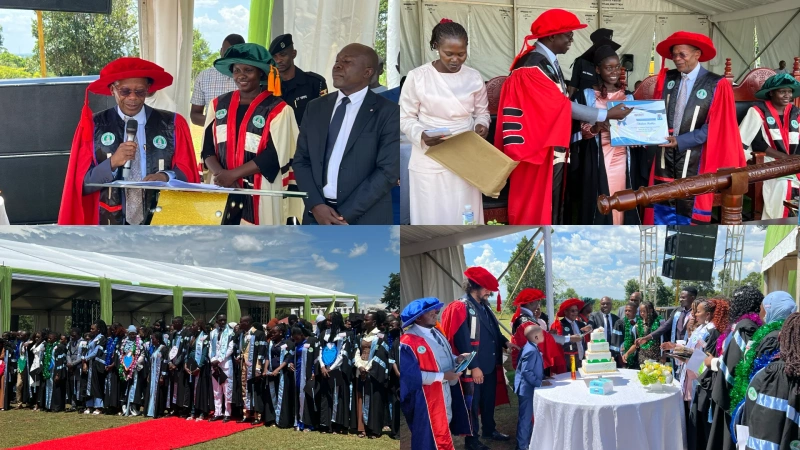
 BUGWERI DISTRICT — The Acting Minister of Education and Sports, Hon. Dr. JC Muyingo, has commended nursing and midwifery training institutions for their contribution to strengthening Uganda’s healthcare workforce, noting that the training of competent health professionals remains essential to improving healthcare delivery and the well-being of communities across the country. Dr. Muyingo made the remarks during the fourth graduation ceremony of Leura School of Nursing and Midwifery in Bugweri District, where hundreds of students received diplomas and certificates in nursing and midwifery-related programmes.The ceremony marked a significant milestone for the graduates, their families and the institution, which continues to contribute to the development of skilled health workers equipped with the knowledge and practical competencies required to serve in Uganda’s healthcare sector. Addressing the graduates, Dr. Muyingo congratulated them on successfully completing their studies and urged them to translate their academic achievements into meaningful service to humanity.He emphasised that graduating from a health training institution comes with a responsibility to protect lives, uphold professional ethics and provide quality care to patients regardless of their backgrounds.The Minister encouraged the graduates to put the knowledge and practical skills acquired during their training into practice, reminding them that nursing and midwifery are essential professions in the healthcare system. He noted that health workers play a critical role in caring for mothers, newborns, children and other patients, both in health facilities and within communities. Their competence, commitment and professionalism are therefore important to improving health outcomes and strengthening public confidence in healthcare services.  Dr. Muyingo further urged the graduates to observe the professional standards governing their respective disciplines, respect patients’ rights, maintain confidentiality and demonstrate compassion in their daily work.He stressed that patients entrust health workers with their lives and personal information, making integrity, discipline and responsible conduct indispensable qualities for everyone entering the profession.The Minister also recognised the sacrifices made by parents and guardians to educate their children, commending them for investing in the future of their families and the country. He observed that educating a health professional benefits not only the individual graduate but also the wider community, which stands to gain from improved access to skilled healthcare services.Dr. Muyingo encouraged parents to continue supporting education and professional development, noting that their contribution complements the Government’s efforts to build a skilled workforce capable of supporting Uganda’s development.  He also appreciated the Government under the leadership of President Yoweri Kaguta Museveni for its continued focus on education and the development of health training institutions.According to the Minister, institutions such as Leura School of Nursing and Midwifery provide opportunities for students to acquire specialised knowledge and practical skills needed to strengthen healthcare delivery. He noted that the continued training of nurses and midwives contributes to building the human resource capacity required to respond to the country’s healthcare needs, particularly through the provision of competent professionals who can serve in different health facilities and communities.The fourth graduation ceremony therefore reflected the importance of continued investment in health education as part of broader efforts to improve the quality of healthcare services in Uganda.  The event was presided over by the Bishop of Central Busoga Diocese, the Rt. Rev. Patrick Wakula, who led the opening prayers and delivered a sermon centred on service, responsibility and the importance of using professional knowledge to help others.In his message, Bishop Wakula commended parents and guardians for the sacrifices they had made to ensure their children received an education.He urged the graduates to use their newly acquired skills to treat patients and care for those in need, reminding them that their professional calling should be guided by compassion, humility and a commitment to saving lives. The Bishop encouraged the graduates to recognise the human responsibility that accompanies their qualifications and to remain dedicated to serving communities with professionalism and care.Following the opening prayers, Dr. Muyingo, who was the chief guest, participated in the planting of a commemorative tree before officially opening a building named the Dr. C.J. Lukabyo Block.The opening of the building marked an important development in the institution’s infrastructure and its efforts to strengthen the environment in which students receive professional training.  The development also formed part of the institution’s broader aspirations to expand its operations and improve its capacity to train health professionals.Speaking during the ceremony, Leura School of Nursing and Midwifery Director Sulaiman Lule revealed that the institution’s long-term ambition is to develop into a university.He, however, highlighted challenges associated with students who combine employment with their studies, explaining that work commitments sometimes interfere with their academic preparation and examination performance. Lule’s remarks highlighted the importance of balancing employment and academic responsibilities to ensure that students have sufficient time to study, develop practical competencies and prepare adequately for examinations.The institution’s ambition to grow into a university also points to its aspirations for further development, although its future growth will depend on meeting the applicable regulatory, academic and institutional requirements.Meanwhile, Commissioner Tina Nakimera, who represented the Commissioner responsible for health training, Hajjat Dr. Safinah Kisu Mussene, urged the graduates to honour their professional oaths and put the ethical principles acquired during training into practice.  Nakimera emphasised the importance of following the laws, regulations and professional standards governing health practice.She reminded the graduates to protect patients’ confidentiality, maintain professional discipline and ensure that the care they provide meets the required standards.She stressed that professional qualifications must be accompanied by responsible conduct, explaining that the trust patients place in health workers depends on their ability to demonstrate competence, discretion and respect.  Her message reinforced the importance of preparing graduates not only to perform their professional duties but also to uphold the ethical obligations that come with working in the healthcare sector.Bugweri District Woman Representative Hajjat Wandera Sadala also commended Parliament for appropriating and approving resources to support the development of education and healthcare services.She highlighted the importance of continued investment in the two sectors, noting their contribution to human development and the country’s social and economic progress.The ceremony attracted parents and guardians, continuing students, institutional administrators, local leaders and other invited guests who joined the graduates in celebrating the achievement.  The event also provided an opportunity to recognise academic excellence, with outstanding students receiving gifts and awards in appreciation of their performance.A major highlight of the ceremony was the graduates’ taking of their professional oaths, marking their transition from students to qualified health professionals expected to apply their training in practical healthcare settings.The oaths served as a reminder of the responsibilities they are assuming as they prepare to enter professional practice, particularly the obligation to respect patients, protect confidential information and adhere to the standards of their respective professions.  For the graduates, the fourth graduation ceremony represented the culmination of years of learning, sacrifice and determination. It also marked the beginning of a new chapter in which they are expected to use their knowledge and skills to contribute to the health and well-being of the communities they serve.  For Leura School of Nursing and Midwifery, the ceremony demonstrated its continuing role in training nurses and midwives while pursuing its ambition to expand its institutional capacity.As Uganda continues to strengthen its healthcare system, the training of competent, ethical and compassionate health professionals remains an important part of improving service delivery.

CMA Marks 30 Years with Push to Expand Uganda’s Capital Markets Beyond Kampala, Embraces Technology to Attract Long-Term Investment National

CMA Marks 30 Years with Push to Expand Uganda’s Capital Markets Beyond Kampala, Embraces Technology to Attract Long-Term Investment

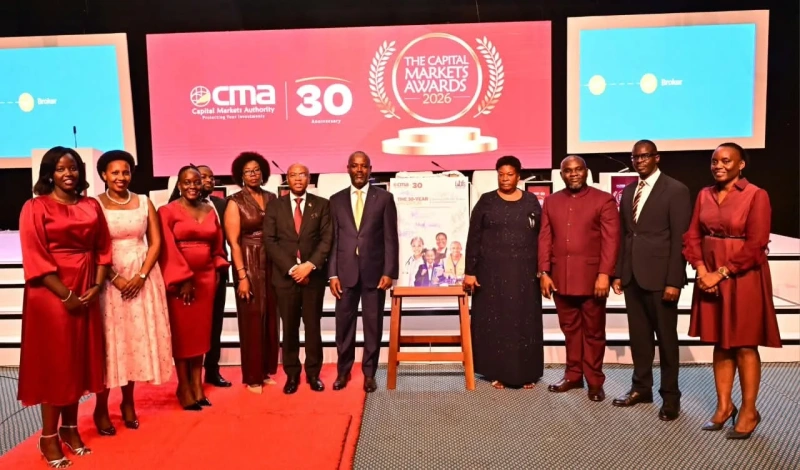
 By Mutuunzi SaulUganda’s capital markets are entering a new phase focused on expanding investment opportunities beyond Kampala, embracing technology, attracting long-term capital and increasing public participation, the Capital Markets Authority (CMA) has said.The authority made the remarks as it celebrated 30 years of regulating and developing Uganda’s capital markets under the theme “Re-imagining Uganda’s Capital Markets for a Sustainable Future.” CMA Chief Executive Officer Josephine Okui Ossiya said the authority’s priority is to maintain investor confidence while building a fair, transparent and orderly market capable of contributing more significantly to Uganda’s economic growth.Ossiya noted that Uganda’s capital markets have made progress over the past three decades, with growth in collective investment schemes, public offers and market capitalisation demonstrating the sector’s expanding role in financing and investment. She said CMA is also embracing financial innovation through a regulatory sandbox that allows market participants to test new financial products, assess potential risks and develop appropriate safeguards before introducing them to the wider market.The initiative is intended to encourage innovation while protecting investors and maintaining confidence in the financial system.  CMA Board Chairperson Saul Sseremba said technology would be central to the next phase of the country’s capital market development, particularly in making investment opportunities more accessible to ordinary Ugandans.He observed that Uganda’s capital markets have evolved considerably since the authority was established in 1996, moving from paper-based share certificates and open-outcry trading to electronic records and automated trading systems. However, Sseremba said the next challenge is to ensure that technological advances translate into broader participation, especially among young people, farmers, entrepreneurs and communities outside Kampala.He envisioned a future in which a farmer or young entrepreneur in a rural community could access investment opportunities almost as easily as using mobile money services.According to Sseremba, although Uganda’s capital markets have registered significant progress, their size remains relatively small compared with the scale of the national economy and the country’s financing needs.He said CMA’s strategic plan for 2025/26–2030 prioritises increasing participation and harnessing capital markets to support Uganda’s broader economic growth ambitions.  The plan is expected to guide efforts to deepen the market, expand the investor base and strengthen the contribution of capital markets to long-term national development.National Social Security Fund (NSSF) Managing Director Patrick Ayota called on CMA and other financial sector players to address structural barriers that prevent private businesses from accessing long-term capital for investment and expansion.Ayota identified high government bond yields as one of the challenges facing private sector financing, explaining that businesses must compete with government securities that offer relatively attractive returns with lower risk.  He argued that the structure of the financial market needs to be examined to establish how more long-term capital can be channelled towards businesses and productive economic activities.Ayota also urged stakeholders to focus on creating more investors and expanding participation in the capital markets rather than relying solely on economic growth to generate new market participants.His remarks highlighted the need for a financial environment in which businesses can access appropriate financing to expand operations, create jobs and contribute to economic transformation.The CMA was established in 1996 through an Act of Parliament to regulate, develop and promote an orderly, fair and efficient capital market in Uganda.  The Uganda Securities Exchange was licensed in 1997, while Uganda Clays became the first company to conduct a public share offer around 2000, marking an important milestone in the development of Uganda’s equity market.Over the years, the sector has expanded to include listed companies, government and corporate bonds, collective investment schemes, fund managers, brokers, dealers and other licensed market participants.These developments have provided individuals and institutions with different avenues to invest their savings while offering businesses and government additional mechanisms for raising capital.The 30th-anniversary celebrations recognised the contribution of individuals and institutions that helped establish and develop Uganda’s capital markets over the past three decades.  As the sector looks towards the future, CMA’s leadership has emphasised the importance of leveraging technology, broadening financial inclusion, strengthening investor confidence and mobilising long-term capital to support Uganda’s economic development.  The authority’s next phase will therefore focus not only on growing the market but also on ensuring that investment opportunities become more accessible to Ugandans across the country and that capital markets play a greater role in financing sustainable economic growth.

Anita Rukundo Tayebwa to Link Uganda, Bahamas Tourism Sectors Global

Anita Rukundo Tayebwa to Link Uganda, Bahamas Tourism Sectors

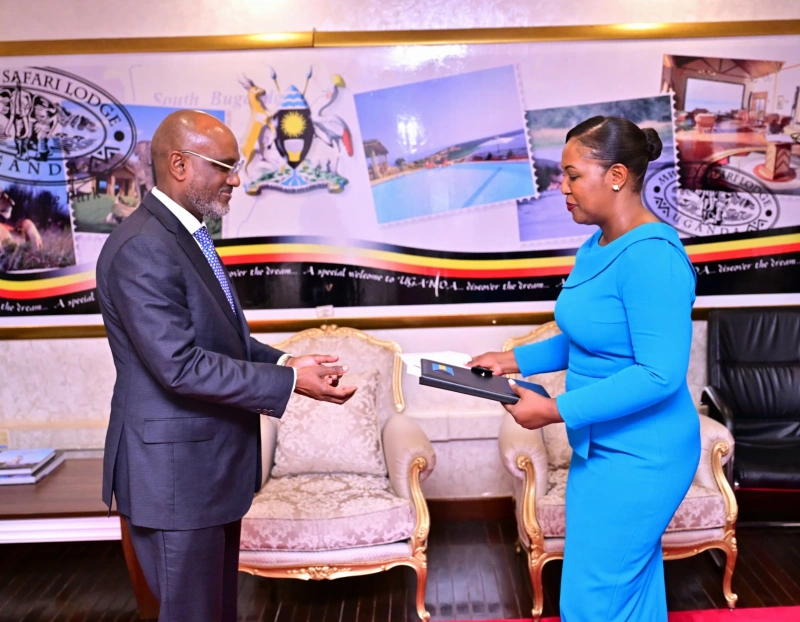
 Anita Rukundo Tayebwa, the newly appointed honorary consul of The Bahamas to Uganda, has pledged to strengthen links between the two countries’ tourism sectors to help Uganda benefit from The Bahamas’ experience.She made the remarks on Thursday evening after presenting her letters of credence to the Minister of Foreign Affairs, Hon. Amb. Adonia Ayebare, in Kampala. Rukundo said Uganda could learn from the Caribbean nation’s success in attracting international visitors and generating tourism revenue. Although The Bahamas is significantly smaller than Uganda in both geographical size and population, she noted that it has developed a much stronger tourism sector.She said The Bahamas attracted more than 12 million international visitors in 2025, compared with approximately 1.6 million visitors to Uganda during the same period.She added that The Bahamas generated about US$5.27 billion in tourism receipts in 2025, compared with Uganda’s estimated US$1.62 billion. She said the figures demonstrate the need for Uganda to strengthen its international tourism marketing and learn from countries that have successfully developed the sector. “We hope to bridge the gap between The Bahamas and Uganda. We hope to promote tourism… With this relationship, we hope to attract more people to come and visit Uganda,” she said.Rukundo identified destination marketing, hospitality and resort development, visitor experience management, international tourism investment, branding and promotion as areas in which Uganda could benefit from The Bahamas’ experience through partnerships and knowledge exchange.She also said her office would focus on helping Ugandan tour operators develop complementary tourism packages showcasing the distinct attractions of both countries. This, she said, would require linking tourism industry players and government agencies in the two countries. “We are looking at how we can have the private sector get into The Bahamas and vice versa. With the ministry’s support, we are assured we will be able to achieve this,” she said.Ayebare said Uganda had high expectations of Rukundo, expressing confidence that her appointment would benefit the country.“The figures speak for themselves; we will count on you to tap the best practices from them. Uganda will benefit immensely from your representation,” Ayebare said.Deputy Speaker of Parliament Thomas Tayebwa said he was excited to see his wife take on the role in her own right, adding that it is important for men to support their spouses. “The public doesn't know that she is the mover behind the scenes, running the businesses. I know her potential when it comes to execution,” he said.Tayebwa said she had told him about her interest in helping Uganda tourism operators to attract high-spending tourists by leveraging the country’s unique attractions, including mountain gorillas and chimpanzees.“The Bahamas is very unique in many ways. On top of having big numbers in terms of tourism, they also attract ultra-wealthy and high-value tourists.Amos Wekesa, a prominent tourism investor, said Rukundo could help Uganda unlock the tourism potential of its water bodies, particularly Lake Victoria. He argued that Uganda could generate significantly more tourism revenue by developing its water-based tourism sector.  King Ceasar Mulenga, the Honorary Consul of Vietnam to Uganda, also described the appointment as significant. “I have no doubt you will strengthen trade and people-to-people bilateral ties between our two Commonwealth nations,” he noted.

Makerere University Nkrumah Day Lecture Calls for African Leadership Rooted in Self-Reliance, Innovation and Transformation Happening Kati

Makerere University Nkrumah Day Lecture Calls for African Leadership Rooted in Self-Reliance, Innovation and Transformation

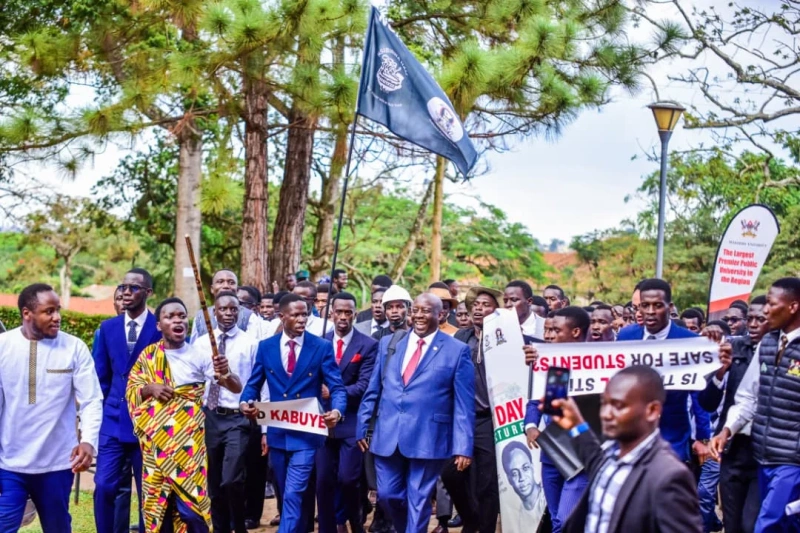
 Makerere University has renewed the call for African leaders and young people to translate Kwame Nkrumah’s Pan-African vision into practical action, with scholars and university leaders emphasising economic independence, technological advancement, ethical leadership and the transformation of African institutions.The call was made during the 2026 Annual Nkrumah Day and Public Lecture held on Thursday, October 8, at the Yusuf Lule Central Teaching Facility at Makerere University under the theme, “Leadership, Self-Reliance & Transformation: Reimagining Nkrumah’s Vision for the 21st Century African Youth.”The event brought together university leaders, academics, students and other stakeholders to reflect on the enduring relevance of Ghana’s founding President Kwame Nkrumah’s ideas and the responsibility of the current generation to advance Africa’s social, economic, intellectual and technological development.  A key message throughout the discussions was that political independence alone cannot deliver the transformation Africa needs unless it is accompanied by economic self-reliance, intellectual freedom, cultural confidence and effective leadership.Representing the Chief Guest, Rt. Hon. Dr. C.W.C.B. Kiyonga, Chancellor of Makerere University, Dr. Charles Kahigiriza read his remarks verbatim, framing the lecture as an opportunity for ideological renewal and a reassessment of Africa’s development priorities. Dr. Kiyonga observed that while the previous generation fought for and achieved political independence, the present generation must build on that achievement by prioritising economic and technological advancement.He emphasised that leadership in the modern era should not be judged solely by political positions, parliamentary representation or titles, but by the courage to think independently, challenge conventional approaches and develop solutions suited to African realities.The remarks challenged African leaders and institutions to reconsider their reliance on imported solutions without adequately adapting them to the continent’s social, economic and cultural circumstances.The discussions also examined the historical structures that continue to influence Africa’s development and the need for leaders to take greater responsibility for addressing the continent’s challenges rather than attributing every failure to the legacy of colonialism.Dr. Zaid Sekitto, a lecturer in Makerere University’s Department of History, Archaeology and Heritage Studies, challenged the tendency among leaders to use historical circumstances as an excuse for failing to fulfil their responsibilities to their generation.Reflecting on the relationship between colonialism and underdevelopment, Dr. Sekitto argued that Africa must critically examine not only its historical experiences but also the decisions and institutional structures that have continued to shape its development after independence.He recalled Nkrumah’s argument that political independence remains incomplete without economic, intellectual and cultural independence. Dr. Sekitto noted that African leaders had not adequately dismantled the structures inherited from colonial rule, but had instead continued to reproduce some of them, limiting the continent’s ability to achieve genuine self-determination.His contribution placed responsibility on contemporary leadership to move beyond historical explanations and confront the institutional, economic and governance challenges that continue to hinder Africa’s progress. On the broader meaning of liberation, panelist Dr. Zahara Nampewo drew on Nkrumah’s 1963 writings to emphasise that the struggle for freedom must extend beyond political independence to encompass the total liberation of the African continent.She explained that liberation also involves individual dignity, economic empowerment and social freedom, arguing that Africa’s transformation must be measured by the extent to which its people gain the capacity to shape their own lives and determine their collective future.Dr. Nampewo also challenged young Africans to reflect on how technology is being used and whether digital platforms are strengthening or weakening African cultural identity and confidence.She questioned whether technology was being harnessed primarily for entertainment or deliberately deployed to support innovation, preserve African heritage and generate knowledge that contributes to development.Her remarks called for greater intentionality in the use of digital platforms, encouraging young people to become producers of knowledge and technology-driven solutions rather than remaining passive consumers of information. The discussion reinforced the lecture’s central message that Africa’s technological future must be accompanied by intellectual independence, cultural awareness and the ability to develop home-grown solutions to contemporary challenges. Delivering the keynote address, Prof. Gerald Karyeija, a political analyst and Head of Quality Assurance at the Uganda Management Institute, emphasised that the true value of education extends beyond academic qualifications to the character, integrity and responsibility developed through learning.He noted that academic achievement without ethical grounding is insufficient to drive the transformation Africa requires, underscoring the importance of producing graduates who combine knowledge and professional competence with integrity and a commitment to serving society. The emphasis on character and responsible leadership resonated with Makerere University’s broader role in preparing graduates who can contribute meaningfully to national development and the continent’s future.Assoc. Prof. Gorettie Nabanoga, Acting Deputy Vice Chancellor for Finance and Administration, who represented the Vice Chancellor, Prof. Barnabas Nawangwe, urged participants to move beyond commemorating Nkrumah as a historical figure and focus instead on implementing the ideals for which he stood. She called for a more practical and results-oriented approach to Pan-Africanism, arguing that the movement must evolve from solidarity to capacity, rhetoric to strong institutions, potential to production, and aspirations to implementation.Her remarks challenged universities and other African institutions to turn the continent’s abundant human and intellectual potential into tangible outcomes through research, innovation, effective systems and productive enterprise.Assoc. Prof. Nabanoga further emphasised Makerere University’s responsibility to go beyond awarding degrees and become a stronger centre for knowledge generation, critical thinking and innovation.She noted that the university fulfils its mission when it develops people capable of questioning established assumptions, generating new knowledge, challenging existing ideas and creating solutions to society’s problems.Addressing students, she reminded them that their opportunity to study at Makerere comes with a responsibility to contribute to Africa’s development. “You are not simply the leaders of tomorrow; you are citizens of Africa today,” she said, urging young people to recognise their present role in shaping the continent’s social, economic and intellectual future.She stressed that building for the future requires an education system that produces independent thinkers, innovators and responsible citizens capable of responding to the needs of their communities and countries. The Dean of Students, Dr. Winnie Kab, also highlighted the significance of Nkrumah Hall as a symbol of Makerere University’s longstanding commitment to Pan-Africanism.She observed that the hall’s name had maintained its historical significance and continued to represent ideals that resonate across the African continent and beyond.Dr. Kab noted that the lecture’s focus on leadership, self-reliance and transformation aligned with the university’s mission of nurturing responsible leaders equipped to contribute to national and continental development.  She emphasised the importance of preserving the historical identity of Nkrumah Hall while ensuring that the principles associated with its namesake remain relevant to the experiences, ambitions and responsibilities of contemporary students.Beyond the intellectual discussions, the event also recognised the contribution of Mr. John Kamya, who served as Warden of Nkrumah Hall for 13 years, from 2007 to 2020.Mr. Kamya received an appreciation award in recognition of his outstanding service to the hall and the university community. The award was presented by the Chief Guest, with the Chairman of the Hall and other dignitaries witnessing the recognition.In his acceptance remarks, Mr. Kamya thanked Makerere University for giving him the opportunity to serve the institution and its stakeholders.  He recalled the 2018 visit to Nkrumah Hall by Ms. Samia Yaba Nkrumah, daughter of Kwame Nkrumah, as one of the most memorable experiences of his tenure.The recognition highlighted the contribution of university staff whose service helps preserve institutional traditions, support students and sustain the values associated with Makerere’s academic and residential communities.  The 2026 Annual Nkrumah Day and Public Lecture was organised by Nkrumah Hall under the leadership of Dr. Rodney Rugyema, in partnership with the Julius Nyerere Leadership Centre, Makerere University Alumni and other partners.The event reaffirmed the importance of universities as spaces where Africa’s historical experiences can inform contemporary debates on leadership, governance, development and the responsibilities of the younger generation.At its core, the lecture called for a shift from celebrating the achievements and ideas of Africa’s founding leaders to applying their lessons in ways that respond to present-day challenges.  It placed particular emphasis on the need for African institutions to nurture independent thinkers, strengthen ethical leadership, invest in technological advancement, build productive economies and cultivate confidence in African knowledge and identity.For Makerere University, the Nkrumah Day commemoration served as a reminder that education must do more than provide qualifications. It must equip people with the knowledge, values and practical abilities to transform their societies.

Thomas Tayebwa Seeks Commonwealth Expertise to Strengthen Parliament National

Thomas Tayebwa Seeks Commonwealth Expertise to Strengthen Parliament

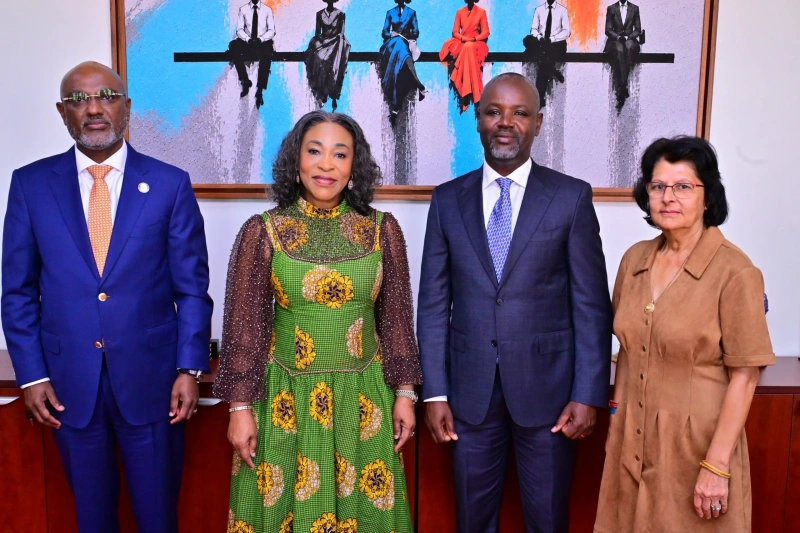
 Deputy Speaker of Parliament Thomas Tayebwa has said Parliament will tap into the capacity and experience of Commonwealth member states through the Commonwealth Secretariat to strengthen its effectiveness.He made the remarks on Wednesday during a meeting with Commonwealth Secretary-General Shirley Ayorkor Botchwey, who was making her first visit to Uganda as Secretary-General. Botchwey was accompanied by Minister of Foreign Affairs Adonia Ayebare. Botchwey said she had come to learn how Parliament is fulfilling its accountability mandate and explore ways in which the Commonwealth can support Uganda.Tayebwa said Parliament needs support in building the capacity of Members of Parliament and staff, as well as in digitising parliamentary processes.“We need capacity building of our Members of Parliament so that we can effectively debate critical issues. Also, digitisation is very important for an effective Parliament, and we would like to get support,” Tayebwa said. He said it would be useful for the Commonwealth Secretariat to organise visits and exchanges for Uganda’s Members of Parliament and staff to visit other parliaments and learn from their experiences.Botchwey promised to work with Parliament on issues that the deputy speaker raised. She said  Parliament can be a stronger pillar of Uganda’s democratisation, accountability and promotion of liberties, which are cornerstones of the Commonwealth’s mission.  She also said one of her priorities is to make the Commonwealth more relevant to young people, who make up a large proportion of citizens in Commonwealth member states.Some of the ideas discussed on making the Commonwealth more relevant to ordinary citizens included promoting free education, entrepreneurship, skilling young people, promoting dialogue among young people and supporting climate adaptation, among others.A better ParliamentOn the performance of Parliament, Tayebwa said the House is effectively carrying out its oversight role by holding the executive accountable. He explained that this is being done by both ruling-party and opposition legislators. He cited opposition legislators chairing accountability committees and being given space on the floor of Parliament to raise issues they want addressed.Opposition Chief Whip Paul Mwiru, who was also part of the meeting, said the 12th Parliament, under the leadership of Speaker Anita Among and Tayebwa, is cultivating a culture of mutual respect that did not exist before and giving opposition legislators the space and resources they need to perform their duties.“The atmosphere is that we can raise anything. We are on the right trajectory...the room exists for us to raise the issues,” he said.“I want to thank the office of the Speaker because the oversight committees are now working very well; they are being facilitated,” he added.

Let’s Build Stronger Families for Uganda’s Future, Says Deputy Speaker Tayebwa Featured

Let’s Build Stronger Families for Uganda’s Future, Says Deputy Speaker Tayebwa

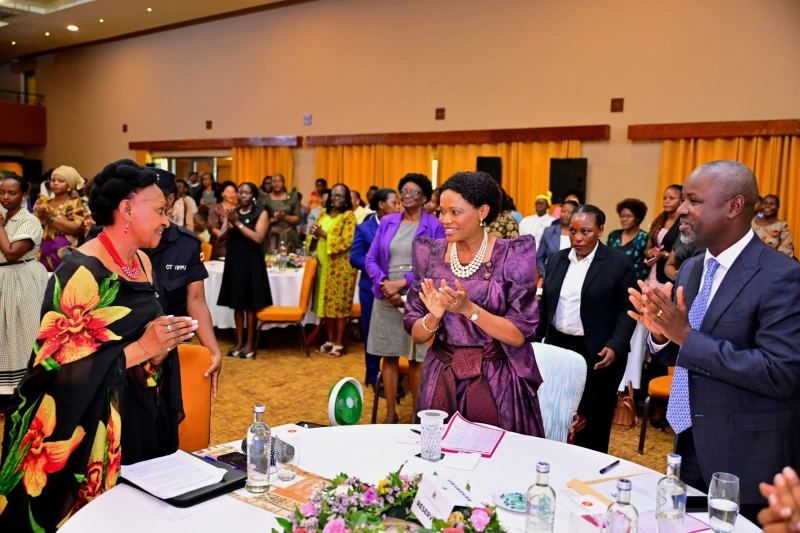
 Deputy Speaker of Parliament Thomas Tayebwa has described stable and supportive homes anchored in prayer as essential to raising responsible children and building a stronger country.Tayebwa made the remarks on Tuesday while speaking at the 13th Women Forum of the National Prayer Breakfast at Speke Resort Munyonyo in Kampala.The forum brought together Women Members of Parliament, women from the private sector, including Nnaabagereka Sylvia Nagginda, and visiting dignitaries from other countries.Tayebwa said the family remains one of the most important institutions in society and warned that the breakdown of families can have consequences for children, communities and the country.“I do believe that in whatever we are doing, the institution of the family is the important institution that will shine,” Tayebwa said.He said children are likely to be affected by the environment in which they grow up, stressing the importance of families working together and creating homes where both parents and children can thrive.“If you have a broken family full of drunkards, then the children are not going to grow in the right way,” he said.Tayebwa urged men and women to take responsibility for creating peaceful homes, explaining that the same standards of conduct should apply to both sexes.He condemned domestic violence in all its forms, saying violence should not be excused depending on whether the victim is a man or a woman. “The standard should be the same,” he said.Further, the Deputy Speaker also linked stronger families to personal responsibility and integrity. He urged Ugandans to examine their own conduct before demanding accountability from others.  “Integrity is not for other people. Integrity is for you. You start with yourself,” he said.Tayebwa said prayer should be at the centre of building families and that it should translate into responsible action.  Nation-building, he explained, requires citizens to combine faith with hard work and a commitment to their responsibilities.“A country is built by people who can pray that prayer and then go and work,” he said.He also recognised the contribution women make to families and communities, describing them as important sources of support and prayer for their families and the nation. Tayebwa said women often carry significant responsibilities in raising families and participating in community activities and called for greater appreciation of their contribution.

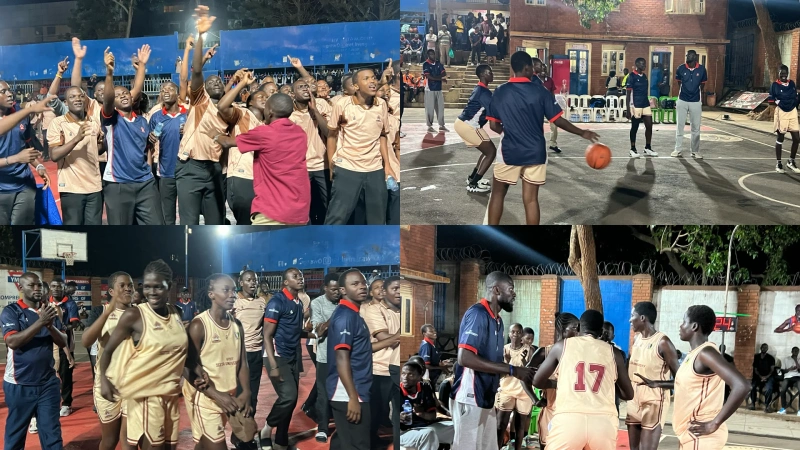
Seeta High School Mukono Mbalala Campus Completes Stunning Playoff Comeback, Earns Promotion to Uganda’s National Basketball League Sports

Seeta High School Mukono Mbalala Campus Completes Stunning Playoff Comeback, Earns Promotion to Uganda’s National Basketball League

 Seeta High School Mbalala Campus has completed a remarkable playoff comeback, defeating Makerere Sparks 47–44 on Wednesday, October 7, 2026, to win the FUBA Division One Women’s semifinal series 3–1 and secure promotion to Uganda’s National Basketball League (NBL).The historic victory at the YMCA Court in Wandegeya capped a spirited campaign in which Seeta High demonstrated resilience, discipline and the competitive character required to progress from Division One to Uganda’s top-flight women’s basketball competition. The decisive Game Four was a true test of Seeta High’s composure.Makerere Sparks started strongly, taking the opening quarter 17–8 and putting Seeta High nine points behind. But instead of allowing the early setback to dictate the game, Seeta settled into its defensive structure, improved its offensive execution and gradually worked its way back into contention.Seeta won the second quarter 11–10, reducing the deficit before producing a crucial third-quarter response. The school side continued to apply pressure and finished the game strongly, taking the fourth quarter 15–10 to complete the 47–44 victory. The official result confirms that Seeta High scored 8, 11, 7 and 15 points across the four quarters, while Makerere Sparks managed 17, 10, 6 and 10 respectively, producing the final 47–44 scoreline. Independent match listings also confirm Seeta’s victory in the Uganda Women’s Division One fixture played on October 7.The victory was particularly significant because Seeta High had entered the semifinal series on the back foot.Makerere Sparks won Game One 54–52, giving the Kampala side a 1–0 advantage. Seeta High responded immediately in Game Two, overcoming a difficult contest to win 50–43 and level the series 1–1. Seeta then carried the momentum into Game Three, defeating Makerere 58–47 to move within one victory of the NBL.  Wednesday’s fourth game therefore represented the biggest test of the series—and Seeta High delivered when it mattered most.The journey had started even earlier in the quarterfinals, where Seeta High swept Nkumba Lady Marines 2–0 to book its place in the semifinals. That progression established the school side as one of the serious contenders in this year’s Division One playoff race.For Seeta High School Head Teacher, Mr Boniface Ssebukalu, the promotion is the product of deliberate institutional support and the administration’s determination to give students an opportunity to excel both academically and through talent development.  Ssebukalu said the school administration had put in extra effort and invested in the basketball programme to ensure that the dream of competing at the highest level could become a reality. He commended the players, coaches, teachers and school administration for working together to build a competitive team capable of producing results on the national stage.The Head Teacher also emphasized that Seeta High considers participation in competitive sport an important component of a student’s education.He noted that while academic excellence remains central to the school’s mission, sports give learners another important platform through which they can develop discipline, teamwork, leadership, confidence, resilience, time management and the ability to perform under pressure. For Ssebukalu, the basketball court is therefore more than a place where students compete for trophies. It is also an environment where young people learn how to work with others, respond to setbacks and remain focused on a common objective—lessons that can significantly shape their lives beyond school.The Seeta High administration’s support has consequently provided the players with an opportunity to transform their sporting talent into meaningful competitive achievement.And the players have responded on the court.  Their semifinal campaign is a particularly strong illustration of resilience. After losing the opening game by just two points, Seeta High refused to surrender the series. The team levelled the contest, took a 2–1 lead and then survived a difficult opening quarter in the decisive Game Four to finish the job.That ability to respond to adversity has become one of the defining characteristics of Seeta High’s playoff run.In Game Two, for example, Seeta recovered from a 27–19 halftime deficit to produce a powerful second-half performance and win 50–43. Kristine Stephanie led the way with 19 points, nine rebounds and four steals, while Bilha Akinyi added 13 points.Game Three produced another important performance, with Christine Namyaalo scoring 23 points as Seeta High defeated Makerere 58–47. Bilha Akinyi contributed 13 points, eight rebounds and six assists, while Achomo Lucky added 13 points from the bench.  By the time the teams returned to the court for Game Four, Seeta High had already demonstrated that it possessed both the talent and mentality to compete with one of the established teams in Ugandan women’s basketball.The final 47–44 victory was consequently more than another win. It was the moment the school’s sustained investment in basketball translated into one of its biggest sporting achievements.Seeta High is now set to join the Uganda National Basketball League, giving its players an opportunity to test themselves against the country’s leading women’s basketball teams.The promotion also represents an important milestone for school sports in Uganda, demonstrating how structured investment in co-curricular programmes can create pathways for young athletes to progress into elite competition.  For Seeta High, the message from the 2026 campaign is clear: academic development and sporting excellence can advance together.The school administration’s support, the coaches’ technical preparation and the players’ determination have combined to turn an ambitious basketball project into a national-level achievement.  After trailing 1–0 in the semifinal series, Seeta High came back to win three consecutive games, including Wednesday’s decisive 47–44 victory, and book its place in the NBL.Seeta High High 47–44 Makerere Sparks. Series: Seeta High 3–1. Achievement: Promotion to Uganda’s National Basketball League.

© Copyright 2026, All Rights Reserved