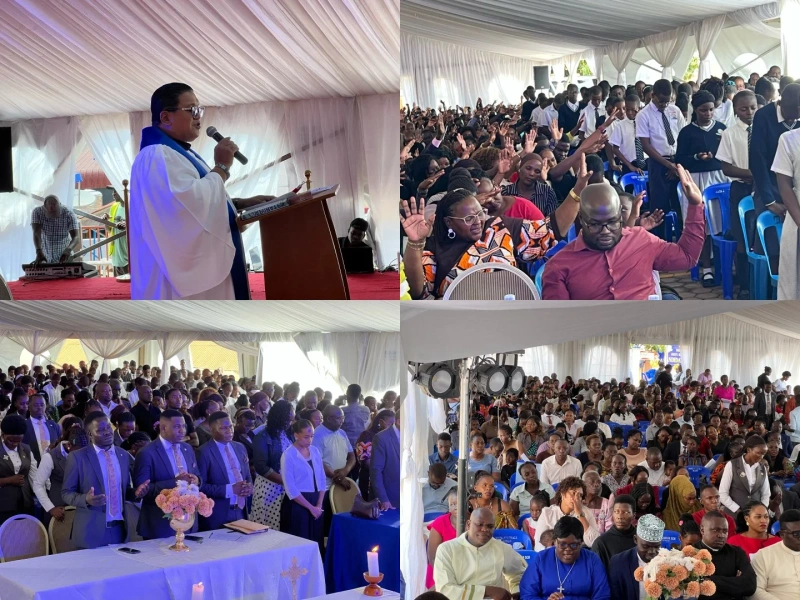
PRESIDENT MUSEVENI TASKS CULTURAL LEADERS ON AFRICAN HERITAGE, WEALTH CREATION AND NATIONAL DEVELOPMENT
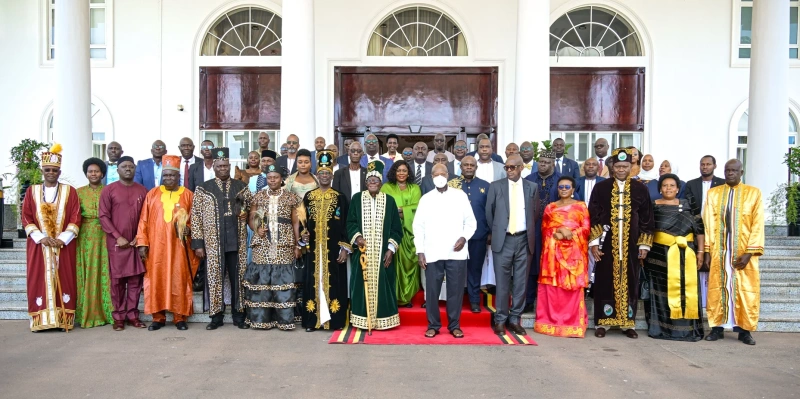
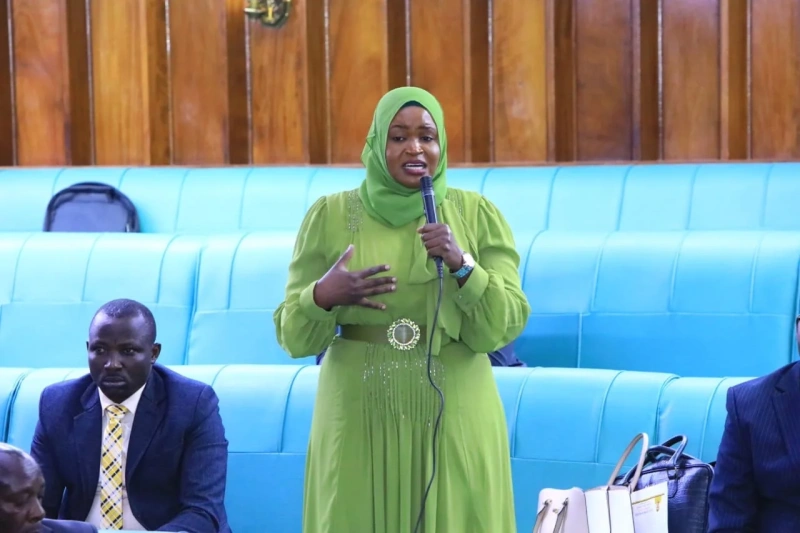
President Yoweri Kaguta Museveni has challenged traditional andcultural leaders to take a more active role in preserving Africa’sheritage, promoting continental unity and supporting governmentefforts to transform communities through wealth creation.The President said cultural institutions have a critical responsibilityto safeguard Africa’s historical identity, indigenous knowledge,languages, traditional skills and cultural practices, many of whichwere undermined by colonialism and its aftermath. He made the remarks today while addressing traditional and culturalleaders on the first day of a two-day conference at State House,Entebbe.President Museveni said Africa’s shared history, cultural heritage andlinguistic connections should be used as a foundation forstrengthening cooperation, economic integration and unity amongAfrican countries.Quoting Matthew 19:6, he said, “Therefore what God has joinedtogether, let no man put asunder,” urging Africans to overcomeartificial divisions and recognise their common heritage and sharedinterests.He emphasised that cultural institutions should complement, ratherthan compete with, elected government structures, noting that eachinstitution has its own distinct responsibilities.According to the President, cultural leaders should concentrate onpreserving heritage, promoting indigenous knowledge and advisingtheir communities, while leaving legislation, public administrationand other formal government responsibilities to the respectiveconstitutional institutions. He cautioned against the politicisation of cultural institutions, sayingtheir role should remain rooted in cultural preservation, communityguidance and social cohesion.President Museveni also identified the preservation and promotion ofindigenous knowledge as one of the most important contributionscultural institutions can make to national development. He cited traditional expertise in agriculture, livestock keeping, fishing,blacksmithing, carpentry, leather tanning, pottery and other forms ofcraftsmanship, saying such knowledge should be documented andtransferred to younger generations.He also urged cultural leaders to promote indigenous food systems,traditional crops and livestock breeds as part of efforts to strengthenfood production, household incomes and economic resilience. The President said Africa’s development must be guided by what hedescribed as five historical missions: liberation from colonialism,democracy, economic prosperity, strategic security and African unity.He explained that political independence alone was insufficientwithout economic independence, which requires countries to producegoods and services and access bigger markets. In this regard, he highlighted regional integration through the EastAfrican Community (EAC), the Common Market for Eastern andSouthern Africa (COMESA) and the African Continental Free TradeArea (AfCFTA) as important frameworks for expanding markets,increasing trade and creating opportunities for producers.He further called for stronger strategic security and deeper EastAfrican integration, arguing that the region’s shared history, culturalconnections and economic interests provide a strong basis for closercooperation and eventual political federation.Cultural leaders propose development partnerships:In their presentation, cultural leaders called for stronger collaborationwith the government to harness Uganda’s cultural diversity as aresource for social and economic transformation.Through their representative, they described traditional kingdoms,chiefdoms and community-based cultural institutions as importantstructures for preserving national identity, promoting moral values,strengthening social cohesion and supporting reconciliation andpeace.They proposed joint programmes with the government in wealthcreation, agricultural development, community industrialisation,tourism, cultural preservation, women's economic empowerment andskills development.Under the proposed wealth creation initiative, cultural institutionsoffered to provide land for model agricultural farms that would serveas centres for practical training, agricultural innovation, technologytransfer, food production and agribusiness development. They appealed to the government to support the initiative withimproved seeds, livestock, irrigation facilities, agricultural machinery,extension services and technical expertise.The leaders also proposed establishing small- and medium-scaleproduction facilities within communities to promote agro-processing,food manufacturing, textiles, crafts, leather processing and othervalue-added enterprises.On cultural preservation and tourism, they proposed theestablishment of a Digital Cultural Park to showcase Uganda'skingdoms, traditional leadership systems, historical sites, culturalartefacts, indigenous knowledge, music, dance, food and othercultural practices.They further called for partnerships to develop cultural tourismdestinations around royal and historical sites, palaces and traditionalburial grounds.The cultural institutions also announced plans to organise a UgandaNational Cultural Festival in collaboration with the Ministry ofGender, Labour and Social Development.The proposed festival is expected to bring together culturalinstitutions, artists, communities, tourism stakeholders, youngpeople and the private sector to celebrate Uganda's diversity, promotenational unity and stimulate cultural tourism.Other proposals included strengthening women's economicempowerment through enterprise development, cooperatives,vocational training and access to financial services, as well asexpanding community skills development and employmentopportunities. The leaders called for a clear framework of engagement, regulardialogue and mutual respect between the government and culturalinstitutions to enable them to participate more effectively in nationaldevelopment programmes.They also highlighted challenges affecting cultural institutions,including inadequate staffing, limited infrastructure, and low publicawareness.They appealed for government support to strengthen the Forum ofCultural Institutions, which they lead, and improve coordinationamong cultural institutions across the country.The Minister of Gender, Labour and Social Development, Gen. HenryTumukunde, urged cultural leaders to work closely with thegovernment in addressing social challenges affecting communities. He highlighted gender-based violence, harmful cultural practices,child marriage, teenage pregnancy, poverty, unemployment anddiscrimination against persons with disabilities as issues requiringcollective action.The Minister also drew attention to the economic potential of Uganda'screative and cultural industries, commonly referred to as the OrangeEconomy.The sector encompasses music, film, performing arts, fashion, crafts,cultural tourism, publishing, design and digital creativity, which hesaid offer opportunities for employment, enterprise development andeconomic growth.The two-day conference brought together traditional and culturalleaders representing different communities and institutions acrossUganda to deliberate on cultural preservation, indigenous knowledge,social development and the role of traditional institutions in national development
 Global