Ssemaganda Moses Hope

Ssemaganda Moses Hope

Journalist at Kampala Media TV

849 published articles


Articles by Ssemaganda Moses Hope

Showing 45-55 of 849 articles
Minister Muyingo Challenges Universities to Produce Job Creators as Nkumba University Graduates Class of 2026 National

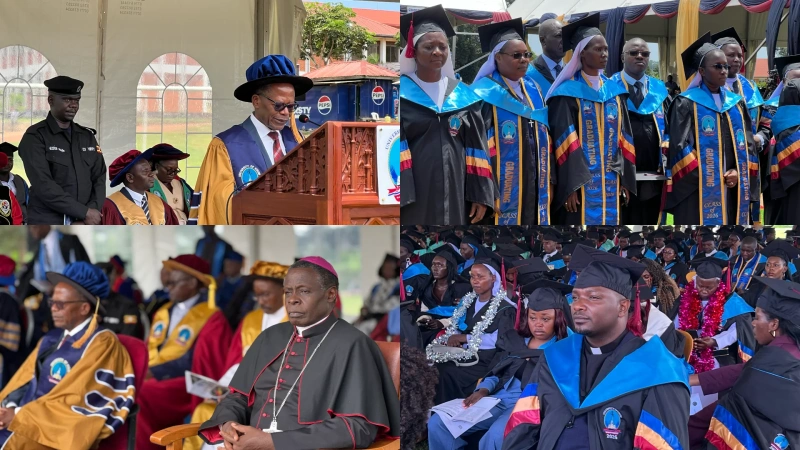
Minister Muyingo Challenges Universities to Produce Job Creators as Nkumba University Graduates Class of 2026

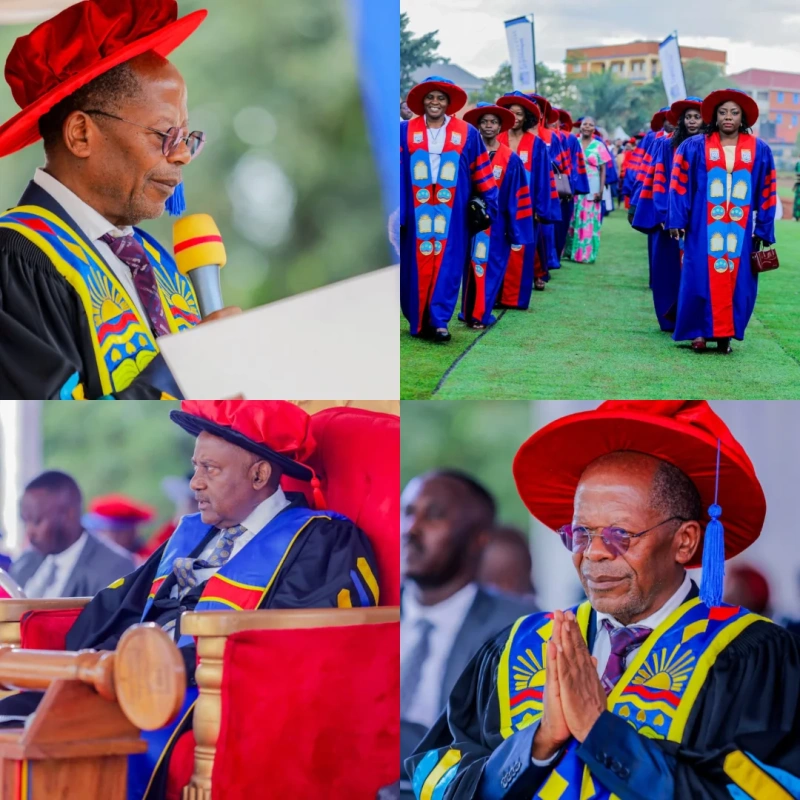
 The Acting Minister of Education and Sports, Hon. Dr. JC Muyingo, has challenged universities across Uganda to prioritise practical skills, innovation and research to produce graduates capable of creating jobs, solving societal challenges and driving the country’s economic transformation.Speaking at Nkumba University’s 28th Graduation Ceremony on Saturday, October 24, 2026, Minister Muyingo called on higher education institutions to accelerate the transition to Competence-Based Education and Training (CBET), which the Government expects to be fully implemented in the 2027/2028 academic year. He emphasised that university education must go beyond awarding academic qualifications to equipping learners with practical competencies, ethical values and the ability to translate knowledge into solutions that respond to the needs of the economy.Minister Muyingo noted that the reforms align with Uganda’s Fourth National Development Plan (NDP IV), covering the 2025/2026–2029/2030 period, which prioritises sustainable industrialisation, inclusive growth, employment and wealth creation. He added that universities have a critical role in supporting the Government’s Ten-Fold Economic Growth Strategy by preparing a skilled workforce capable of driving innovation and enterprise development.  He urged institutions to strengthen practical training, modernise assessment methods and invest in research that addresses challenges in agriculture, healthcare, education, renewable energy, environmental management and digital technology. He also challenged universities to ensure research findings translate into practical innovations that benefit communities and stimulate economic growth.Addressing the graduates under the theme “Beyond Graduation: Thriving in a World of Artificial Intelligence,” Minister Muyingo described the changing technological landscape as both an opportunity and a challenge, calling on graduates to embrace innovation responsibly while protecting human creativity, integrity and sound judgement.  He reminded the Class of 2026 that graduation marks the beginning of a new responsibility rather than the end of learning, urging them to measure success not only by salaries and job titles but also by the problems they solve, lives they improve and opportunities they create for others.“Uganda needs graduates who are not only competent but also compassionate; not only ambitious but also ethical; not only innovative but also responsible,” he said, encouraging them to use their knowledge to advance the common good. Minister Muyingo also paid tribute to Nkumba University’s founders for establishing an institution founded on the belief that education can transform communities and advance national aspirations. He commended the university leadership, parents, guardians, sponsors, lecturers and mentors for their contribution to the graduates’ academic journeys.Nkumba University Chancellor, Emmanuel Katongole, challenged the graduates to become responsible leaders who understand the opportunities and limitations of Artificial Intelligence, translate knowledge into practical solutions and create opportunities for others. Katongole outlined three pillars of an impactful graduate: understanding the global dynamics of Artificial Intelligence, becoming a person of impact and upholding integrity. He cautioned that professional success must be accompanied by honesty, humility and service, urging graduates to protect the reputation of the institution through their conduct.He further encouraged them to become agents of positive change in their workplaces and communities, emphasising that their achievements should contribute to the progress of others. The Vice-Chancellor, Professor Jude T. Lubega, congratulated the graduates for their perseverance and determination, acknowledging the financial difficulties, personal setbacks and other challenges some had overcome to complete their studies.Prof. Lubega urged them not to fear Artificial Intelligence but to learn how to use it responsibly to enhance productivity, creativity and problem-solving. He emphasised the importance of continually updating their knowledge and skills to remain competitive in a rapidly changing world. He also encouraged graduates to cultivate essential human qualities, including integrity, empathy, communication, collaboration, leadership and sound judgement, while remaining open to new opportunities and learning from their mistakes.  The 28th graduation ceremony reaffirmed the shared responsibility of government and higher education institutions to develop a competent, ethical and innovative workforce capable of responding to technological change and supporting Uganda’s national development priorities.
Minister Muyingo Urges Parents to Raise Children Responsibly as He Celebrates Margaret Nanyonga’s Inspiring Journey Featured

Minister Muyingo Urges Parents to Raise Children Responsibly as He Celebrates Margaret Nanyonga’s Inspiring Journey

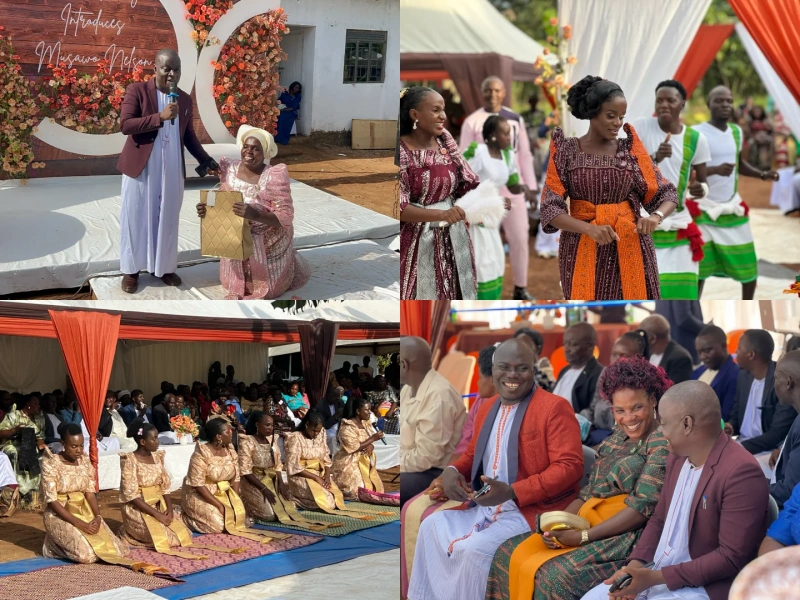
 LUWEERO DISTRICT — The Acting Minister of Education and Sports, Hon. Dr. John Chrysostom Muyingo, has urged parents to raise their children with good values, provide them with proper guidance and encourage them to complete their education before embarking on marriage and other major responsibilities in life.Dr. Muyingo made the call through his Personal Assistant, Wasswa Abdulkarim Tamale, who represented him at the introduction ceremony of Margaret Nanyonga in Nakasetta Village, Zirobwe Town Council, Bamunanika County, Luweero District.In his message, Dr. Muyingo emphasised the importance of responsible parenting, noting that children who grow up without adequate guidance and support are more vulnerable to dropping out of school, entering premature relationships and making life-changing decisions before they are adequately prepared.He encouraged parents to nurture their children’s character, protect their future and provide an environment in which they can pursue their education, acquire skills and become responsible adults capable of contributing meaningfully to their families and society.The Minister also cautioned Ugandans against adults who exploit and prey on young children, calling for greater vigilance and collective responsibility to protect children from abuse and other harmful influences. Dr. Muyingo’s message was particularly significant at Nanyonga’s introduction ceremony, where the young woman celebrated a milestone that once appeared beyond her reach.Through his education support, Nanyonga, who had abandoned school because of financial difficulties, was able to return to class, complete her studies, graduate and secure employment. She has now embarked on another important chapter of her life by formally introducing her partner to her family.According to Tamale, Dr. Muyingo first encountered Nanyonga at a time when she had lost hope of continuing with her education because her family could no longer afford the costs. With no clear path back to school, she was considering how to survive without the education she had hoped would shape her future.Nanyonga recalled that her uncle had given her a sack of charcoal to sell as start-up capital after she could no longer continue with school.“I had lost hope. My uncle had given me a sack of charcoal to sell as capital because I could no longer continue with school,” Nanyonga said.However, the intervention by Dr. Muyingo helped change the course of her life. With education support, she returned to school, completed her studies, graduated and eventually secured a job.Today, Nanyonga says she is grateful that the opportunity she received has enabled her to rebuild her future, become financially productive and bring pride to her family.She described Dr. Muyingo’s support as a turning point that restored her hope at a time when she felt her dreams had been shattered by financial hardship. “Through education support from Hon. Dr. JC Muyingo, I went back to school and graduated. I now have a job, and God has blessed me with the miracle of starting a family. I am so grateful,” she said.Her story illustrates how timely support for a child’s education can create opportunities that extend far beyond the classroom, enabling beneficiaries to build careers, support their families and approach adulthood with greater confidence and independence.For Nanyonga, the introduction ceremony was therefore more than a family celebration. It marked a personal victory over adversity and a reminder of how an opportunity to return to school can transform an individual’s life.Dr. Muyingo’s message also underscored the need for parents, communities and other stakeholders to work together to keep children in school, especially those at risk of dropping out because of financial challenges.Beyond providing children with basic necessities, parents have a responsibility to instil discipline, promote education, offer emotional support and guide them towards making responsible decisions about their relationships and future.  The Minister’s appeal serves as a reminder that investing in children today helps prepare them for the responsibilities of tomorrow.Nanyonga’s journey from a young woman who had lost hope of completing her education to a graduate, employed adult and bride-to-be offers an inspiring example of what can happen when a vulnerable child receives the support needed to pursue her dreams.  Her experience reinforces the importance of giving young people a second chance, protecting them from exploitation and ensuring that financial difficulties do not permanently deny them the opportunity to build a better future.

Minister Muyingo Urges Universities to Embrace Competence-Based Education as University of Kisubi Celebrates 11th Graduation Education

Minister Muyingo Urges Universities to Embrace Competence-Based Education as University of Kisubi Celebrates 11th Graduation

 KISUBI, October 23, 2026 — The Acting Minister of Education and Sports, Hon. Dr. John Chrysostom Muyingo, has urged Ugandan universities to embrace Competence-Based Education and Training (CBET) and equip graduates with practical skills, innovation and professional integrity to meet the changing demands of the job market.Dr. Muyingo made the call on Friday while officiating as Chief Guest at the 11th Graduation Ceremony of the University of Kisubi, held under the theme “Pilgrims of Hope: Sent Forth to Transform the World in Christ.”He said the Government expects institutions of higher learning to prepare for the full implementation of CBET in the 2027/2028 academic year, emphasising that universities must produce graduates capable of creating employment rather than relying solely on seeking jobs.The Minister challenged the graduates to use their knowledge and professional skills to address societal challenges, promote innovation and contribute to Uganda’s development, guided by honesty, ethical leadership and Christ-like compassion.“You leave this campus not merely as degree holders, but as Pilgrims of Hope,” Dr. Muyingo said, urging them to become agents of positive change in their workplaces and communities. He also congratulated the University of Kisubi on appointing its first full professor and associate professors, describing the achievement as a sign of growing academic excellence and research capacity. He encouraged the university to strengthen research partnerships, promote innovation and adopt sustainable approaches to student accommodation.Dr. Muyingo further commended the Brothers of Christian Instruction for celebrating 100 years of service in Uganda, recognising their contribution to education, moral formation and community development. He urged the congregation to sustain its commitment to providing quality and affordable education.The graduation ceremony also reflected on the importance of faith, hope and service in shaping responsible graduates who can make a meaningful difference in society.The Bishop of Kasana-Luweero Catholic Diocese, Rt. Rev. Lawrence Mukasa, served as the Main Celebrant, bringing the spiritual dimension of the occasion into focus as the university celebrated the academic achievements of its graduands.The Chancellor of the University of Kisubi and Provincial Superior of the Brothers of Christian Instruction, Rev. Br. Casio Aizire, encouraged the graduates to embrace their responsibility to transform society through their expertise, integrity and Christian faith.“You do not need to solve every global crisis overnight. But as pilgrims of hope, you are called to light the step in front of you, with your integrity, your expertise and your faith in Christ,” Br. Aizire said. Meanwhile, the Vice-Chancellor, Br. Dr. Deogratias Mugema, described the graduates as “Centenary Graduates” in recognition of the Brothers of Christian Instruction’s 100 years of service in Uganda.The milestone added special significance to the university’s 11th graduation ceremony, celebrating not only academic achievement but also a century of commitment to education and the formation of future leaders. The ceremony brought together university leaders, religious representatives, academic staff, parents, guardians and other distinguished guests to celebrate the graduates and reaffirm the role of higher education in building a skilled, ethical and socially responsible generation.  As the new graduates embark on their professional journeys, the message was clear: education must go beyond qualifications to inspire hope, strengthen character and transform communities.

Take Parliament to the People, Deputy Speaker Tayebwa Advise MPs Events

Take Parliament to the People, Deputy Speaker Tayebwa Advise MPs

 Deputy Speaker of Parliament Thomas Tayebwa has urged parliamentary committee chairpersons to take Parliament closer to the people through regular field visits.This initiative, he said, can improve legislative debates, strengthen oversight, enhance Parliament’s public image and help the institution achieve its vision of becoming a “transformed, independent and people-centred Parliament.”“Can we take Parliament to the people? That will help improve the image of Parliament. The best way to take Parliament to the people is not people coming to Parliament,” he said.Tayebwa made the remarks on Thursday while opening a quarterly meeting of sectoral committee chairpersons, regional and zonal whips at Mestil Hotel in Kampala. The meeting, convened by Chief Whip Jane Ruth Aceng, was intended to assess their performance during the first quarter.He urged committees to visit communities and assess the implementation of government programmes firsthand, saying the information gathered would help MPs make informed decisions when scrutinising ministerial policy statements.“Let the committees go to the field. Go and be felt. Going to the field doesn’t mean that you should bring a report to Parliament. No, you will get information which will enable you to do your work when you’re processing ministerial policy statements,” Tayebwa said.Speaker of Parliament Jacob Oboth-Oboth, upon taking office, committed funds previously held under his office to parliamentary committees to ensure they are adequately funded to carry out oversight activities.*Advancing Musevenomics*Tayebwa also asked MPs to play a critical role in translating Musevenomics, Uganda’s homegrown economic philosophy, into laws, budget priorities and stronger oversight of government programmes to accelerate economic transformation.He said Parliament should ensure the philosophy moves beyond political branding to become a practical framework for increasing production, creating wealth and improving household incomes.“Parliament must anchor Musevenomics in law and in the budget,” Tayebwa said, identifying legislation, funding and oversight as key tools for its implementation.Musevenomics combines market efficiency, strategic government guidance and social inclusion. Its principles include value addition, industrialisation, infrastructure development, regional integration, fighting corruption and human capital development.Tayebwa identified five priorities for Parliament: promoting value addition through legislation, funding infrastructure that supports production, strengthening oversight of the Parish Development Model and Emyooga, legislating for land consolidation and tenure security, and championing regional integration to expand markets.On value addition, he called for Uganda to move away from exporting raw materials towards processing, packaging and branding products locally.“No more export of raw coffee beans, raw dairy, raw minerals. We must roast, grind, process, package and brand from Uganda,” the presentation states.He also emphasised accountability in government programmes, saying Parliament must ensure public funds reach intended beneficiaries and support productive activities.

Hon Tebandeke Raises Concerns Over Staffing Imbalances as Minister Nabakooba Explains Disruptions at Land Zonal Offices Featured

Hon Tebandeke Raises Concerns Over Staffing Imbalances as Minister Nabakooba Explains Disruptions at Land Zonal Offices

 Bbaale County Member of Parliament, Hon. Charles Tebandeke, has raised concerns over staffing imbalances and workload distribution at the Ministry of Lands, Housing and Urban Development’s zonal offices, calling attention to operational challenges that could affect the timely delivery of land-related services to the public.  The concerns were raised during parliamentary proceedings on Thursday, October 22, 2026, as the Minister of Lands, Housing and Urban Development, Hon. Judith Nabakooba, briefed the House on reports of a temporary suspension of services at some of the Ministry’s zonal offices.Hon. Tebandeke observed that some land zonal offices appeared to have more staff than their workload required, leaving some employees underutilised, while other offices faced heavy workloads that placed additional pressure on their personnel.  His observation highlighted the need for an appropriate balance between staffing levels and the volume of work handled by individual zonal offices to ensure that available human resources are deployed effectively and that citizens receive timely services.The concern also brought into focus the importance of reviewing staffing arrangements across the different zones to ensure that offices experiencing high demand have sufficient personnel to manage land transactions, respond to public inquiries and process applications without unnecessary delays. In response, Hon. Nabakooba acknowledged that workload differences across the zones contribute to the operational challenges, explaining that some offices handle substantially more work than others.The Minister told Parliament that there had been a temporary suspension of services at the zonal offices but assured legislators that operations had since resumed smoothly.She reaffirmed the Ministry’s commitment to providing efficient, transparent and accessible land administration services, noting that reports of delays arising from the disruption had drawn attention to the importance of maintaining continuity in service delivery. The Ministry operates 22 land zonal offices established to bring land administration services closer to the public, reduce the distance citizens travel to access services and improve the management of land-related transactions across the country.The decentralised arrangement is intended to make it easier for landowners, prospective buyers and other members of the public to access services without having to travel long distances to the Ministry’s central offices.  However, the concerns raised in Parliament underscore the importance of ensuring that the zonal offices are adequately staffed, efficiently managed and equipped to respond to the varying levels of demand in their respective areas of operation.Differences in workload can affect how quickly offices process applications and respond to clients, making effective staff deployment and coordination essential to the smooth functioning of the system.  Hon. Nabakooba’s explanation that operations have resumed provides reassurance regarding the immediate disruption, while the issues raised by Hon. Tebandeke point to the need for continued attention to staffing distribution and workload management across the network.As the Ministry continues delivering land-related services through its zonal offices, effective coordination of personnel and resources will remain important in ensuring that the decentralised system meets the needs of the public.  The parliamentary discussion reflects the role of legislative oversight in bringing service delivery challenges to the attention of responsible ministries and seeking explanations on measures being taken to address them.  For citizens who depend on land offices to process documents and access other land administration services, the ultimate priority remains reliable service, transparency and timely handling of their applications.

Speaker Oboth Urges Stakeholders to Own Parliament’s LOR Programme, Strengthen Accountability and Deliver Results Under NDP IV Featured

Speaker Oboth Urges Stakeholders to Own Parliament’s LOR Programme, Strengthen Accountability and Deliver Results Under NDP IV

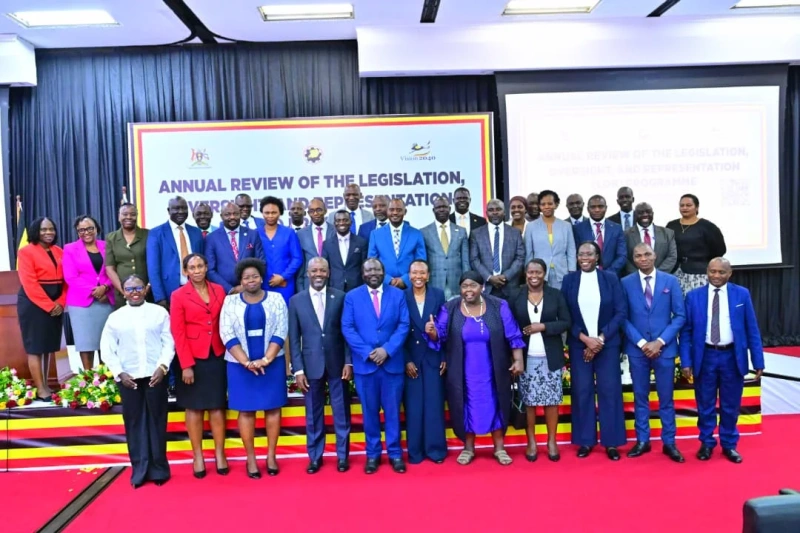
 The Speaker of Parliament, Rt. Hon. Jacob Markson Oboth, has called on partners and stakeholders to take collective ownership of Parliament’s Legislation, Oversight and Representation (LOR) Programme by actively participating in setting priorities, implementing agreed action plans and accounting for results.The Speaker made the call while officially opening the first Annual Review Workshop of the LOR Programme in the 12th Parliament, emphasising the need for a shared commitment to achieving the programme’s objectives and strengthening Parliament’s contribution to Uganda’s national development agenda. He urged all actors involved in the programme to take responsibility for its implementation, noting that effective delivery requires collaboration, clear priorities and accountability for agreed actions.The workshop, organised by Parliament’s Corporate Planning and Strategy Department, brought together parliamentary leadership, institutional officials and development planning stakeholders to review the programme’s performance during the first year of the Fourth National Development Plan (NDP IV).The review also assessed the programme within the broader context of the Government’s Tenfold Growth Strategy, providing an opportunity to reflect on progress made, identify implementation challenges and consider measures to improve performance in the coming years.The LOR Programme supports Parliament’s three core constitutional functions: legislation, oversight and representation. These functions are central to the development and scrutiny of laws, accountability in the use of public resources and ensuring that citizens’ views and concerns are represented in parliamentary processes.Through the annual review, participants assessed progress against programme priorities and reflected on how implementation could be strengthened to deliver tangible institutional and national development outcomes.The emphasis on collective ownership also highlighted the importance of coordination between Parliament and its partners in translating strategic commitments into practical interventions, with clear responsibilities and measurable results.  The Deputy Speaker, Rt. Hon. Thomas Tayebwa, closed the workshop, which was also attended by the Clerk to Parliament, Hon. Adolf Mwesige; Commissioners of Parliament; parliamentary staff; and officials from the National Planning Authority (NPA).The participation of the National Planning Authority provided an important institutional link to Uganda’s national development planning framework, particularly as government institutions work towards implementing NDP IV and the Tenfold Growth Strategy.  The annual review is expected to strengthen performance monitoring, reinforce accountability and support continuous improvement in the implementation of Parliament’s LOR Programme, ensuring that the institution remains focused on delivering its legislative, oversight and representation responsibilities effectively.

Deputy Speaker Asks Journalist Who Distorted His Video to Apologise Publicly Featured

Deputy Speaker Asks Journalist Who Distorted His Video to Apologise Publicly

 The Deputy Speaker of Parliament, Thomas Tayebwa, has asked a journalist who edited and shared a misleading version of his remarks about nurses to issue a public apology.Addressing Parliament on Wednesday, Tayebwa explained that John Paul Sebaduka, a journalist accredited to Parliament and working with CBS FM, edited a video of his remarks on the proposed Bachelor of Pharmacy degree at Mbarara University and shared the altered version on his personal online platform, SPJ Exclusive Media. Tayebwa made the remarks during Tuesday’s plenary sitting.Tayebwa said the edited video created the impression that he was demeaning nurses and suggesting that they could not become leaders, prompting widespread criticism and abuse on social media. However, in his communication, he described nurses as professionals, some of whom already hold PhDs and senior leadership positions.Tayebwa said he began receiving numerous phone calls and messages after the video went viral, with people accusing him of disrespecting nurses. He said he quickly investigated the source of the video and established how his remarks had been distorted.Tayebwa said he spoke to the journalist, who apologised. However, he explained that a private apology was insufficient because the video had been shared publicly and had already reached a wide audience.“I told him to make a public apology because you cannot tarnish my name in public and apologise to me in private,” he said.He disclosed that he had referred the matter to the Uganda Communications Commission (UCC) for consideration. He also asked Parliament’s Corporate Affairs Department to handle the issue in line with its established guidelines to ensure accurate reporting of proceedings in the House.“I will own up to whatever I say, but when you twist it, you should also own up,” Tayebwa said.He said the incident should concern all legislators because any public official can become a victim of misleading edits of video or audio recordings.Good working relationshipTayebwa said Parliament was working to create a media-friendly environment, recognising the important role journalists play in informing the public about legislative proceedings and the institution’s activities.“The media is very critical for the performance of this Parliament, but they are not above scrutiny where they do wrong things,” he said.

Deputy Speaker Thomas Tayebwa Says MUST Pharmacy Course Is Duly Accredited by NCHE News

Deputy Speaker Thomas Tayebwa Says MUST Pharmacy Course Is Duly Accredited by NCHE

 Deputy Speaker of Parliament Thomas Tayebwa has said Mbarara University of Science and Technology’s (MUST) Bachelor of Pharmacy programme remains accredited by the National Council for Higher Education (NCHE) for the next four years, despite a dispute over its professional recognition by the Pharmaceutical Society of Uganda (PSU). Tayebwa made the remarks during Tuesday’s parliamentary plenary sitting following concerns over the Pharmaceutical Society’s reported withdrawal of professional recognition of the programme with immediate effect. He said he had received several calls from students and parents seeking clarification on the matter. Tayebwa explained that he contacted the NCHE Executive Director, who confirmed that the programme remained accredited. “The students are learning and being taught an accredited course,” Tayebwa told Parliament. He added that NCHE had accredited the programme in consultation with relevant stakeholders, including Pharmaceutical Society. The Deputy Speaker said there was an overlap in the mandates of the Pharmaceutical Society and the National Council for Higher Education under the laws governing pharmacy training. He directed the Minister of Education and Sports to present a comprehensive statement to Parliament on Thursday, October 22, 2026.He also asked the minister to consult the Attorney General and requested the Attorney General’s presence in Parliament to clarify the legal framework governing the matter. Leader of the Opposition Joel Ssenyonyi said the concerns raised by PSU appeared to extend beyond programme recognition to the qualifications of the person heading Mbarara University Department of Pharmacy. Ssenyonyi said a letter from the professional body questioned whether the department was headed by someone with the qualifications required for the position. He urged the government and relevant authorities to address the concerns promptly to prevent further uncertainty among students and graduates.“If it is a question of somebody heading a department who requires a particular set of qualifications, I think that should be sorted out so that students are not in disarray,” Ssenyonyi said. Minister of State for Education and Sports Peter Ogwang pledged that the ministry would present the requested statement to Parliament on Thursday. *MUST Explains the situation* MUST Vice Chancellor Professor Pauline Byakika-Kibwika, in a letter dated October 20, 2026, to NCHE Executive Director Professor Mary J. N. Okwakol, outlined measures the university is taking to address leadership and staffing concerns in its Department of Pharmacy. She explained that the issue emerged after the former Head of Department, an Associate Professor of Pharmacy, resigned in July 2026 to take up a professorial position at another public university in Uganda. His departure left a leadership gap, with the university lacking a pharmacist at the rank of Senior Lecturer or above to take over the position. Consequently, the university appointed a senior lecturer with a background in nursing, public health, pharmacology and clinical trials to serve in an acting capacity for three months. MUST said her research experience and familiarity with departmental activities informed the temporary arrangement as the university prepared for the academic year. However, effective October 19, 2026, the university appointed Dr Jonans Tusimiire as Acting Head of Department for three months. Dr Tusimiire is a Senior Lecturer, Deputy Dean of the Faculty of Health Sciences and President of the Pharmaceutical Society of Uganda. According to the Vice Chancellor, the university secured clearance from the Ministry of Public Service on October 14 to recruit or promote academic staff after seeking funding from the Ministry of Finance, Planning and Economic Development.

ONE CHARGED OVER ALLEGED LAND TRESPASS AND PROPERTY DAMAGE IN MUKONO Exposed

ONE CHARGED OVER ALLEGED LAND TRESPASS AND PROPERTY DAMAGE IN MUKONO

 The State House Anti-Corruption Unit (SH-ACU), working jointly with the Criminal Investigations Directorate (CID) and the Office of the Director of Public Prosecutions (ODPP), has arraigned Kaye Andrew Kaggwa before the Goma Grade One Magistrates Court over allegations of criminal trespass and malicious damage to property.Kaggwa has been remanded in custody until 17 November 2026 as investigations and court proceedings continue.Prosecution alleges that between 7 and 9 October 2026, at Misindye Village, Goma Sub-County, Mukono District, Kaggwa unlawfully entered land comprised in Kyagwe Block 101, Plot 51, which was in the possession of Justice Andrew Khaukha, with the alleged intention of annoying him.He is further accused of wilfully and unlawfully destroying two padlocks on a residential house belonging to Nakawungu Janet, a 99-year-old woman residing on the disputed land, despite reportedly having been warned about the incident. Investigations indicate that Justice Khaukha purchased five acres of land in 2004 from Nakawungu Janet and Nakawunde Norah, who had inherited six acres from their late father, Bulasio Ddamba. The two women retained one acre containing the family burial grounds of Ddamba, his wife and Norah.Norah has since passed away, while Janet, now 99 and frail, remains alive.  Investigations further indicate that some of Ddamba’s descendants through his son, Yusuf Kaye, have over the years disputed or allegedly interfered with Khaukha’s possession of the land. The dispute has reportedly involved repeated complaints to various offices and statements about him published on social media. The case highlights the importance of respecting lawful property possession and resolving land disputes through established legal procedures rather than alleged unlawful entry or destruction of property.The State House Anti-Corruption Unit, working with its investigative and prosecutorial partners, remains committed to supporting investigations into alleged wrongdoing and ensuring that cases are handled through the established justice system.

HON. ZAMBAALI RAISES MATTER OF NATIONAL IMPORTANCE OVER RISING FIRE OUTBREAKS, CALLS FOR EMERGENCY RESPONSE UNIT News

HON. ZAMBAALI RAISES MATTER OF NATIONAL IMPORTANCE OVER RISING FIRE OUTBREAKS, CALLS FOR EMERGENCY RESPONSE UNIT

 Hon. Zambaali Bulasio Mukasa, the Member of Parliament for Nansana Municipality, has raised a matter of national importance on the floor of Parliament, calling for urgent government intervention following a series of devastating fire outbreaks that have resulted in loss of lives, destruction of property and distress among affected families.  While addressing Parliament, Hon. Zambaali drew attention to the recurring fire incidents in Nansana Municipality and other parts of the country, stressing the need to strengthen emergency response systems and ensure that communities can access timely firefighting services whenever disasters occur.  He particularly highlighted the recent tragic fire at Hami Junior School in Nansana, which claimed the lives of two pupils, describing the incident as a painful reminder of the urgent need to improve fire prevention, preparedness and emergency response in schools and other public facilities.Hon. Zambaali expressed concern over the loss of young lives, noting that schools should provide safe environments where children can learn, grow and build their futures rather than places where families experience devastating loss.“A school should not be a place where families lose the future, but a place where children discover their future,” he emphasised. The legislator called on the government to establish a rapid fire response unit in Nansana Municipality to ensure that firefighters and emergency personnel can respond promptly to incidents before they escalate into major disasters.He noted that timely intervention is critical in saving lives, protecting property and reducing the devastating consequences of fire outbreaks, particularly in densely populated urban communities where emergencies can spread rapidly.Hon. Zambaali also appealed to the Office of the Prime Minister (OPM) to extend support to families affected by the Hami Junior School tragedy, urging the government to stand with those who have lost their children during this difficult period.He stressed that disaster response should not end with extinguishing fires but should also include providing appropriate assistance to bereaved families and other victims as they cope with the consequences of such incidents.  In further highlighting the urgency of the matter, Hon. Zambaali referred to a fire that reportedly occurred at Ivory Hotel in Nansana during the early hours of the morning, adding to concerns about the frequency of fire incidents in the municipality.He also drew attention to the fire incident reported at Wandegeya Police Station last Thursday, pointing to the need for a broader national conversation on fire safety, emergency preparedness and the capacity of relevant institutions to respond effectively to disasters. The incidents, he argued, underline the importance of moving beyond responding to individual emergencies towards developing a coordinated and adequately equipped national fire and rescue system.  Hon. Zambaali called for increased government attention to firefighting equipment, emergency response infrastructure, personnel and public awareness programmes aimed at preventing avoidable fire disasters.He further emphasised the need to strengthen fire safety measures in schools, hotels, police facilities, commercial buildings and residential areas, with regular inspections and effective emergency preparedness plans to help minimise risks.The legislator maintained that access to prompt firefighting services should be treated as an essential public safety requirement, particularly in rapidly growing municipalities such as Nansana, where increasing populations and expanding commercial activities demand stronger emergency response capacity. His intervention places renewed focus on the responsibility of government institutions to protect lives, safeguard public infrastructure and ensure that communities are adequately prepared to respond to emergencies.Hon. Zambaali’s appeal to Parliament and the government is for urgent, practical measures that will prevent further loss of life, support affected families and ensure that fire outbreaks do not continue to leave communities devastated.  He urged the relevant authorities to treat the matter with the urgency it deserves, emphasising that protecting children, families and public institutions must remain a national priority.

© Copyright 2026, All Rights Reserved