
Ssemaganda Moses Hope

Ssemaganda Moses Hope

Journalist at Kampala Media TV

849 published articles


Articles by Ssemaganda Moses Hope

Showing 78-88 of 849 articles
President Museveni’s Anti-Corruption Drive Gains Momentum as Shs22.7 Billion Comes Under Investigation Featured

President Museveni’s Anti-Corruption Drive Gains Momentum as Shs22.7 Billion Comes Under Investigation

 President Yoweri Kaguta Museveni’s sustained drive to strengthen accountability and intensify the fight against corruption is gaining fresh momentum, with at least Shs22.7 billion in public funds now linked to corruption-related complaints and cases under investigation across the country.The development comes as the nationwide “Expose the Corrupt” campaign, being implemented through a coordinated government approach led by Minister of Local Government Hon. Balaam Barugahara and the State House Anti-Corruption Unit (SHACU), continues to uncover alleged weaknesses in the management of public resources and delivery of government programmes.  The campaign has so far resulted in the arrest of 267 suspects, interdiction of 253 officials and the arraignment of nearly 40 accused persons, as government strengthens efforts to ensure that public resources are protected and government services reach their intended beneficiaries.Head of SHACU, Brig. Gen. Henry Isoke, said the figures demonstrate the growing scale of citizen complaints and the increasing determination of government institutions to act on allegations of corruption, abuse of office, misuse of public resources and poor service delivery.  He, however, clarified that the Shs22.7 billion figure represents funds implicated in matters still under investigation and should not be interpreted as money conclusively established to have been stolen or lost.According to Brig. Gen. Isoke, the actual financial loss, recoverable resources and criminal liability in the respective cases will only be established after investigations, audits, verification of financial records, forensic examination and other specialised processes are completed.  He made the remarks during an engagement with the Presidential Press Unit team at the SHACU offices in Kampala, where he outlined the progress of the campaign and its wider impact on accountability and service delivery.The campaign is rooted in President Museveni’s directive that government leaders and anti-corruption agencies should move closer to citizens and establish directly whether government programmes are delivering the services and benefits for which public resources are allocated.  President Museveni has repeatedly challenged leaders to go beyond relying solely on reports from local government officials and instead engage communities to establish the actual situation on the ground.Addressing the NRM Parliamentary Caucus at Kololo Ceremonial Grounds last week, the President observed that Uganda would have progressed much further economically if corruption had not undermined government programmes.“This campaign, which people like Balaam are doing, is implementing what NRM has been telling you all the time,” President Museveni said.  The President’s directive has consequently provided a stronger platform for citizens to report suspected corruption, mismanagement and failures in public service delivery, with SHACU working alongside the Criminal Investigations Directorate (CID), the Directorate of Public Prosecutions (ODPP) and other relevant government institutions.Brig. Gen. Isoke described the multi-agency campaign as a force multiplier in the fight against corruption, saying stronger coordination and citizen participation could significantly degrade corruption within local governments.  “The campaign is a force multiplier in our efforts to eradicate corruption in our country. It involves a whole-of-government approach and, given the goodwill of all leaders at various levels and support by the citizens, corruption in local governments will be substantially degraded,” he said.The campaign is not being measured merely by the number of arrests made. According to SHACU, its broader objective is to expose weaknesses within government systems, stop ongoing abuse, recover public resources, strengthen internal controls and improve service delivery.  Investigations have covered a wide range of sectors, including procurement and contract management, District Service Commission recruitment, land administration, Parish Development Model (PDM) funds, roads, schools, health facilities, infrastructure and other government programmes.SHACU says the growing participation of citizens is particularly important because many cases involving abuse of public resources and poor service delivery are first identified at community level.“The fight against corruption is a people’s responsibility,” Brig. Gen. Isoke said.  The campaign has so far generated 124 case files from complaints received by SHACU, with the files currently at different stages of investigation, review and prosecution.SHACU has stressed that every complaint is independently assessed and that not every allegation raised during public barazas automatically becomes a criminal case.The complaints have nevertheless helped identify recurring risk areas within local governments, including procurement, recruitment, land administration, implementation of government wealth-creation programmes, infrastructure development and weaknesses in public service delivery.  Other complaints have involved illegal charges in government schools, abuse of office, alleged diversion or misuse of public resources and inadequate supervision.Recent operations have also exposed alleged irregularities involving roads, schools, health facilities, markets and PDM programmes.In Busia, for instance, investigations have highlighted allegations ranging from inflated school enrolment figures and illegal school charges to shoddy infrastructure, missing streetlights, irregularities involving PDM funds and poor service delivery.The campaign has also translated into prosecutions. In July, four Mbale local government officials arrested during the “Expose the Corrupt” campaign were arraigned before the Anti-Corruption Court over allegations including unlawful charging of school fees under the Universal Secondary Education programme and abuse of office.Why arrests do not always lead immediately to court  The difference between the 267 arrests and nearly 40 arraignments has raised questions about the progression of cases after suspects are arrested.Brig. Gen. Isoke explained that an arrest is not itself proof that a person will ultimately be prosecuted, noting that investigators and prosecutors must establish sufficient evidence before charges can proceed to court.He said some suspects remain under investigation, while others may be released where available evidence is insufficient at a particular stage. Other cases require additional documentation, auditing, forensic examination, expert analysis or action by other competent institutions before investigations can be completed.“The wide difference in the number of arrests and those arraigned in court reflects the fact that investigations and prosecution processes take time,” Brig. Gen. Isoke said.He explained that investigators may in some circumstances need to arrest suspects promptly to prevent interference with investigations, secure documents and other evidence, record statements and establish the facts surrounding alleged offences.For SHACU, therefore, the success of the campaign cannot be reduced to arrest figures alone. Brig. Gen. Isoke said the wider impact is already being felt, with arrests in some districts encouraging officials elsewhere to implement works and services that had previously been neglected.He also said the campaign had strengthened public confidence in reporting suspected corruption, as citizens increasingly believe that their complaints can trigger government action.SHACU and the whole-of-government approachQuestions about the working relationship between SHACU and Minister of Local Government Hon. Balaam Barugahara have also been raised, particularly regarding institutional independence.Brig. Gen. Isoke said the cooperation should be viewed within the wider government effort to combat corruption and strengthen accountability. He explained that the campaign requires joint action among government institutions, ministries, local governments and citizens, while SHACU continues to coordinate corruption complaints with constitutionally mandated agencies responsible for investigation and prosecution.He commended Hon. Barugahara for mobilising local government leaders and citizens to participate in the campaign, noting that SHACU also works with other ministries and government institutions in addressing fraud, abuse and corruption.  The campaign has already traversed several regions, including Busoga, Bukedi, Bugisu, Sebei, Ankole, Buganda and Tooro, and has now expanded to the Bunyoro sub-region.Teams are currently operating in Kiryandongo, Masindi, Buliisa, Hoima and Hoima City, where they are inspecting government facilities and programmes, including health centres, roads, schools, markets and wealth-creation initiatives such as PDM and Emyooga.  For President Museveni and SHACU, the campaign represents more than a crackdown on individual suspects. It is intended to strengthen government systems, protect public resources, improve internal controls and ensure that citizens receive the services and opportunities promised through government programmes.  As investigations continue, SHACU maintains that the Shs22.7 billion figure will ultimately be subjected to the necessary verification and accountability processes, while cases supported by sufficient evidence will proceed through the appropriate legal channels.The campaign has also reinforced the message that accountability is not solely the responsibility of government institutions. Through the “See Something, Say Something” approach, citizens are being encouraged to remain vigilant, report suspected abuse and participate actively in protecting public resources.  Brig. Gen. Isoke said continued citizen participation, combined with stronger coordination among government institutions, would remain critical to reducing corruption and ensuring that public resources are used for their intended purposes.
Tayebwa Calls for Tax Compliance, Ethical Business Practices National

Tayebwa Calls for Tax Compliance, Ethical Business Practices

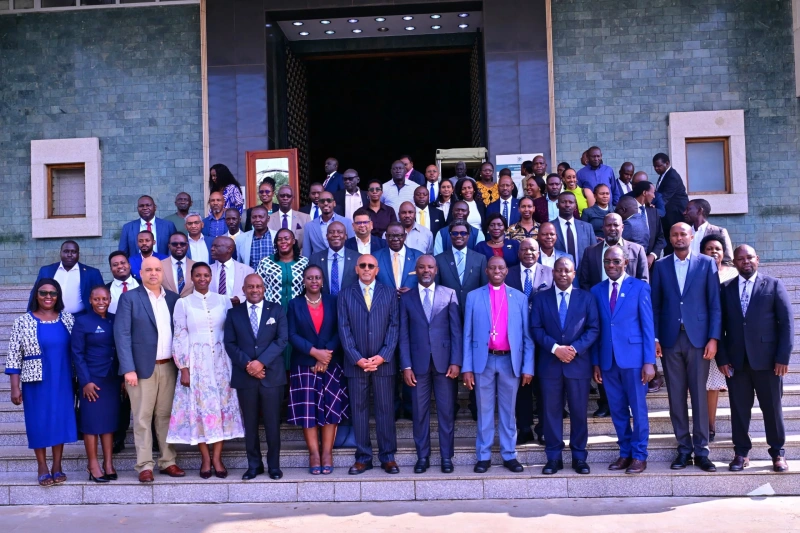
 Deputy Speaker of Parliament Thomas Tayebwa has called on the business community to embrace tax compliance, transparency and ethical practices, saying Uganda’s economic transformation depends on a strong and responsible private sector.Tayebwa made the remarks on Wednesday while speaking at the inaugural National Prayer Breakfast Business Forum held at Parliament, where Members of Parliament and business leaders discussed the role of the private sector in national development.Emmanuel Katongole, Executive Chairman of Quality Chemicals Industries Uganda Limited, delivered the keynote address.  The forum was attended by guests from various countries, including Rwanda, Burundi, Nigeria, Tanzania, Germany, India and Cameroon, among others.Tayebwa said Uganda is focusing on improving tax compliance and widening the tax base rather than continually introducing new taxes. He explained that increased tax compliance would provide the government with more resources to invest in infrastructure and public services.  “How do you expect us to build more roads, generate more power and provide you with water when we are still hovering around the tax-to-GDP ratio of 13–14%?” he asked.He said Uganda can raise its tax-to-GDP ratio to about 21 per cent by ensuring that more people and businesses pay their fair share of taxes.Tayebwa said the government and Parliament also have a responsibility to create a fair business environment, warning that selective tax exemptions and other preferential arrangements can distort competition.  He told members of the business community that Parliament wants to hear directly from them about whether existing policies and laws are enabling businesses to grow and create wealth.“The government does not create wealth. The government creates conditions which will enable you, the business community, to create wealth,” he said.He also called for greater integrity within the private sector, saying ethical conduct should not only be expected from public officials. Workers who steal from their employers, he said, should face strong sanctions, just as public officials who steal public resources are held accountable. *Businesses should create impact*Tayebwa challenged entrepreneurs to look beyond making profits and consider the wider impact of their businesses on society.He said businesses should focus on the solutions they provide to communities through employment, supply chains, tax contributions and other forms of economic activity.“If the major aim of your business is to make money, then you’re living on borrowed time,” he said.*Mentor young Ugandans and MPs*The Deputy Speaker called on established business people to mentor young Ugandans and other aspiring entrepreneurs, arguing that experienced business leaders have a responsibility to pass on their knowledge and experience. “Mentor young people. Mentor other business people. One candle can light a thousand candles,” Tayebwa said.He said the growth of individual businesses contributes to broader economic prosperity by increasing employment and purchasing power.“If each one of us here becomes rich, then we shall all become richer,” he said.Tayebwa said the mentorship should also extend to Members of Parliament who want to build successful businesses. He said mentorship could help MPs move away from a mindset of political business, in which they are constantly spending money to win voters, towards building sustainable businesses that can contribute to national development.If MPs engage in business, he added, they can better appreciate the challenges entrepreneurs face in establishing and growing businesses. Tayebwa said the experience could also help MPs better understand the concerns of the private sector as they formulate and oversee policies affecting businesses.Various speakers noted that the forum  will strengthen cooperation between parliament and the private sector.

Sr. Goretti Nanseera Makes Perpetual Profession, Celebrates Lifelong Call to Religious Life Events

Sr. Goretti Nanseera Makes Perpetual Profession, Celebrates Lifelong Call to Religious Life

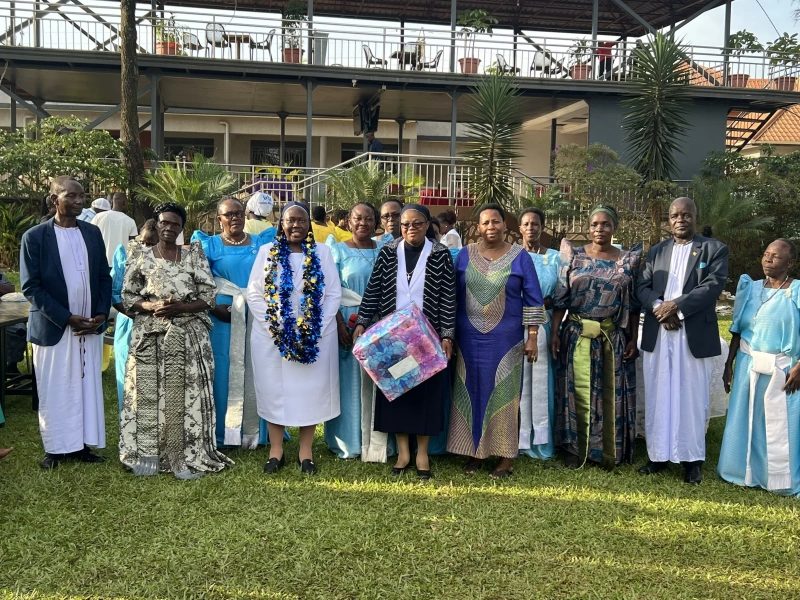
 Sister Goretti Nanseera of the Missionary Sisters of Our Lady of the Holy Rosary (MSHR) has made a major milestone in her religious vocation after taking her Perpetual Profession during a colourful ceremony at Lugazi Cathedral.The profession ceremony was presided over by the Bishop of Lugazi Diocese, Rt. Rev. Christopher Kakooza, on Saturday, October 3, 2026, marking a significant moment in Sr. Nanseera’s journey of faith and commitment to serving God. The occasion brought together family members, friends, religious leaders and well-wishers who gathered to celebrate Sr. Nanseera’s commitment to a life dedicated to God and the service of humanity.Following the Holy Mass at Lugazi Cathedral, celebrations continued at MURS Hotel in Mukono-Kigunga, where guests joined Sr. Nanseera and her family in celebrating the achievement.  Among the special guests were Hon. Dr. John C. Muyingo and his wife, Mrs. Rose Muyingo, who attended the celebrations as special guests and as God-given parents who have supported Sr. Nanseera in her studies and journey, helping her pursue and ultimately realise her dream of becoming a nun.Sharing her experience, Sr. Nanseera reflected on how her desire to dedicate her life to God began while she was still growing up. She explained that becoming a nun was not simply a decision she made later in life, but a dream and calling that continued to grow within her as she matured.Despite the challenges that came along the way, she remained determined to pursue her vocation, continuously chasing the dream she had carried from childhood until she completed her formation and studies in Kenya.Her Perpetual Profession therefore became more than a religious ceremony; it represented the fulfilment of a long-held dream and years of commitment, formation, prayer, sacrifice and perseverance.During the celebrations, Mrs. Rose Muyingo congratulated Sr. Nanseera for remaining faithful to her calling and for reaching such an important milestone in her religious journey.Mrs. Muyingo said the journey of religious life comes with numerous challenges and requires faith, courage and perseverance, noting that Sr. Nanseera’s achievement was a testimony to God’s grace and her determination to remain faithful.“We have seen you loving and serving God. It is not easy because of the many challenges that come along with life, but we thank God who has enabled you to accomplish this big milestone,” Mrs. Muyingo said.She further encouraged Sr. Nanseera to remain steadfast in her faith and continue with the spirit of love and service that has characterised her journey.  The celebrations were also a moment of thanksgiving for the parents, family members, religious community and other people who have supported Sr. Nanseera throughout her journey.For Sr. Nanseera, the occasion marked the fulfilment of a dream she had nurtured from childhood and a new chapter in her commitment to religious life.Her Perpetual Profession means she has made a lifelong commitment to the religious vocation, choosing to continue serving God and His people under the Missionary Sisters of Our Lady of the Holy Rosary.  The celebration was a fitting culmination of a journey that began with a childhood desire to become a nun, survived the challenges of life and formation, continued through her studies in Kenya, and finally reached its glorious milestone at Lugazi Cathedral.

Hon Mafabi Nabulo Calls for Legal Framework to Transform Smallholder Farming and Build Climate Resilience Featured

Hon Mafabi Nabulo Calls for Legal Framework to Transform Smallholder Farming and Build Climate Resilience

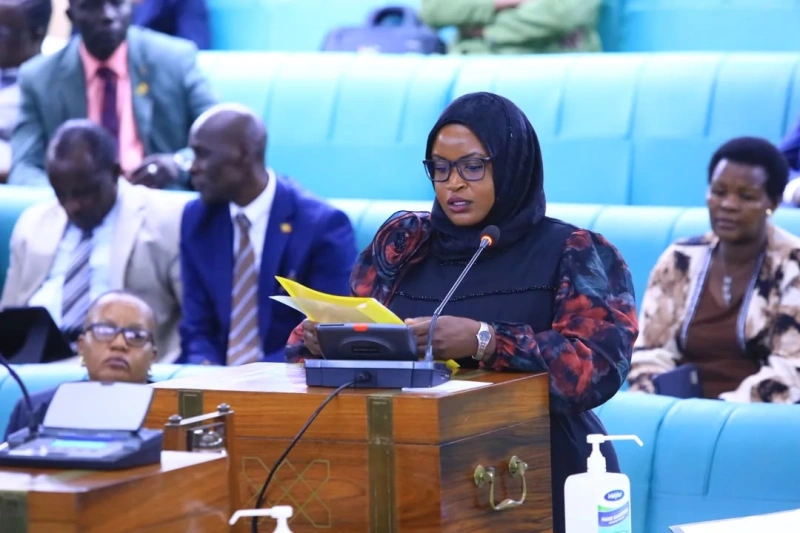
 Sironko District Woman Member of Parliament, Hon. Asha Mafabi Nabulo, has tabled a motion in Parliament urging Government to develop and enact a comprehensive legal framework to support the National Smallholder Farmers’ Transformation and Climate Resilience Programme.Nabulo said Uganda’s smallholder farmers continue to face persistent challenges that undermine the productivity, profitability and competitiveness of the agricultural sector, despite agriculture remaining a major source of livelihoods for millions of Ugandans. She argued that establishing a clear legal and institutional framework for the proposed programme would provide a coordinated approach to addressing the challenges affecting smallholder farmers, while strengthening their capacity to adapt to the growing impacts of climate change.According to Nabulo, smallholder farmers are particularly vulnerable to climate-related shocks, limited access to affordable agricultural inputs and financing, inadequate markets, low levels of value addition and limited access to modern agricultural technologies and extension services. She emphasised that transforming smallholder agriculture requires more than individual interventions, calling for a comprehensive national programme backed by legislation, sustainable financing and effective coordination among Government agencies and other stakeholders.Nabulo said the implementation of the National Smallholder Farmers’ Transformation and Climate Resilience Programme has the potential to significantly improve household incomes, increase agricultural productivity and strengthen Uganda’s food security. She further projected that, if effectively implemented, the programme could enable Uganda to produce enough food to supply markets across East and Central Africa while lifting an estimated 89 percent of small-scale farmers out of poverty.The legislator urged Government to treat the transformation of smallholder agriculture as a strategic national priority, noting that empowering farmers would not only improve livelihoods but also expand Uganda’s productive capacity, strengthen rural economies and create opportunities for agro-processing and value addition. She called for deliberate measures to ensure that smallholder farmers are integrated into profitable agricultural value chains and have access to the resources, knowledge, technology and markets required to move from subsistence production to commercially viable farming.The motion was tabled during a plenary sitting of Parliament chaired by Deputy Speaker Rt Hon Thomas Tayebwa, as legislators considered measures aimed at addressing key challenges affecting Ugandan communities and the national economy.  Nabulo’s proposal places climate resilience and smallholder farmer transformation at the centre of Uganda’s agricultural development agenda, with the broader objective of building a productive, competitive and sustainable agricultural sector capable of contributing significantly to national and regional food security.

Minister Muyingo Calls for Sustainable Enterprises That Create Jobs and Lasting Value Featured

Minister Muyingo Calls for Sustainable Enterprises That Create Jobs and Lasting Value

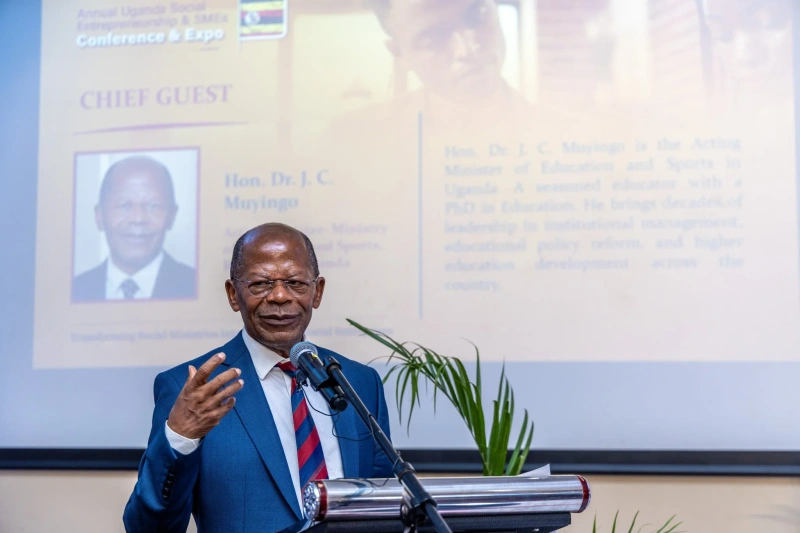
 Ag. Minister of Education and Sports, Hon. Dr. John C. Muyingo, has called for a shift in Uganda’s approach to enterprise development, urging stakeholders to focus not only on establishing and training enterprises but also on ensuring that they survive, grow, create jobs and generate lasting wealth. Dr. Muyingo made the remarks today at the Annual Uganda Social Entrepreneurship and SME Conference and Expo 2026 at Mestil Hotel, Nsambya, Kampala, where entrepreneurs, investors, policymakers and other players in the private sector and social enterprise ecosystem gathered to discuss ways of strengthening sustainable businesses.The conference is focusing on sustaining impact in social enterprises through innovation, financing models and market readiness, with particular attention to the challenges that prevent promising enterprises from growing into sustainable and resilient businesses. Dr. Muyingo said the success of enterprise development should ultimately be measured by the ability of businesses to remain productive and create value over time.“We need to move beyond the question, ‘How do we establish and train enterprises?’ to an even more important one: How do we ensure that these enterprises survive, grow, create jobs, generate wealth and continue creating value over time?” he said.  He noted that establishing an enterprise is only the beginning, arguing that entrepreneurs require an enabling ecosystem that supports them through different stages of business growth.The Ag. Minister also challenged entrepreneurs to rethink the way they approach access to finance, saying the conversation should not only focus on where money can be obtained but also on whether enterprises have the structures and capacity required to responsibly utilise and repay financing. “We should move beyond asking ourselves, ‘Where can we get the money?’ We should also ask, ‘Are our enterprises ready for finance?’” Dr. Muyingo said.He emphasised the importance of strengthening enterprise management, financial discipline, innovation, market readiness and long-term planning if Ugandan businesses are to attract investment and compete effectively.The discussions at the conference also highlighted the delicate balance between pursuing commercial sustainability and maintaining the social purpose that defines many social enterprises.Dr. Gudula Naiga Basaza, CEO of Gudie Farms, said commercial viability should strengthen rather than undermine an enterprise’s mission.“Commercial viability should not replace the mission, but mission must not become a reason for avoiding commercial discipline,” she said.Her remarks underscored the need for social enterprises to develop sound business models that can generate sufficient revenue to sustain their operations while continuing to address social and community challenges.The role of empowerment in strengthening community-based organisations was also highlighted, with Sr. Grace Angelina Aciro, Superior General of the Little Sisters of Mary Immaculate of Gulu, noting that stronger institutions are better positioned to expand their contribution to society.“If we are empowered, we can still help the world and do charity work better, because people easily believe in us. We are trusted,” she said.Participants further stressed that enterprise resilience cannot be achieved through entrepreneurship training alone.Jacqueline Kigonya, Board Director at Strathmore Global Institute, said enterprises require access to several complementary elements if they are to withstand economic pressures and achieve sustainable growth.“Enterprise resilience cannot be built through enterprise training alone. It also needs finance, markets, technology, policy and partnerships,” she said.The observation reflects a broader challenge facing SMEs and social enterprises, many of which possess viable ideas but struggle to scale because of limited access to affordable finance, markets, technology, business networks and supportive policies.The conference is consequently providing a platform for stakeholders to examine practical approaches to financing, innovation, market access and partnerships that can help enterprises move from survival to sustainable growth. Discussions are also emphasising the growing importance of responsible business practices, including environmental, social and governance considerations, as enterprises increasingly interact with investors and markets that demand greater accountability and sustainability.  For Uganda, strengthening the SME and social enterprise sector remains important to employment creation, innovation, household incomes and broader economic transformation. However, the discussions at the conference point to the need for a more comprehensive approach in which entrepreneurs are supported to build businesses that are commercially viable, socially responsible and resilient enough to withstand changing economic conditions.Dr. Muyingo’s message therefore places enterprise sustainability at the centre of the entrepreneurship conversation, challenging stakeholders to look beyond the creation of businesses and focus on building enterprises capable of continuously creating value for their owners, employees and communities.  The conference brings together entrepreneurs, investors and other ecosystem players with the aim of strengthening collaboration and developing practical solutions that can enable Ugandan enterprises to become more innovative, financially prepared, market-oriented and sustainable.

Tayebwa Challenges 12th Parliament to Move Beyond Climate Speeches and Invest in Lasting Solutions to Prevent Disasters Featured

Tayebwa Challenges 12th Parliament to Move Beyond Climate Speeches and Invest in Lasting Solutions to Prevent Disasters

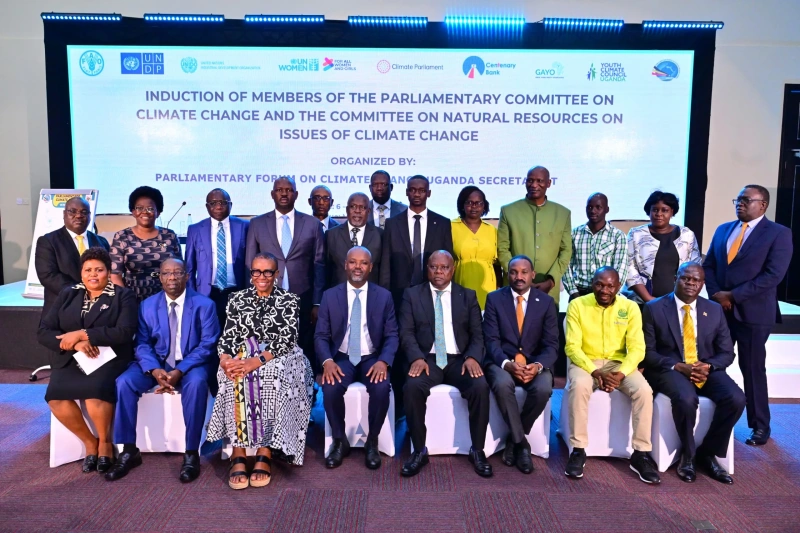
 Deputy Speaker of Parliament Thomas Tayebwa has urged Members of Parliament to use Parliament’s legislative, budgeting, oversight and representation roles to help Uganda prevent climate-related disasters and build resilience.Tayebwa said climate change can no longer be treated as an issue for speeches and conferences but requires concrete action and investment in long-term solutions. He made the remarks on Tuesday while opening a two-day induction for members of the Parliamentary Committee on Climate Change and the Committee on Natural Resources at Mestil Hotel in Kampala.He said the 12th Parliament would be judged by how effectively it prevents climate-related disasters and protects future generations.“History will judge the 12th Parliament not by how many sittings we had, or how many conferences we attended, but on how we prevented disasters from happening again,” Tayebwa said.  He urged MPs to ensure that climate considerations are incorporated into government programmes and public spending, arguing that investments could be wiped out if the country does not address the effects of climate change.Tayebwa said Parliament should ensure that the government focuses more on preventing climate-related disasters than spending public money responding to their aftermath.He cited recurring flooding along River Nyamwamba in Kasese, where communities are repeatedly displaced, as an example of a problem requiring a permanent solution.  He questioned whether the government should continue spending money every year on tents, blankets and food for communities affected by flooding and famine, instead of investing in measures that can prevent such disasters.He also mentioned Ntoroko as a district at high risk from climate change, saying some families had already lost large portions of their land after it was submerged.Tayebwa said climate action must also extend to agriculture, warning that changing weather patterns could undermine programmes intended to improve household incomes and food security.  He called for climate-smart agriculture, drought-resistant seeds, agroforestry, soil protection and better-equipped agricultural extension workers.“I do hope that we, as the 12th Parliament, can tie PDM funds to climate-smart agriculture, to drought-resistant seeds, to ensure we focus on agroforestry, soil protection, and also ensure that we have extension workers who are well equipped with knowledge to teach people on how they can do sustainable agriculture,” he said.  He also urged Parliament to promote water harvesting in schools, hospitals and other public institutions and to explore ways of increasing the use of renewable energy.Tayebwa said public institutions should be encouraged to generate their own electricity, including through solar installations, while surplus electricity could potentially be supplied to the national grid.The Deputy Speaker further called for stronger oversight of forests and wetlands, saying Parliament must ensure that government agencies responsible for environmental protection are held accountable. “We need to protect our forests. We need to keep these people in government who should protect our forests in check, on their toes,” he said.He said Uganda is losing about 80,000 hectares of forest cover annually, describing the situation as unacceptable.Tayebwa also called for greater investment in weather forecasting to help farmers and communities prepare for extreme weather.“We need to support Uganda National Meteorological Authority (UNMA), give them the equipment they need to give perfect projections,” he said. He argued that farmers should also receive weather forecasts on their phones and in languages they can understand before disasters strike.

Use the Law to Fight Fraud Not Fraud to Suspend the Law  Hon. Tebandeke Tells Lands Ministry National

Use the Law to Fight Fraud Not Fraud to Suspend the Law Hon. Tebandeke Tells Lands Ministry

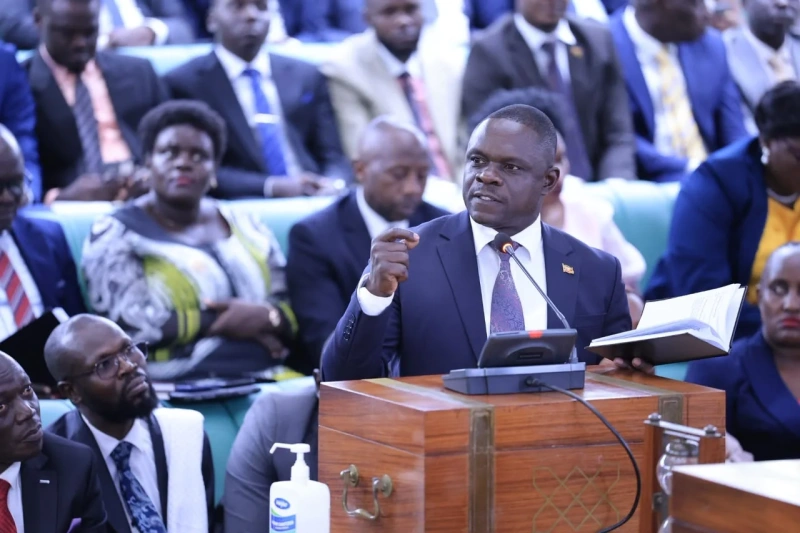
 Bbaale County Member of Parliament Hon. Charles Tebandeke has challenged the Ministry of Lands, Housing and Urban Development over its decision to suspend the issuance of special titles, arguing that concerns over fraud should be addressed through stronger enforcement of the law rather than suspension of a legal process.Hon. Tebandeke made the remarks while appearing before the Parliamentary Committee on Lands, where he questioned the legal and administrative basis of suspending special-title issuance as a response to fraudulent practices within the land registration system.  According to Hon. Tebandeke, a special title essentially serves as a duplicate or replacement of an existing registered land title, while the original title and corresponding records remain in the custody of government.He argued that this arrangement gives the Ministry an opportunity to verify applications by comparing the particulars presented by an applicant with the exact features, descriptions and other details contained in the original title and records held by the land registry.  Hon. Tebandeke told the committee that the verification process should therefore be used to establish whether an application corresponds with the government-held records before a special title is issued.His concern was whether the existence of fraud within the land administration system, without more, should result in the suspension of a procedure provided for under the applicable legal framework.“Ministry of Lands failure to fight fraud within the ministry shouldn’t cause them to suspend the provisions of the law,” Hon. Tebandeke told the committee.  He argued that fraudulent practices should instead lead to stronger verification, investigation and enforcement measures targeting the fraudulent transactions or persons responsible, while lawful applications continue to be processed in accordance with the law.“Ministry should not cause FRAUD to suspend the law but rather apply the LAW to suspend fraud,” he added.  Hon. Tebandeke’s submission puts the focus on the distinction between suspending a legal or administrative process and strengthening the safeguards used to prevent its abuse.He argued that where the Ministry has access to original land records, the authentication of an application should be based on a careful comparison of the applicant’s information with the records held by government.  The position raised before the committee, however, does not by itself determine whether the Ministry’s suspension is lawful. That question would depend on the relevant provisions of the land laws and regulations, the authority under which the suspension was made, and any applicable administrative directives or judicial decisions.The committee may therefore have to examine the legal basis for the suspension, the circumstances that led to the Ministry’s decision, and whether existing verification and enforcement mechanisms are adequate to address fraud without unnecessarily restricting legitimate land-registration services.  The discussion also brings into focus the broader challenge of protecting Uganda’s land registration system from fraudulent transactions while ensuring that legitimate landowners and applicants can access services provided for under the law. For Hon. Tebandeke, the central issue is that the response to fraud should be directed at identifying, preventing and sanctioning fraudulent conduct, rather than allowing the existence of fraud to become a reason for suspending the legal process itself.

Don’t Act Like Doctors, Tayebwa Tells Mitooma Community Health Workers National

Don’t Act Like Doctors, Tayebwa Tells Mitooma Community Health Workers

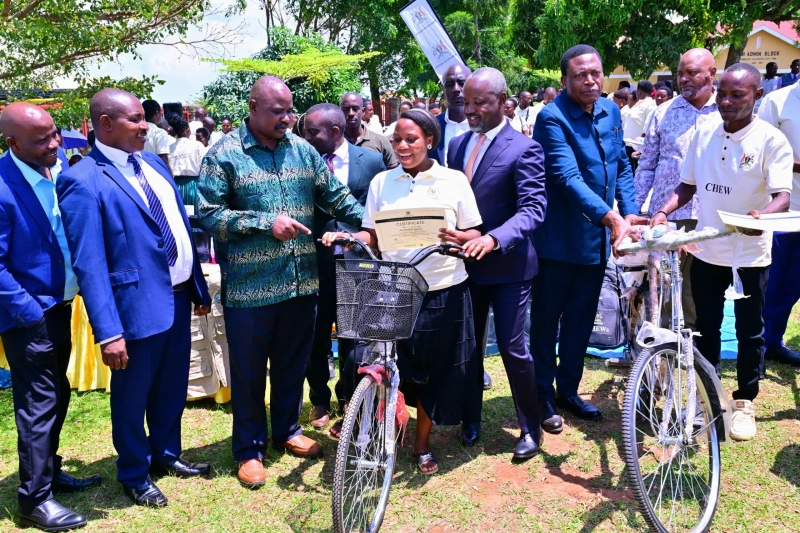
 Deputy Speaker of Parliament Thomas Tayebwa has advised 155 newly trained Community Health Extension Workers (CHEWs) in Mitooma District against treating patients or setting up informal clinics, telling them to concentrate on health education, disease prevention and linking communities to health facilities.  Tayebwa told the community health workers to instead become the government’s eyes and ears within communities by identifying health risks, educating households and referring people to appropriate health facilities.“You’re not a doctor; don’t start acting like doctors, don’t set up clinics. Don’t attempt to treat anyone. That is not your job,” he said.He was speaking on Monday during the passing-out ceremony for the community health extension workers at the Mitooma District headquarters, where he joined Ministry of Health officials and district leaders to mark the completion of their training.  The workers are expected to take health promotion closer to households, in areas where residents may face difficulties accessing health facilities. Their responsibilities include community sensitisation, disease surveillance, encouraging immunisation and antenatal care, identifying health risks and referring patients for professional treatment.Tayebwa said Mitooma’s geographical setting and disease burden make community sensitisation important. The district has communities bordering forests and a national park, while malaria remains a significant health concern.  He urged the community health extension workers to identify communities with particular disease burdens and tailor their health education campaigns to the needs of those areas.He also asked local leaders to give the workers space at community gatherings, including burial ceremonies, to sensitise people instead of allowing such platforms to be dominated by politicians.Tayebwa further told the community health workers to educate communities about lifestyle-related diseases, including the dangers of excessive alcohol consumption, and to encourage women to attend routine antenatal care. He cautioned the workers to protect bicycles and other equipment provided to them by the government, saying the items were intended to facilitate their work and should not be treated as personal property.“Guard the properties that you have been given; they are not gifts. They are work equipment. For you women, if your husband confiscates the bicycle, report immediately.”Director General of Health Services Dr. Charles Olaro said the deployment of the workers is part of a broader Ministry of Health effort to shift Uganda’s health system towards prevention rather than waiting for people to become sick before seeking treatment. Olaro said a large proportion of Uganda’s disease burden could be prevented through better health information, healthier lifestyles and early action at community level.The success of the community health extension workers programme, he said, will be measured by the health problems prevented in communities rather than by the number of patients referred to health facilities.Olaro said community health workers should play an important role in promoting immunisation, antenatal care, family planning, sanitation and the prevention of non-communicable diseases.Mitooma District Acting District Health Officer Julius Taremwa said the new workers will help address a longstanding gap between households and health facilities.Although the district recently recruited 101 health workers, including a surgeon, gynaecologist and medical officers, its staffing level remains at about 22 percent.He also said the district faces gaps in health facilities in some communities, while Mitooma General Hospital is undergoing further development.“We still have communities that are not being reached. For example, Katenga Sub-county as a whole has no health facility, and Kiyanga Sub-county also faces gaps in access to health services,” he said.

Seeta High School Green Campus S.4 Candidates Dedicated to God Ahead of UNEB Exams Featured

Seeta High School Green Campus S.4 Candidates Dedicated to God Ahead of UNEB Exams

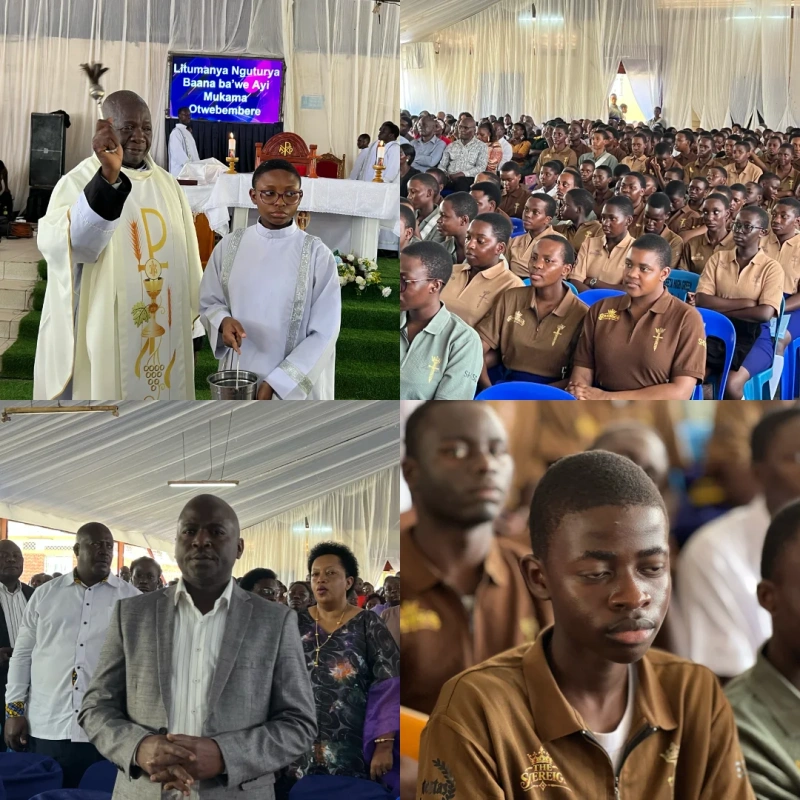
 Religious leaders have called upon parents and teachers to play a leading role in restoring hope and confidence among learners as they prepare for their final Senior Four examinations, warning that students need continuous encouragement and support to overcome pressure and avoid negative thoughts that could affect their performance.The call was made during a special prayer Mass held for Senior Four candidates at Seeta High School Green Campus in Takajjunge, Mukono, who are preparing to sit their final examinations administered by the Uganda National Examinations Board (UNEB).  Rev. Father Joseph Kamiza from the Tororo Archdiocese, who led the Mass, urged the candidates to put their trust in God, whom he described as the source of their strength and guidance during the examination period.Father Kamiza, however, reminded the learners that prayer must be accompanied by action, urging them to apply the knowledge and skills they have acquired from their teachers over the past years.  He encouraged the candidates to remain focused, disciplined and confident, saying success requires both faith and personal effort.The priest also appealed to parents and teachers to understand the pressure learners face during examination periods and provide them with the emotional, academic and practical support they need to remain focused.   He cautioned against situations that could cause learners to lose hope or develop negative feelings towards themselves, emphasizing that encouragement from adults can make a significant difference in a student’s confidence and eventual performance.The Headteacher of Seeta High School Green Campus, Mr. Alibundi Paul, said the school has spent the past four years deliberately preparing the candidates for their final examinations.  Alibundi expressed confidence in the learners, saying the school is satisfied with the level of preparation they have received and expects them to perform well when they sit their UNEB papers.He attributed the anticipated performance to the strong cooperation that has existed between the school, parents and learners throughout the candidates’ four-year journey.According to the Headteacher, the partnership has enabled the school to identify the learners’ needs, support their academic progress and prepare them adequately for the demands of the examinations.  The dedication Mass therefore provided more than a religious moment for the candidates; it also served as an opportunity for the school community to encourage the learners, strengthen their confidence and remind them that the examinations are part of a broader journey towards their future aspirations.  As the S.4 candidates prepare to enter the examination rooms, the message from both the Church and the school remains clear: they should trust in God, believe in their preparation, remain disciplined and put into practice what they have been taught.

482 S.4 2026 Candidates at Seeta High School A-Campus Surrender UNEB Exams to God in Glorious Dedication Mass Education

482 S.4 2026 Candidates at Seeta High School A-Campus Surrender UNEB Exams to God in Glorious Dedication Mass

 A glorious atmosphere of praise, worship and thanksgiving filled Seeta High School A-Campus in Kigombya as 482 S.4 candidates preparing to sit their 2026 Uganda National Examinations Board (UNEB) examinations gathered for a special dedication Mass, committing their examinations and academic journey into the hands of God.The dedication brought together candidates, teachers, parents and school leaders in a moment marked by prayers, worship and thanksgiving, as the learners were encouraged to approach the examinations with confidence, discipline and faith.Rev. Father Benedict Wakabi from the Diocese of Jinja called upon the candidates not to fear the examinations but to trust in God and believe in the preparation they have received.  Father Wakabi urged the learners to avoid anything that could distract them during this important period, reminding them to remain focused on their studies and put into practice everything they have been taught.He further encouraged the candidates to look beyond the S.4 examinations and remain committed to their education, urging them to pursue higher levels of learning and prepare themselves for the opportunities and challenges ahead.“Do not fear during this season. Trust in God and remain focused,” Father Wakabi told the candidates.He also called upon parents to continue nurturing and supporting their children even after the examinations, noting that the world outside school presents its own challenges and requires young people to remain disciplined, responsible and focused on their future.The Headteacher of Seeta High School A-Campus, Mr. Ramathan Songa, said the school is proud of the 482 candidates and expressed confidence in their preparation, particularly under the new curriculum.Songa said teachers have worked tirelessly to ensure that the learners are academically and mentally prepared to face the examinations.“We have prepared these learners very well and they are ready to face any kind of examination given to them. Our teachers have worked tirelessly, and we know victory belongs to us,” Songa said.  He noted that the school’s preparation has focused not only on academic content but also on helping learners develop the confidence and skills required to respond to different forms of assessment under the new curriculum.The Deputy Headteacher, Mr. Paul Bazira, also encouraged the candidates to remain disciplined and attentive throughout the examination period, urging them to carefully follow instructions, avoid distractions and trust the knowledge and skills they have acquired from their teachers.  Bazira reminded the learners that the examinations are an opportunity to demonstrate what they have learned and encouraged them to enter every examination room with confidence and a positive mindset.For the candidates, the journey to the examinations has also been one of overcoming fears and building confidence.One female candidate shared her personal experience, explaining that when she first joined the school, she was afraid of science subjects and lacked confidence in her ability to perform well in them. However, through the guidance and support of her teachers, she gradually overcame her fears and developed confidence in the subjects.She said she is now performing well and approaches her science subjects with a completely different mindset, expressing appreciation to the teachers for their patience and commitment to helping learners understand difficult concepts.  Parents also expressed confidence in the school’s preparation of the candidates.Mr. Nyombi Mathias, a parent, shared his experience with Seeta High School, appreciating the school administration and teachers for the way they have supported and nurtured the learners throughout their academic journey.  He said his experience with the school has given him confidence in the preparation of the candidates and thanked the teachers for their dedication to ensuring that the learners are ready not only for the examinations but also for the next stage of their lives.

96-Year-Old Landowner Appeals to President Museveni Over Disputed Mukono Land Featured

96-Year-Old Landowner Appeals to President Museveni Over Disputed Mukono Land

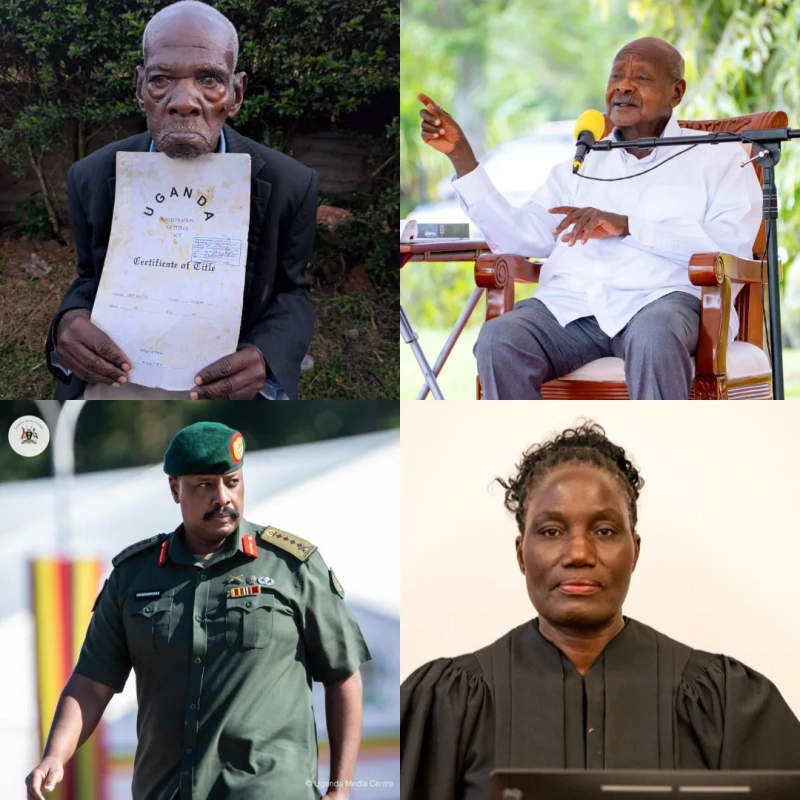
 A 96-year-old landowner, Mzee Dibya Henry, has appealed to President Yoweri Kaguta Museveni, Chief of Defence Forces Gen Muhoozi Kainerugaba and the Chief Justice to intervene in a long-running land dispute in Kyagwe, Mukono, in which he alleges that his land was transferred to a senior judicial officer through a court process involving land that, according to him, did not exist in the form described in the proceedings. Mzee Dibya says the dispute concerns land located at Block 94, Plot 151 in Budugala, Kyagwe, Mukono, which he says was legally registered in his name in the land registration system on March 19, 2009.According to the elderly landowner, the dispute arose after Justice Margaret Tibulya allegedly entered into a purchase agreement dated May 30, 2009, in which she purchased land from a person identified as Dibya Henry Wagaba.  Mzee Dibya, however, maintains that his name is simply Dibya Henry and that he has never been known as Dibya Henry Wagaba. He therefore questions how a transaction could have been conducted in a name different from his own, particularly when the land he says belongs to him had already been registered in the land system. He further questions whether a proper land search was conducted before the alleged purchase agreement was executed.The dispute later went before the High Court of Uganda at Jinja under Civil Suit No. 101 of 2013. Mzee Dibya says the case concerned a claim that he had allegedly given Justice Tibulya 10 acres on Block 94, Plot 18.However, the elderly landowner disputes the existence of the property described in the claim, saying Block 94, Plot 18 had already been subdivided and was no longer in existence in the manner alleged.  Mzee Dibya says he did not participate in the court proceedings because the person named in the case was Dibya Henry Wagaba, while his own name is Dibya Henry. He maintains that he consequently did not understand the proceedings to concern him or his registered property at Block 94, Plot 151. The case subsequently resulted in a decree identified as Civil Suit No. 101 of 2013.According to Mzee Dibya, the decree directed the Commissioner for Land Registration to recover 10 acres from Block 94, Plot 18 and transfer the land into the names of Justice Margaret Tibulya.The 96-year-old now raises a central question over the subsequent implementation of the decree: how land could allegedly be recovered from Block 94, Plot 151, which he says is his registered land, when the decree he refers to specifically mentioned Plot 18.Mzee Dibya alleges that the Commissioner for Land Registration ultimately recovered land from Plot 151 despite there being, according to him, no specific court order directing the Commissioner to take land from Plot 151.  He argues that this has resulted in his registered property being affected by a court process concerning a different plot of land.The elderly landowner has now appealed for intervention and clarification from the highest authorities, saying that at 96 years of age he is seeking justice and protection of the property he says he legally acquired and registered.He particularly wants the authorities to establish how the alleged purchase agreement of May 30, 2009 could have been entered into against a person he says does not bear his name, and how the transaction could have involved land whose particulars, according to him, were inconsistent with his registered property.  Mzee Dibya is also questioning whether an official land search was conducted before the alleged purchase, and if so, what information was contained in the land registry at the time of the transaction.The matter has taken another turn, with Mzee Dibya alleging that persons providing security, some of them reportedly armed, have been deployed on the disputed land and that Justice Tibulya has encroached on the property he claims as his.  The elderly landowner says the presence of armed security personnel has heightened his concerns and left him seeking protection as he pursues clarification over the ownership and administration of the disputed property.His appeal is therefore directed to President Museveni, Gen Muhoozi Kainerugaba and the Chief Justice to examine the circumstances surrounding the land transaction, the court proceedings, the decree and its subsequent implementation, and establish whether the land transferred or recovered corresponded with the property identified in the court proceedings.   At the centre of Mzee Dibya’s complaint are questions over the identity of the alleged seller, the description and existence of the land referred to in the purchase agreement and court proceedings, the status of Block 94 Plot 151 at the time of the alleged transaction, and the legal basis upon which land from Plot 151 was allegedly affected.For the 96-year-old, the matter goes beyond a property dispute. He says it concerns the protection of his land rights and the need for a transparent explanation of how a property he says was already registered in his name came to be affected by proceedings concerning another plot.  He is calling for the relevant land and court records to be examined and for the authorities to establish the facts surrounding the transaction and subsequent transfer before any further action is taken on the disputed property.

© Copyright 2026, All Rights Reserved