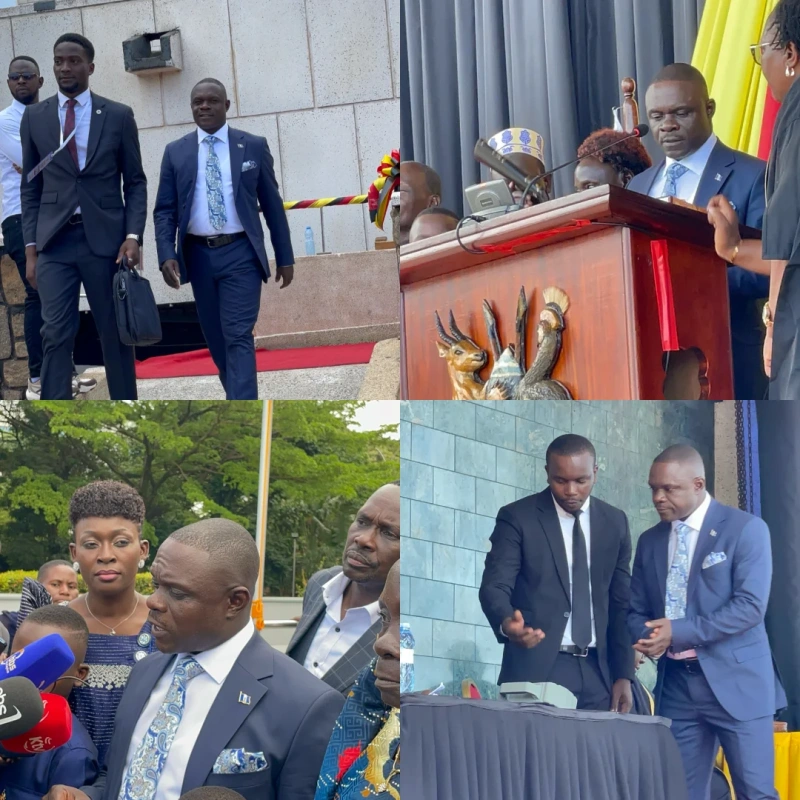
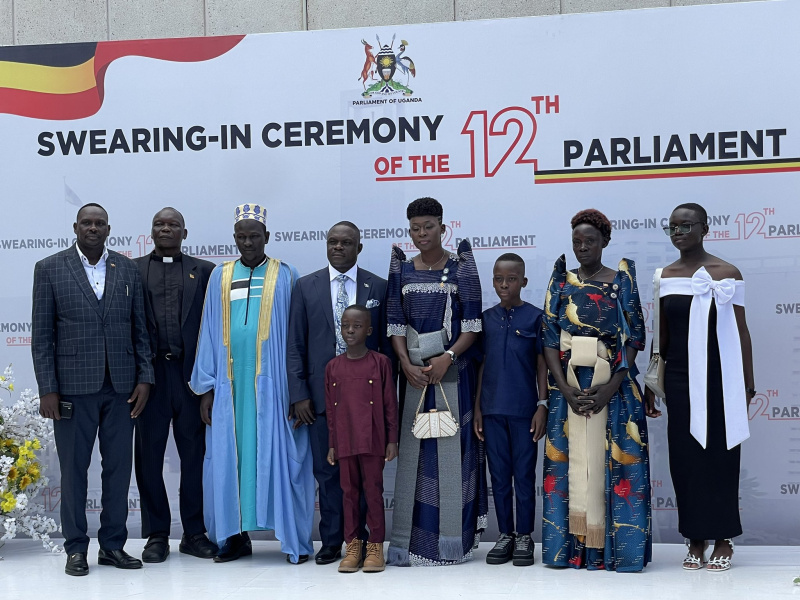
Fresh from taking oath as the duly elected Member of Parliament for Bbaale Constituency in Kayunga District, Charles Tebandeke has already shaken Uganda’s political landscape after openly expressing interest in the position of Deputy Speaker of Parliament.
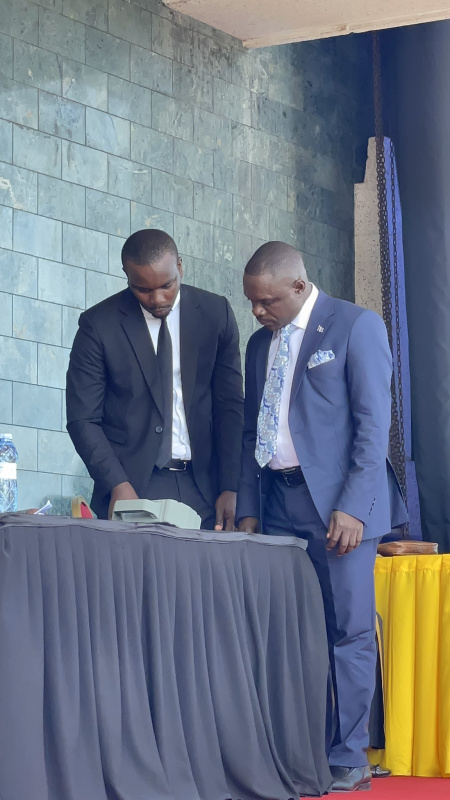
In a bold and unexpected declaration made shortly after his swearing-in ceremony, the National Unity Platform (NUP) legislator stated that Uganda’s Parliament needs a new era of balanced leadership, accountability, and institutional sanity — one that embraces capable leaders from both the ruling government and the opposition.
Hon. Tebandeke argued that the concentration of power within one political side has over the years weakened public confidence in Parliament and contributed to persistent concerns surrounding corruption, abuse of office, and ineffective oversight.
According to the legislator, entrusting opposition leaders with senior parliamentary responsibilities could strengthen transparency and restore public trust in the country’s democratic institutions.
“If the government truly wants to restore sanity in Parliament, then it is time to allow even opposition leaders to take part in top leadership positions. Uganda has opposition leaders with integrity, discipline, and clean hands who can serve this country faithfully,” Hon. Tebandeke reportedly stated.
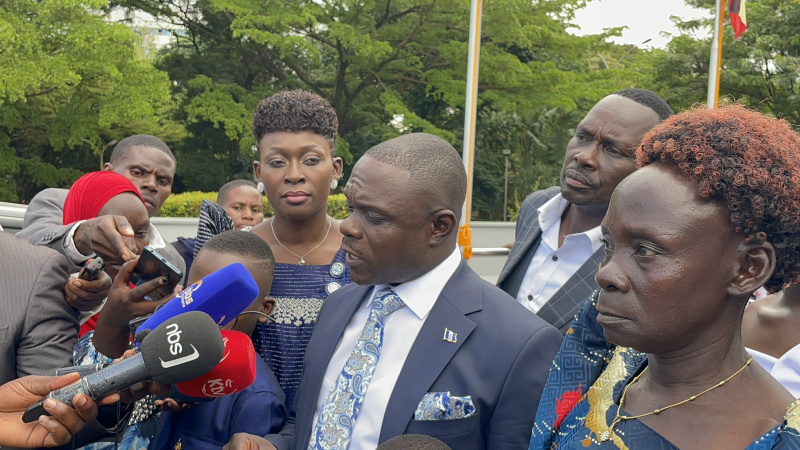
The outspoken MP further emphasized that his experience in the 11th Parliament has adequately prepared him for the demanding role of Deputy Speaker.
“This is my second term in Parliament. The experience and exposure I gained during the 11th Parliament have equipped me with enough capacity to conduct parliamentary business professionally and effectively,” he said.
When asked whether he had secured endorsement from the leadership of the National Unity Platform, Tebandeke expressed confidence in his party’s belief in courageous and transformative leadership.
“How can they know my interest before I express it? My party believes in leaders who rise with courage and determination to bring meaningful change to our people. I believe they will support me,” he noted.
Political analysts and constituents who have closely followed Hon. Tebandeke’s parliamentary journey argue that the Kayunga legislator possesses several qualities that could make him a strong contender for the Deputy Speaker position.
Among the factors frequently highlighted is his continued pursuit of legal studies, a move many believe has sharpened his understanding of constitutional interpretation, parliamentary procedure, and legislative governance — all critical components in managing the affairs of Parliament.
Observers also point to his active participation and visibility during the 11th Parliament, where he earned recognition as one of the more vocal and consistent MPs in representing both constituency interests and broader national concerns.
Beyond politics, supporters describe Hon. Tebandeke as a family-oriented and God-fearing leader whose public image has largely been associated with integrity, discipline, and consistency. His admirers further credit him with strong leadership abilities, firmness in decision-making, and commitment to the promises he makes to the electorate.
While political realities may present significant challenges to an opposition candidate seeking such a powerful parliamentary office, Tebandeke’s declaration has nonetheless sparked debate across political circles and among ordinary Ugandans about the future direction of parliamentary leadership.
His emergence in the race may also intensify national conversations about inclusiveness, bipartisan governance, and the role of opposition voices in shaping Uganda’s democratic institutions.
As political maneuvering begins ahead of the parliamentary leadership elections, many will be watching closely to see whether Hon. Charles Tebandeke’s ambition evolves into a serious political movement capable of disrupting long-standing traditions within Uganda’s Parliament.
Under Uganda’s parliamentary procedures, the Deputy Speaker of Parliament is elected by Members of Parliament through a voting process conducted shortly after the election of the Speaker. Any eligible MP can be nominated for the position, provided they are seconded by fellow legislators. Candidates are then subjected to a vote by MPs, and the winner is determined by majority support in the House. The Deputy Speaker assists the Speaker in presiding over parliamentary sittings and assumes leadership of the House in the Speaker’s absence.