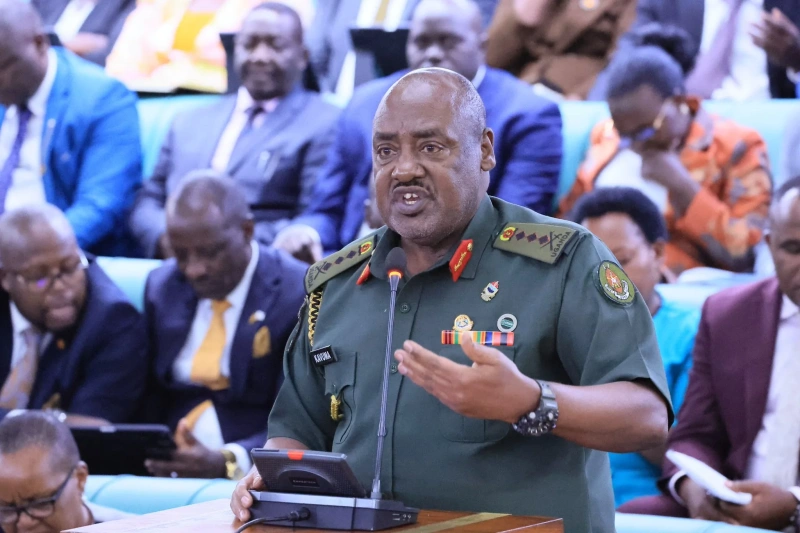
KAMPALA – UPDF Representative in Parliament, Lt. Gen. Samuel Kavuma, has called for urgent action to address what he described as two of the biggest contributors to Uganda’s growing disease burden—self-medication and inaccurate diagnosis in both public and private health facilities.
Speaking during plenary, Lt. Gen. Kavuma questioned why Uganda continues to lose many people, including prominent citizens, to diseases despite the country having abundant food and a favorable environment for healthy living.
According to the legislator, the biggest challenge is that many Ugandans do not seek preventive healthcare, choosing instead to treat themselves whenever they fall ill.
“About 90 percent of Ugandans do not go for regular medical checkups. Someone simply walks into a pharmacy, buys medicine and starts treatment. Many of us have even created mini pharmacies in our homes,” Kavuma told Parliament.
He warned that this culture of self-medication leads to late diagnosis, allowing diseases to progress to critical stages before patients seek professional medical attention.
Lt. Gen. Kavuma, however, said the problem does not end there. He expressed concern that even the small percentage of Ugandans who make the effort to undergo medical checkups often fail to receive accurate diagnoses.
According to him, there are many cases where a patient is tested for the same illness at different hospitals in Uganda—both government and private—and receives conflicting results, creating confusion and delaying proper treatment.
He noted that some Ugandans who later seek treatment abroad, including at specialized hospitals in neighboring countries, are able to receive accurate diagnoses and appropriate treatment after previous tests in Uganda had failed to identify the correct illness.
RELATED
The UPDF MP said such experiences raise serious questions about the quality and consistency of diagnostic services in the country.
Speaking to journalists shortly after the parliamentary sitting, Lt. Gen. Kavuma called on the Government to conduct a comprehensive investigation into the country’s diagnostic system.
He said the review should establish whether the challenge lies in the medical equipment being used or in the competence of some health professionals interpreting test results.
“We need Government to intervene and establish where the problem is. Is it the machines, or is it the people operating them? We must ensure Ugandans receive accurate diagnoses because proper treatment starts with getting the right diagnosis,” he said.
Kavuma further appealed to Members of Parliament to return to their constituencies and intensify public sensitization on the importance of routine medical checkups instead of waiting until illnesses become severe.
He stressed that preventive healthcare remains one of the most effective ways of reducing disease-related deaths and lowering the financial burden families incur while seeking treatment.
The legislator maintained that improving diagnostic accuracy,
strengthening professional standards in the health sector, and encouraging regular medical screening would significantly improve health outcomes and save countless lives across Uganda.
His submission has added momentum to the ongoing national conversation on improving the quality of healthcare services and ensuring that every Ugandan has access to reliable diagnosis and timely treatment.