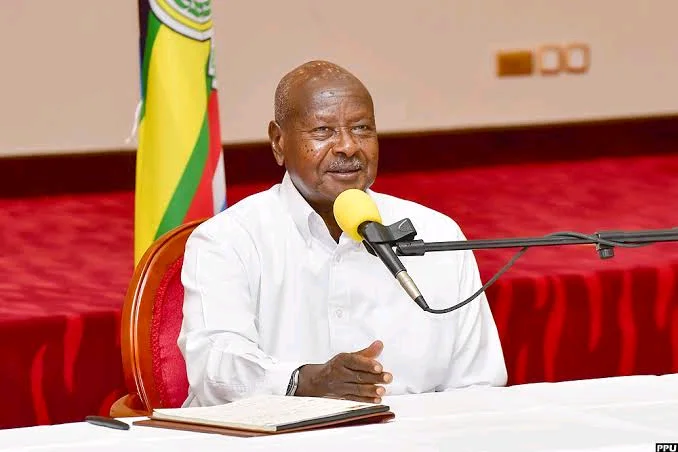

Munyonyo, Kampala – President Yoweri Kaguta Museveni has called on East African nations to deepen regional integration as the clearest path to prosperity, security, and lasting transformation. At the opening of the 1st Regional Ministerial Conference on the East African Community Common Higher Education Area (EACCHEA) held at Speke Resort Munyonyo, he outlined five pillars supporting integration: prosperity, socio-economic change, Pan-Africanism, democracy, and strategic security.
“The only way to achieve prosperity is when each family, company, or individual is involved in producing a good or a service with ekibaaro (calculation). If you do that sustainably and sell it, you will get money and solve your problems,” he stated.
He underscored the role of unity in expanding markets, overcoming divisive identity politics, and building patriotism—the cornerstone of Uganda’s National Resistance Movement. He further emphasized that education should equip citizens to tap into regional markets.
“With all that is happening all over the world, if you are weak you cannot survive. Apart from economic integration for the whole of Africa, where possible there should also be political integration,” the President added.

First Lady Advocates Pragmatic and Grassroots-Aligned Higher Education
The First Lady and Minister of Education and Sports, Maama Janet Museveni, noted that although the EAC was declared a Common Higher Education Area in May 2017, this is the first Regional Ministerial Conference to evaluate its progress.
She urged higher education institutions to go beyond academic theory and actively support grassroots transformation. Citing Uganda’s Parish Development Model (PDM), she called on universities to follow the government’s example in uplifting subsistence households and cultivating a culture of cottage industries.
“Higher Education needs to transform itself from being perceived as an ivory tower of ideas, to becoming the solution to common socio-economic challenges that households encounter in their day-to-day lives.”
She emphasized that the Common Higher Education Area must promote talent mobility, mutual recognition of qualifications, innovation, and collaboration with the private sector.
Regional Leaders Rally Behind the Vision
Prof. Mary J.N. Okwakol, NCHE Executive Director and Chair of the Forum of Higher Education CEOs in East Africa, described the event as a landmark in regional education integration, urging national alignment with continental ambitions.
Prof. Gaspard Banyankimbona, IUCEA Executive Secretary, affirmed that mutual recognition of qualifications and graduate mobility are crucial for a successful EAC Common Market.
Representing the EAC Secretariat, Hon. Andrea Ariik, Deputy Secretary-General, called the ministerial conference historic, pointing to milestones such as the East African Qualifications Framework, regional quality assurance policies, and mobility-supporting initiatives.
A Forward-Looking Vision for East Africa
Conference speakers agreed that the Common Higher Education Area should not only enhance regional integration but position East Africa as a hub of excellence, innovation, and competitiveness. It must train graduates who are employable across borders and able to drive sustainable development.
“As Uganda, we reaffirm our government’s commitment to supporting the EAC Common Higher Education Area … laying a strong foundation for resolutions that will transform our region’s education landscape for generations to come,” said Maama Janet Museveni.
With over 300 million people in the EAC, the region’s youthful population represents immense potential. By aligning education, markets, and governance, East Africa stands poised for equitable and vibrant socio-economic transformation.