
The election petition challenging the election of Bbaale Member of Parliament Charles Tebandeke returned to the High Court in Mukono on Tuesday, with proceedings taking a dramatic turn as the petitioner’s witness faced questions over the basis of some of the evidence presented before court.
The petition, filed by Arthur Kiza against Tebandeke, concerns the circumstances surrounding the parliamentary election. Tebandeke, a National Unity Platform (NUP) member representing Bbaale in the 12th Parliament, has contested the allegations brought against his election.

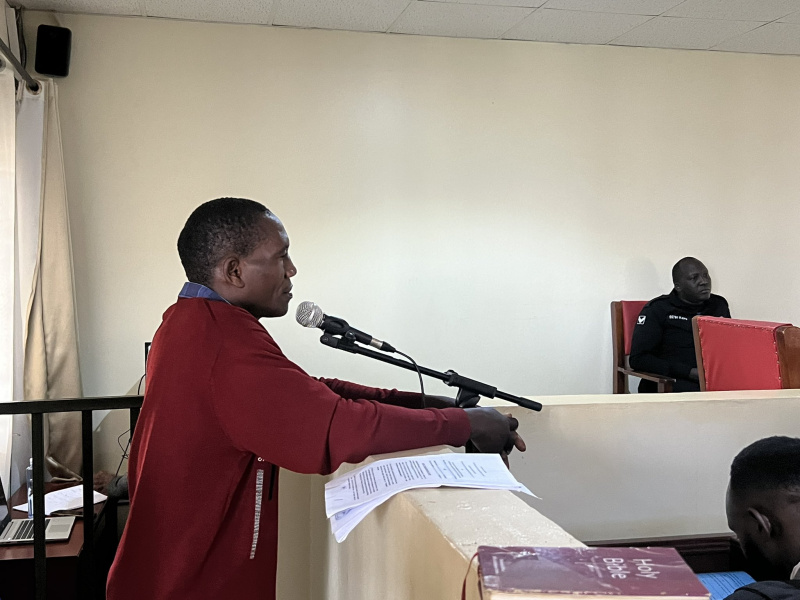
During Tuesday’s proceedings, the petitioner presented Sserunjoji Moses, the Chairperson of Bugonya B, as a witness. However, portions of his testimony came under scrutiny, with the defence challenging evidence that it argued was based on information the witness had not personally witnessed or independently verified.
In legal terms, such evidence may raise questions of hearsay, particularly where a witness seeks to tell court what another person allegedly said or knew rather than giving evidence from direct personal knowledge. The weight to be attached to such testimony remains a matter for the trial judge.
One of the issues raised before court concerned allegations that Tebandeke referred to Kiza as “Goliath” during the campaign period. The petitioner’s side suggested that the reference was intended to portray Kiza negatively and contributed to reducing his support among voters.
But when the issue was put to Tebandeke, he rejected the interpretation.
Tebandeke told court that he did not use the name “Goliath” to refer to Kiza personally, explaining that his references to the biblical story of David and Goliath were part of his campaign messaging.
According to Tebandeke, he used “David” and “Goliath” symbolically when addressing voters, with “David” representing the candidate and voters who wanted change, while “Goliath” represented issues he was campaigning against, including alleged land grabbing, poor service delivery and poor roads.

He maintained that at no point did he specifically intend the term “Goliath” to identify any of his political opponents.
Another significant moment came when the petitioner’s witness described Tebandeke as a highly visible and popular figure during the campaign.
The witness told court that Tebandeke was allegedly well known across the constituency and that his arrival at public functions was often met with excitement, applause and enthusiastic greetings from members of the public.
The witness further suggested that at functions such as burial ceremonies, Tebandeke’s visibility was greater than that of some of the other candidates, an observation the petitioner’s side sought to connect to the election contest.
The evidence created an interesting courtroom contradiction: while the petition seeks to challenge Tebandeke’s victory, evidence from the petitioner’s own side portrayed him as a politician who enjoyed considerable visibility and public recognition during the campaign period.
Tebandeke acknowledged before court that he was popular during the campaign, but explained that popularity and the affection of voters were not matters he could control.
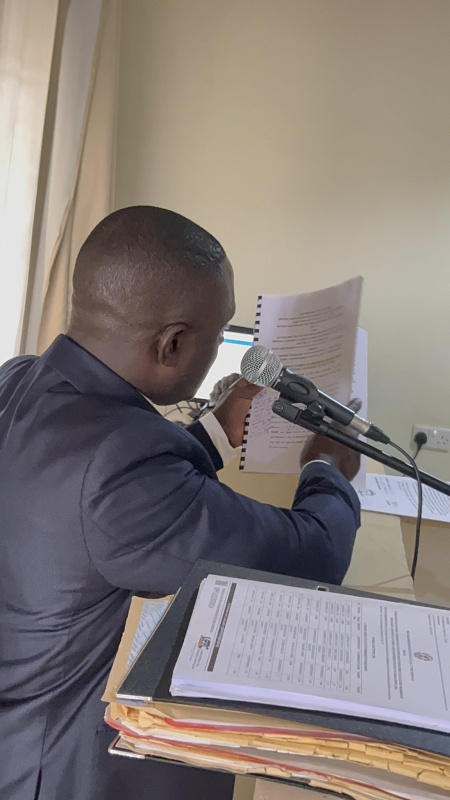
He told the judge that people had welcomed him warmly because, in his view, they appreciated the way he had represented and led them. He nevertheless maintained that he could not dictate where or how people chose to express their support for him.
The defence position was therefore that the presence of enthusiastic crowds at events should not, by itself, be interpreted as evidence of an electoral irregularity.
The proceedings also exposed challenges faced by the petitioner’s witness when asked to substantiate some of the assertions made in court. The defence questioned whether the witness possessed direct evidence capable of independently confirming several of the matters he had raised.
For the court, the distinction between what a witness personally observed and what the witness merely heard from others remains important in determining the evidential value of testimony.
The petition therefore continues to turn not only on the allegations made by the petitioner, but also on whether those allegations can ultimately be supported by admissible and sufficiently reliable evidence.
Justice Phillip Mwaka, who is presiding over the petition at the High Court in Mukono, adjourned the matter to next week when further proceedings are expected to continue.
The next hearing is expected to provide another opportunity for both sides to test the evidence already placed before court as the election dispute moves closer to its determination.