
Uganda has taken a significant step towards transforming its technical and vocational education system following the launch of the Uganda TVET Qualifications Framework (UTQF), an ambitious national initiative designed to standardise skills training, recognise practical competencies and establish clear education and career progression pathways for Ugandans.
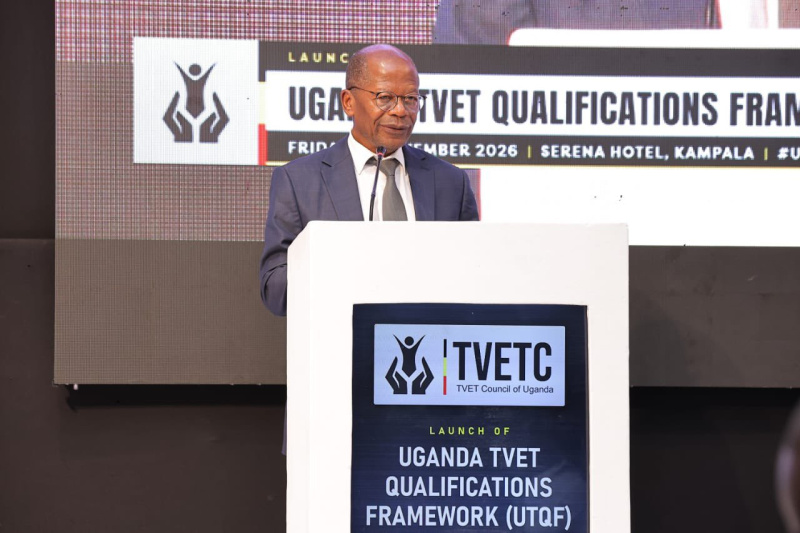
The framework, launched at Serena Hotel in Kampala, is expected to change the way technical and vocational education is delivered, assessed and recognised, while strengthening the country’s efforts to develop a skilled, productive and internationally competitive workforce.
Representing the Government of Uganda at the launch, the Acting Minister of Education and Sports, Hon. Dr John Chrysostom Muyingo, reaffirmed Government’s commitment to supporting the implementation of the framework through appropriate financing, strengthening technical institutions, safeguarding the integrity of qualifications and promoting international recognition of Ugandan qualifications.
Dr Muyingo congratulated the TVET Council and all stakeholders who contributed to developing the framework, describing its launch as an important milestone in Uganda’s human capital development and economic transformation agenda.
He emphasised that Uganda’s ambition of expanding its economy from approximately USD 50 billion to USD 500 billion requires a workforce equipped with relevant technical, vocational and practical skills to support the country’s priority economic sectors.
He identified agro-industrialisation, tourism, mineral development, manufacturing, oil and gas, science and technology, among other sectors, as areas that require competent and skilled workers capable of driving productivity and sustainable economic growth.

The Acting Minister further highlighted the importance of enforcing the Technical and Vocational Education and Training Act, 2025, noting that qualifications must be registered under the approved framework to receive official recognition.
One of the most significant developments introduced by the Uganda TVET Qualifications Framework is the creation of structured education progression opportunities for learners who choose vocational training, including those who begin the pathway after completing Primary Seven.

According to TVET Council Executive Director Moses Kasakya, learners completing Primary Seven and choosing the TVET pathway will be able to progressively advance from artisan and craftsman levels to National Diplomas, degrees, master’s qualifications and eventually PhDs, subject to the relevant progression and entry requirements.
RELATED
This development is expected to change the traditional perception that vocational education is only an alternative for learners who do not continue with conventional academic education.
Instead, the framework positions TVET as a recognised education pathway through which learners can develop practical competencies, acquire higher qualifications and build successful professional careers without necessarily abandoning their academic ambitions.
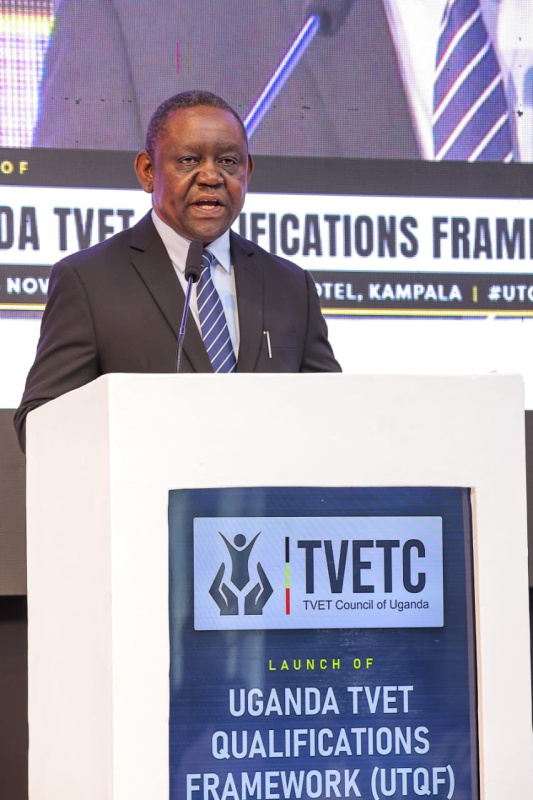
Kasakya explained that the framework is not simply another policy document but a national reference for establishing what a learner knows and, more importantly, what they can demonstrate through practical work.
For many years, Ugandans have acquired valuable skills through apprenticeships, workplaces, informal training and hands-on experience without necessarily obtaining formal certificates to demonstrate their competencies.
This has often made it difficult for experienced workers to compete for formal employment, access opportunities or progress professionally despite possessing the necessary practical abilities.
The new framework seeks to address this challenge through recognised standards for assessing and certifying competencies acquired through both formal and informal learning.

Through Recognition of Prior Learning (RPL), experienced mechanics, electricians, carpenters, builders, agricultural workers and other skilled practitioners will have an opportunity to present their practical abilities for assessment against established occupational standards and obtain recognised qualifications if they meet the required competencies.
The initiative is also expected to strengthen the relationship between training institutions and employers by ensuring that skills development responds to the actual demands of the labour market.
Through collaboration with industry stakeholders, employers and relevant sector experts, training programmes will increasingly focus on producing graduates with the technical knowledge and practical competencies required in different economic sectors.
Kasakya emphasised that a competent and skilled workforce is essential for Uganda to achieve its Vision 2040 ambition of growing the economy tenfold, from approximately USD 50 billion to USD 500 billion.
He explained that priority sectors such as industrialisation, tourism, mineral development, manufacturing, oil and gas, science and technology, and the creative industry require a workforce capable of delivering results and supporting national development.
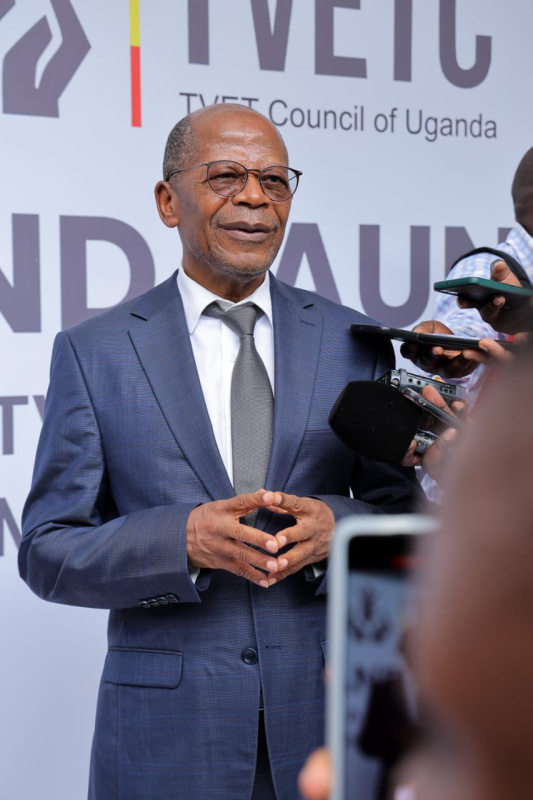
The framework is consequently expected to improve the credibility of Uganda’s qualifications, create better opportunities for skilled workers and make national technical and vocational qualifications more comparable and recognisable beyond the country’s borders.
Its implementation will require coordinated efforts involving Government, the Ministry of Education and Sports, the TVET Council, training institutions, employers, trainers, assessment bodies and other stakeholders.
For young Ugandans, the framework creates additional opportunities to pursue technical careers while retaining the possibility of advancing to higher education. For experienced artisans and workers, it offers an opportunity to have their practical abilities formally assessed and recognised. For employers, it provides a more reliable basis for identifying and recruiting competent workers.
With the Acting Minister of Education and Sports reaffirming Government’s commitment to implementation and the TVET Council spearheading the initiative, the Uganda TVET Qualifications Framework marks a new chapter in the country’s skills development agenda.