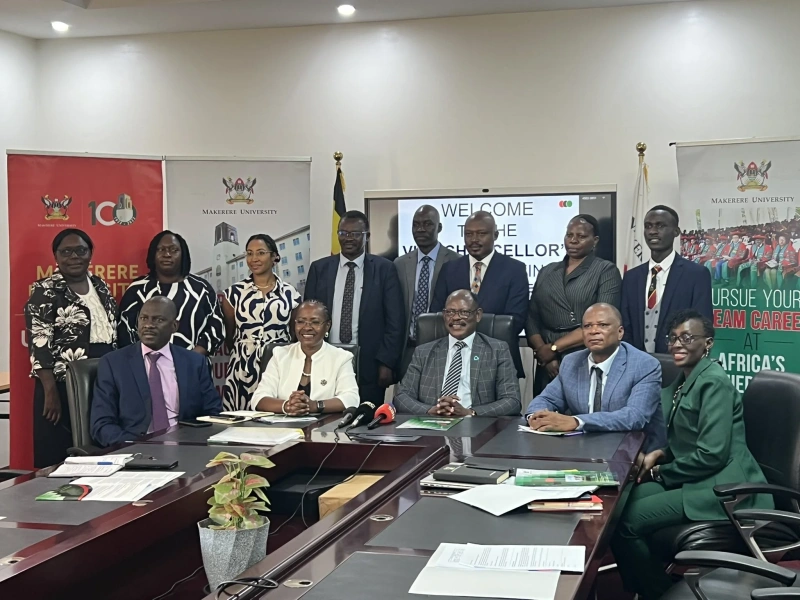
Makerere University has recorded a significant improvement in its global standing, climbing 295 places in the July 2026 Webometrics Ranking of World Universities, in what Vice Chancellor Prof. Barnabas Nawangwe has described as part of the institution’s continued transformation into a leading research-driven university.
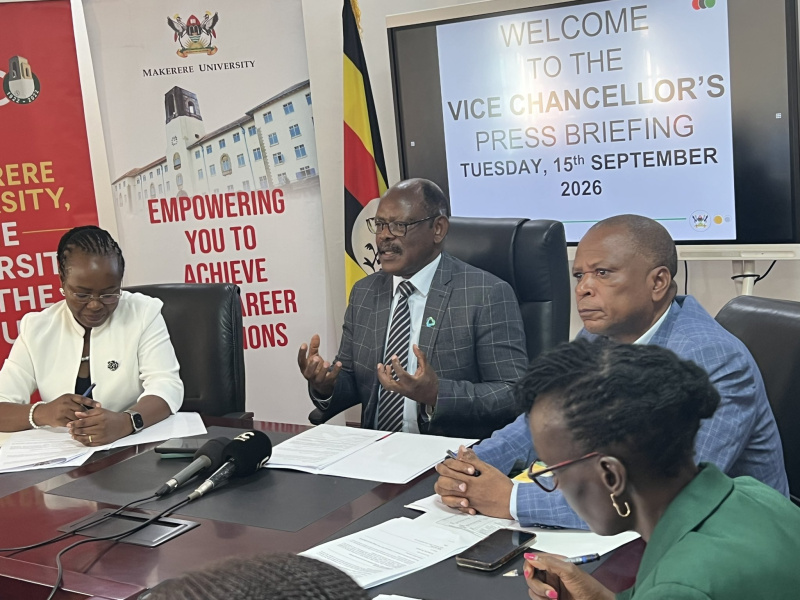
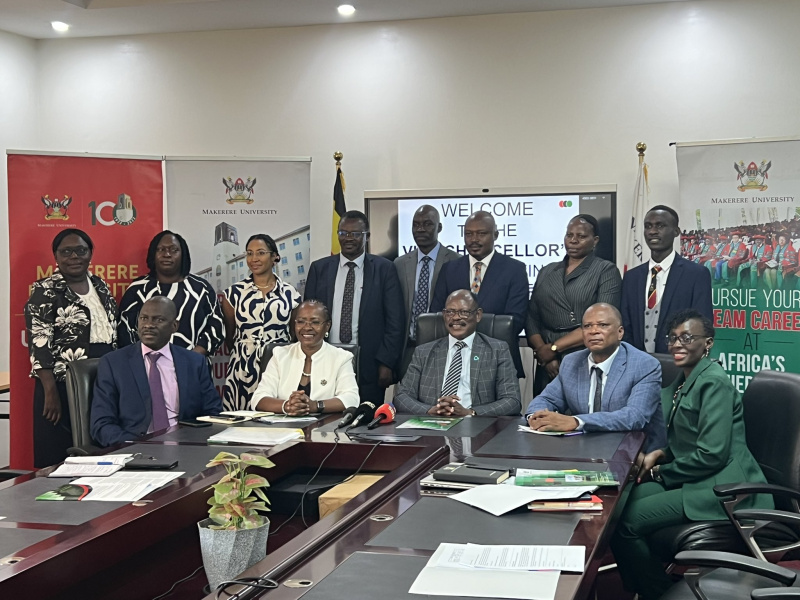
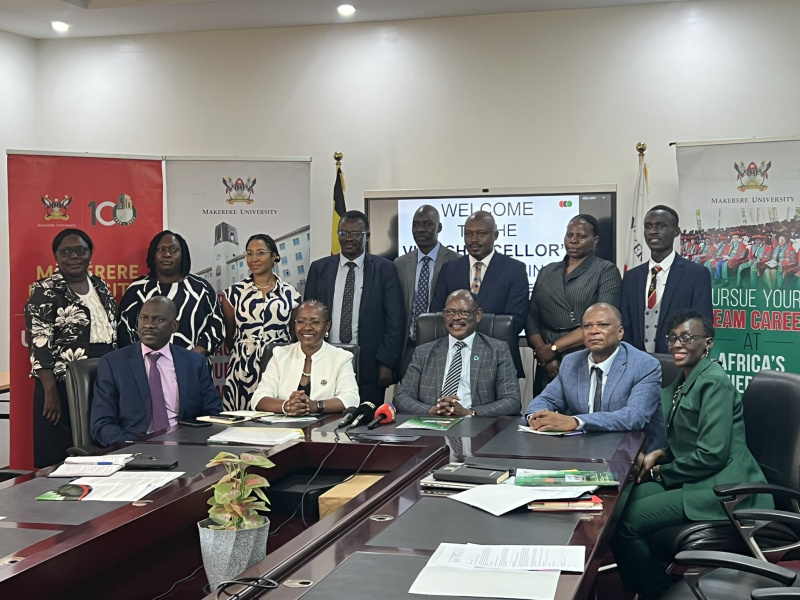
Addressing journalists at the Vice Chancellor’s Boardroom on Tuesday, 15 September 2026, Prof. Nawangwe said Makerere University had risen from 1,071st position globally in the 2025 rankings to 776th in the July 2026 edition.
The latest performance also represents a notable improvement from the January 2026 rankings, when Makerere was ranked 925th globally and 13th in Africa. In July, the University moved to 11th position in Africa, while retaining its position as the top-ranked university in Uganda and East Africa.
Prof. Nawangwe attributed the progress to stronger visibility and performance in research and the University’s digital academic presence, particularly through scholarly publications and online platforms.
The University’s Impact Rank, which measures the external domains linking to Makerere, improved from 1,593 to 1,185, while its Excellence Rank, which measures the institution’s research papers among the top 10 per cent most cited publications between 2019 and 2023, improved from 1,095 to 715.
The Vice Chancellor said Makerere will continue strengthening its online academic and research presence through journals and other scholarly platforms as it builds an institution increasingly defined by research, innovation and global visibility.
The improvement in rankings comes alongside a broader institutional drive to strengthen academic progression and ensure that more postgraduate students complete their Master’s and PhD studies within the expected time.
Prof. Nawangwe said the University was moving away from relying mainly on graduation statistics to identify completion challenges after they have occurred, and was instead introducing a digital tracking framework that will continuously monitor postgraduate students from enrolment through to completion.
The framework will place accountability at four levels, involving the student, supervisor or graduate coordinator, college or school, and the Directorate of Graduate Training together with University Management.
Under the approach, Makerere is adopting the guiding principle of “TRACK – SUPPORT – ACCOUNT – COMPLETE”, aimed at tracking student progress, providing support when challenges emerge, strengthening accountability and increasing the number of students completing their studies on time while maintaining the required academic standards.
The University has already recorded steady growth in postgraduate graduations over the past four years. Postgraduate graduands increased from 1,588 at the 73rd Graduation Ceremony in 2023 to 1,874 in 2024, 2,199 in 2025 and 2,922 at the 76th Graduation Ceremony in 2026.
Beyond postgraduate training and research, Makerere has also completed admissions for the 2026/2027 academic year, enrolling 25,832 students. Of these, 2,169 have been admitted on government sponsorship, while 23,663 are on private sponsorship.
The University Council has also approved the reintroduction of supplementary examinations, providing qualifying students with a limited opportunity to address marginal academic shortfalls while maintaining the academic standards required for University awards.
Under the new policy, one supplementary examination session will be conducted annually at the end of Semester Two and before the beginning of the following academic year.
Makerere’s research agenda is also expanding into practical solutions to some of the country’s urban and environmental challenges.
Researchers and partners have launched the FLOWERS Project — Facilitating Local Organic Waste Exchange for Regenerative Systems — which seeks to transform restaurant food waste in Kampala into animal feed and organic fertiliser.
Led locally by Associate Professor Charles B. Niwagaba, the two-year project running from 2026 to 2028 will map food-waste flows within the Greater Kampala Metropolitan Area and test ways of directing more source-separated restaurant waste to farmers, while assessing both the material and financial value generated along the chain.
The project was launched in Kampala on 10 September 2026, reinforcing Makerere’s ambition to translate research and innovation into practical solutions for communities and the wider economy.
Meanwhile, the University is preparing for its sixth Makerere University Marathon, scheduled for Sunday, 27 September 2026 at Freedom Square. Organised through the Makerere University Endowment Fund, the marathon will bring together students, staff, alumni, partners and members of the public, with proceeds directed towards supporting the Disability Support Centre.
The University will also host its annual Guild Medical Camp from 17 to 18 September 2026 at Freedom Square, offering free essential and specialised health services to students, staff and the surrounding community.
The latest developments present a University simultaneously strengthening its global academic visibility, improving student progression, expanding research and innovation, and increasing its contribution to society.
As Makerere continues to position itself as a research-led institution, the latest Webometrics rise provides a strong indicator of the growing international visibility of its academic and research work.