By Mutuunzi Saul
The National Coordinator of the Office of the National Chairman (ONC) of the National Resistance Movement (NRM), Hajjat Hadijah Namyalo Uzeiye, has called on Parliament to commission a forensic audit into the reported Shs1.7 trillion collected during Uganda’s electricity distribution transition, raising concerns over persistent power blackouts and the cost of electricity.
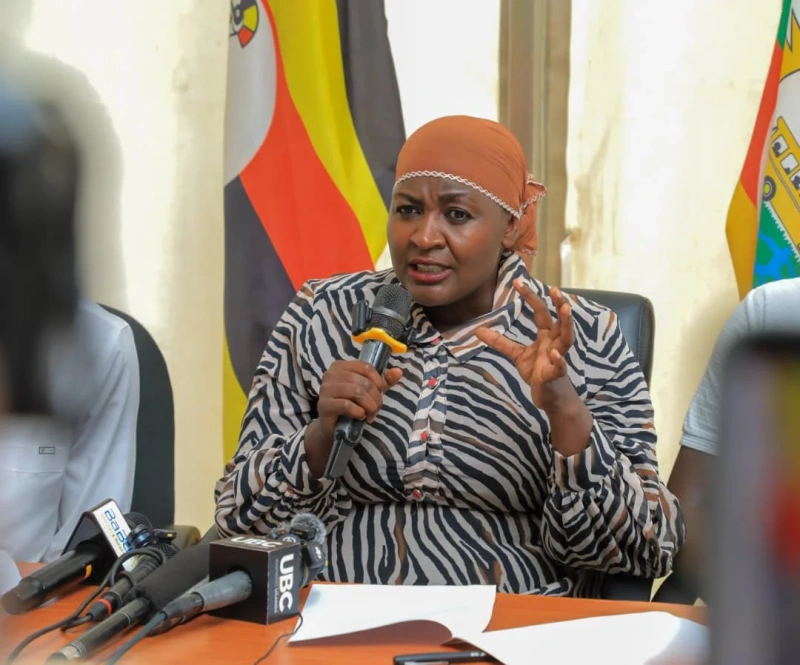
Namyalo made the remarks while addressing the media at the ONC headquarters in Kampala, where she questioned the performance of the Uganda Electricity Distribution Company Limited (UEDCL) since it took over electricity distribution from UMEME in April 2025.
She argued that reliable electricity is essential for economic growth, education, healthcare and the delivery of essential services, warning that prolonged outages continue to affect households, businesses and public institutions.
“I’m addressing you not as a Senior Presidential Advisor, but as a muzzukulu. Electricity is the oxygen of modern existence. No enterprise flourishes, no child studies, no health facility saves lives without it,” Namyalo said.
She also made a controversial remark about the impact of power outages on people’s private lives, arguing that darkness disrupts normal activities and raises concerns about hygiene and infections.
Namyalo questioned whether the transition from UMEME to UEDCL had delivered the improvements Ugandans were promised, noting that the public had been told that electricity distribution was returning to Ugandan control.
She expressed concern that despite the reported collection of Shs1.7 trillion, many consumers continue to face high electricity tariffs and unreliable supply.
According to Namyalo, UEDCL has announced approximately 236,000 new electricity connections, but she questioned why hundreds of thousands of other Ugandans who had reportedly paid for connections were still without power.
“UEDCL announces 236,000 new connections, yet 400,000 Ugandans who paid with their sweat remain marooned in darkness,” she said.
She further questioned Uganda’s electricity export arrangements, arguing that the country should ensure its domestic consumers benefit from the power generated locally before prioritising regional electricity sales.
Namyalo cited electricity prices of approximately 11.3 US cents per unit in Uganda, compared with figures she gave as 13.7 US cents in Tanzania and between 14.4 and 26 US cents in Kenya. She also claimed that Uganda sells electricity to Kenya at a lower price before it is resold at a higher rate.
However, the figures and comparisons she cited were not independently verified in her remarks, and electricity tariffs can vary depending on the consumer category, applicable charges and the period under review.
The ONC coordinator called on Parliament to investigate the reported Shs1.7 trillion through a forensic audit, saying Ugandans deserved accountability regarding the money associated with the electricity distribution transition.
She maintained that consumers who had already paid for electricity connections should receive the services they were promised, adding that the transition would remain questionable until outstanding connection concerns were addressed.
“Until every Ugandan who paid for power gets connected, this so-called ‘Big Switch’ remains a Big Cheat on the people,” Namyalo said.
UEDCL has previously attributed power outages to various operational and technical challenges. The concerns raised by Namyalo add to public debate about the reliability of electricity distribution, the affordability of power and the pace at which new customers are being connected following the change in the country’s electricity distribution arrangements.